
Tessellated Tiles in Ringwood East
Ringwood East combines a village-like neighbourhood activity centre with a layered local story that includes early mining, railway and school history, as well as documented twentieth-century architectural places. For a verandah, pathway, entrance or interior floor, a considered tessellated tile scheme should respond to the property's proportions, surviving fabric and the way the work meets the street or garden. AHTC can assist with design consultation, tessellated tile supply, installation and restoration planning, with stone bullnose or edging coordination where it suits the project.
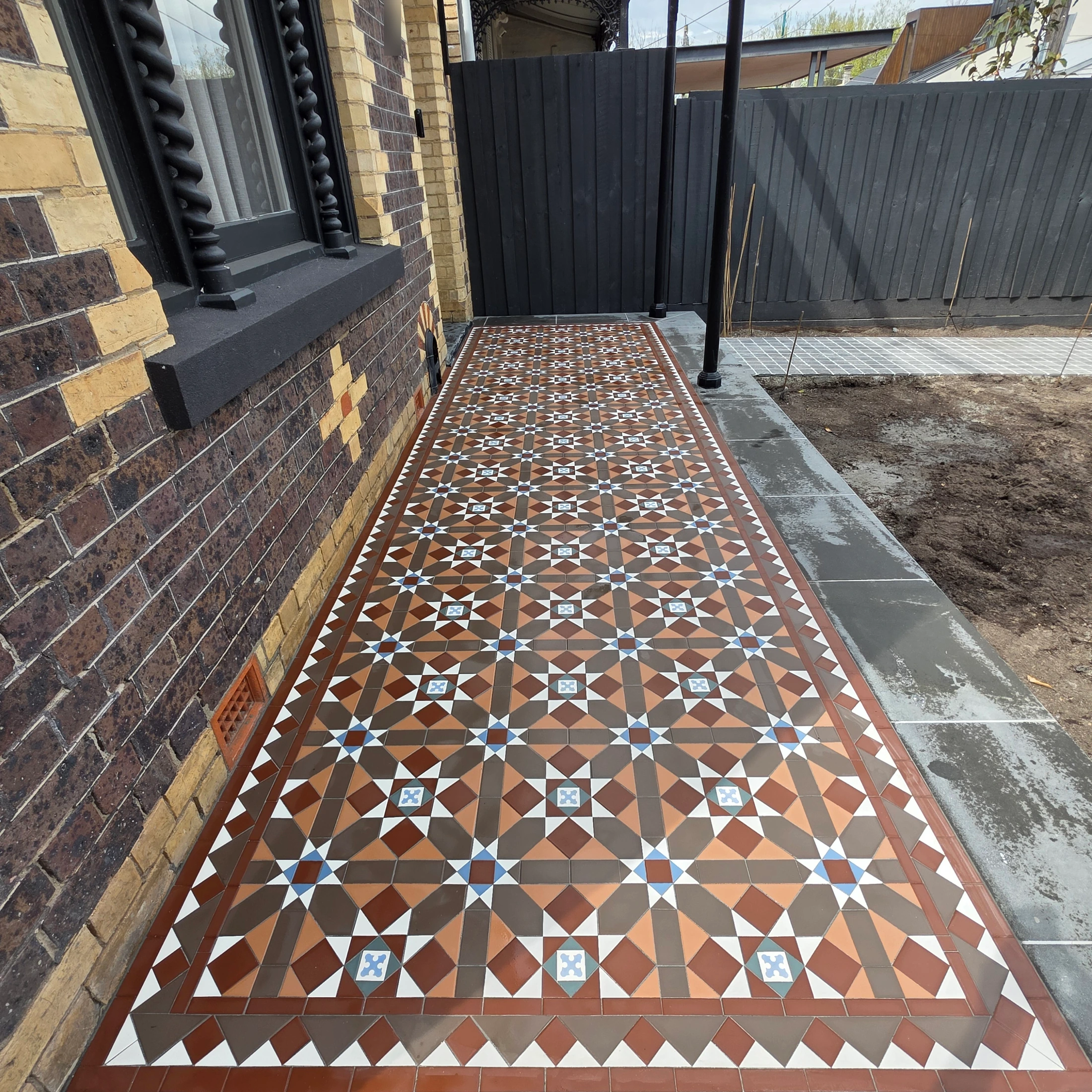
A Ringwood East setting with more than one architectural story
Maroondah's Ringwood East planning schedule describes the neighbourhood activity centre as a place where a village feel, active frontages and landscape character matter. That is useful context for work visible from a footpath or garden: proportions, thresholds, edging and transitions can be designed to sit comfortably with the setting rather than treated as an isolated pattern exercise.
Council's local history material also points to mining, recreation, schools and the railway as part of Ringwood East's development. The suburb should not be reduced to one assumed period style. A tile layout for a later house, a modest interwar alteration or a property near a documented heritage place may each call for a different balance of restraint, contrast and repair.
Ringwood East includes selected documented heritage places rather than a blanket heritage designation for every dwelling. Before changing older tiles or masonry, record what remains and check the current planning information for the particular property.
Planning a tessellated tile scheme for a Ringwood East property
Begin with the building and approach: note the width of the verandah or path, the direction of arrival, existing steps, drainage falls, door thresholds and any stone or masonry that should remain visible. A border, field and turning point can then be considered together so the pattern supports the architecture instead of crowding it.
Where a property has older fabric, matching is not only about colour. Tile dimensions, surface wear, edge pieces, setting-out and the relationship to adjoining materials all affect whether repair, selective replacement or a new adjoining area will read coherently. Design consultation can help establish a practical brief before supply and installation are scheduled.
For new work near a street-facing activity-centre context, the planning material's emphasis on active frontages, landscape and attractive built form is a useful reminder to consider the public edge as well as the private floor. It is not a substitute for checking the applicable controls for a specific site.
Supply, installation and restoration with a property-led brief
AHTC's Ringwood East service can cover design consultation, tessellated tile supply, installation, restoration and coordination of stone bullnose or edging. The right sequence depends on the existing surface, access, levels, moisture conditions and the amount of original material worth retaining; no single substrate or installation method should be assumed before inspection.
For restoration, photograph and measure the existing arrangement before lifting anything. Keep loose or damaged pieces aside where possible, identify where borders turn or change at steps, and distinguish original tilework from later repairs. For a new verandah or pathway, the design can be developed around circulation, maintenance and weather exposure as well as pattern.
This page provides a starting point for a Ringwood East enquiry. Planning or heritage requirements are determined by the relevant authority and the particular property and proposed works, not by the suburb name alone.
Your Heritage Tiling Questions
Are all Ringwood East homes heritage-listed?
No. Official records identify selected heritage places and overlay controls, but they do not make every Ringwood East dwelling individually heritage-listed. Check the current planning information for the particular property before changing older tilework, masonry or other significant fabric.
Can tessellated tiles suit a newer Ringwood East house as well as an older property?
Yes, but the design should respond to the house rather than assume a historic pattern is automatically appropriate. Scale, thresholds, paving connections, colour balance and the visibility of the work from the street can guide a contemporary or more traditional scheme.
What should I do before restoring old tiles in Ringwood East?
Document the layout, edges, steps and adjoining materials, keep loose pieces safe, and check the property's current planning and heritage information. An inspection can then help distinguish repairable original fabric from later work and shape a proportionate restoration or replacement brief.
Does the Ringwood East activity-centre guidance decide whether my tile work needs approval?
No. The activity-centre schedule provides design objectives for its defined precinct, while heritage and permit requirements depend on the property's controls and the proposed work. Confirm the applicable requirements with the relevant authority before starting.
Can AHTC help with a tiled verandah or pathway in Ringwood East?
AHTC can discuss design consultation, tessellated tile supply, installation, restoration and stone bullnose or edging coordination for a verandah, path, entrance or related floor. The brief should be developed around the property's existing conditions, access and design context.
Discuss Your Heritage Tiling Project
Share your location, project details and photographs using our enquiry form, or call 0433 932 711.