
Tessellated tiles in Ringwood North
For Ringwood North homes, a tessellated tile scheme works best when it responds to the building, the approach to the house and the surrounding garden rather than treating every site alike. We can help with design consultation, tessellated tile supply, installation, restoration and stone bullnose or edging coordination, with the scope shaped around the property and the condition of the surfaces.
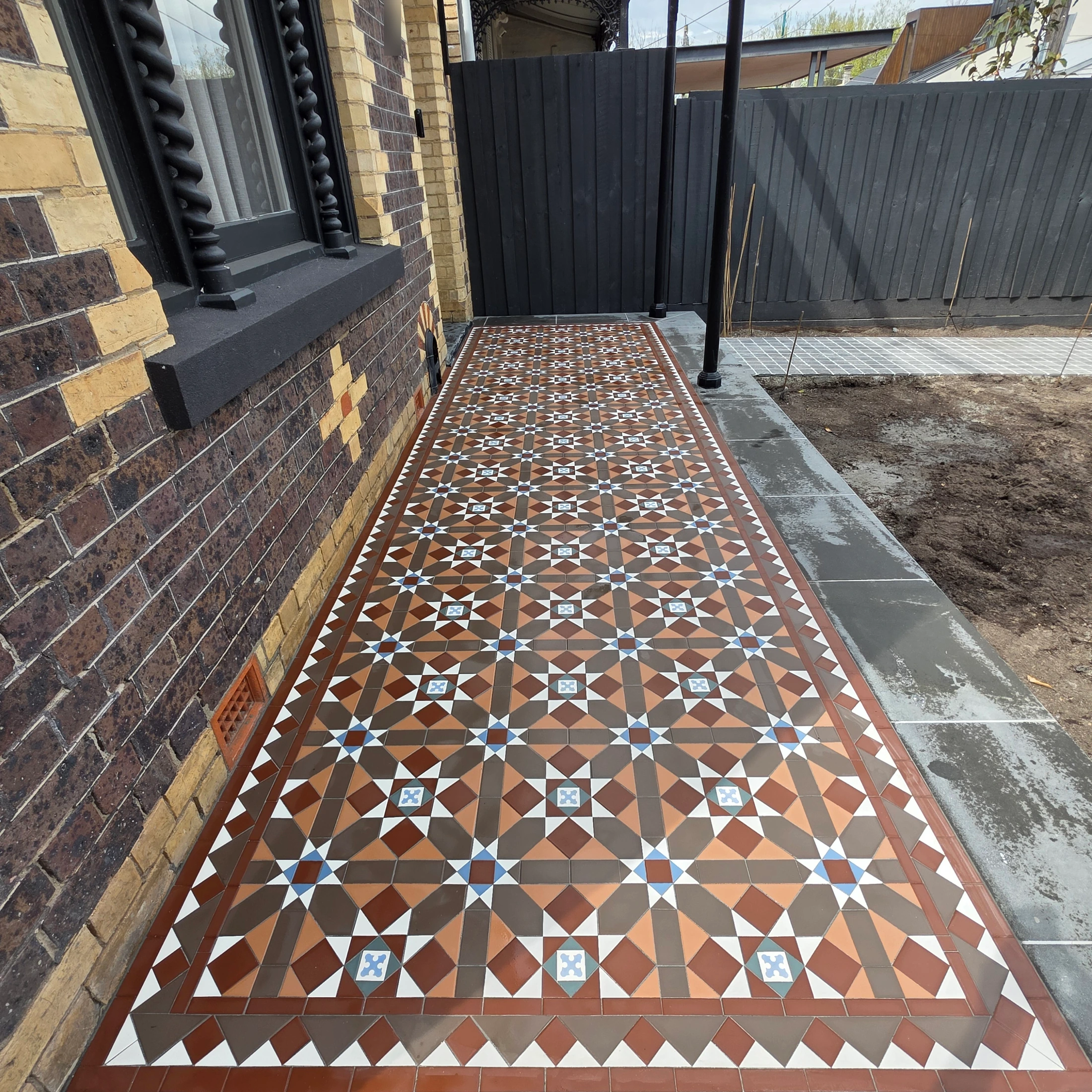
Tile design that sits comfortably in Ringwood North
Maroondah's neighbourhood-character guidance recognises differences in building form, fencing, materials, landscaping, established trees and views. Those details matter when planning a tiled verandah, entry, path or interior floor in Ringwood North: proportions, border rhythm, colour balance and transitions should support the existing house instead of competing with it.
A period-inspired pattern may suit one property while a quieter arrangement or carefully matched repair is more appropriate on another. A site review can consider the relationship between the tiled area, garden setting, levels and adjoining finishes before a layout or supply direction is settled.
A considered approach to older and distinctive homes
Ringwood North's documented local history includes a 1925 timber school building with bungalow-style details, as well as individually assessed homes representing early-modern and post-war design. These records are reminders that architectural character can come from many periods; they are not evidence that every house in the suburb is heritage-listed.
Where a property has a Heritage Overlay or another relevant planning control, the existing fabric and the proposed work should be checked before decisions are made. Maroondah explains that controls are applied to particular places, groups, landscapes or objects, so a property-specific check is more reliable than assuming a suburb-wide rule.
From pattern selection to a finished tiled surface
For a new verandah or pathway, the useful early questions include how the pattern meets steps and thresholds, where a border should turn, how the surface drains and how the edge will meet garden, paving or stone. For an existing floor, the focus may instead be on identifying surviving tiles, recording the layout and deciding whether selective restoration or a new complementary section is the better fit.
We can coordinate design decisions with tessellated tile supply and installation, and discuss restoration or stone bullnose and edging requirements as part of the same property-led conversation. The final recommendation depends on the site, the existing surface and the intended use.
Your Heritage Tiling Questions
Are all Ringwood North homes covered by heritage controls?
No. Maroondah describes Heritage Overlays as controls for particular places, groups, landscapes or objects. Check the current planning scheme for the individual property before assuming that heritage controls apply.
Can tessellated tiles suit a post-war or modernist Ringwood North home?
They can, but the pattern and finish should respond to the home's form, scale, materials and garden setting. Ringwood North's documented architectural context includes both early buildings and post-war modernist examples, so a period label alone does not determine the right tile treatment.
What should I consider for a tiled verandah or pathway?
Consider the approach to the house, levels, drainage, thresholds, border turns, step edges and how the tiled surface meets adjoining paving or planting. These site details help a new layout feel integrated rather than added as an afterthought.
Can an existing tessellated floor be restored instead of replaced?
Often the first step is to inspect what remains, including the pattern, soundness of the tiles, edges and transitions. That assessment can inform whether selective restoration, compatible replacement sections or a new area is the most appropriate course.
Discuss Your Heritage Tiling Project
Share your location, project details and photographs using our enquiry form, or call 0433 932 711.