
Tessellated Tiles in Coburg North
Coburg North has a varied architectural story, from Merlynston's documented inter-war housing groups to individual Victorian places such as Toxteth Park. For a front path, verandah, porch or interior floor, tessellated tile choices work best when they respond to the home's proportions, surviving details and the way the space is used. AHTC can help with design consultation, tessellated tile supply, installation and restoration, including coordination of stone bullnose or edging where appropriate.
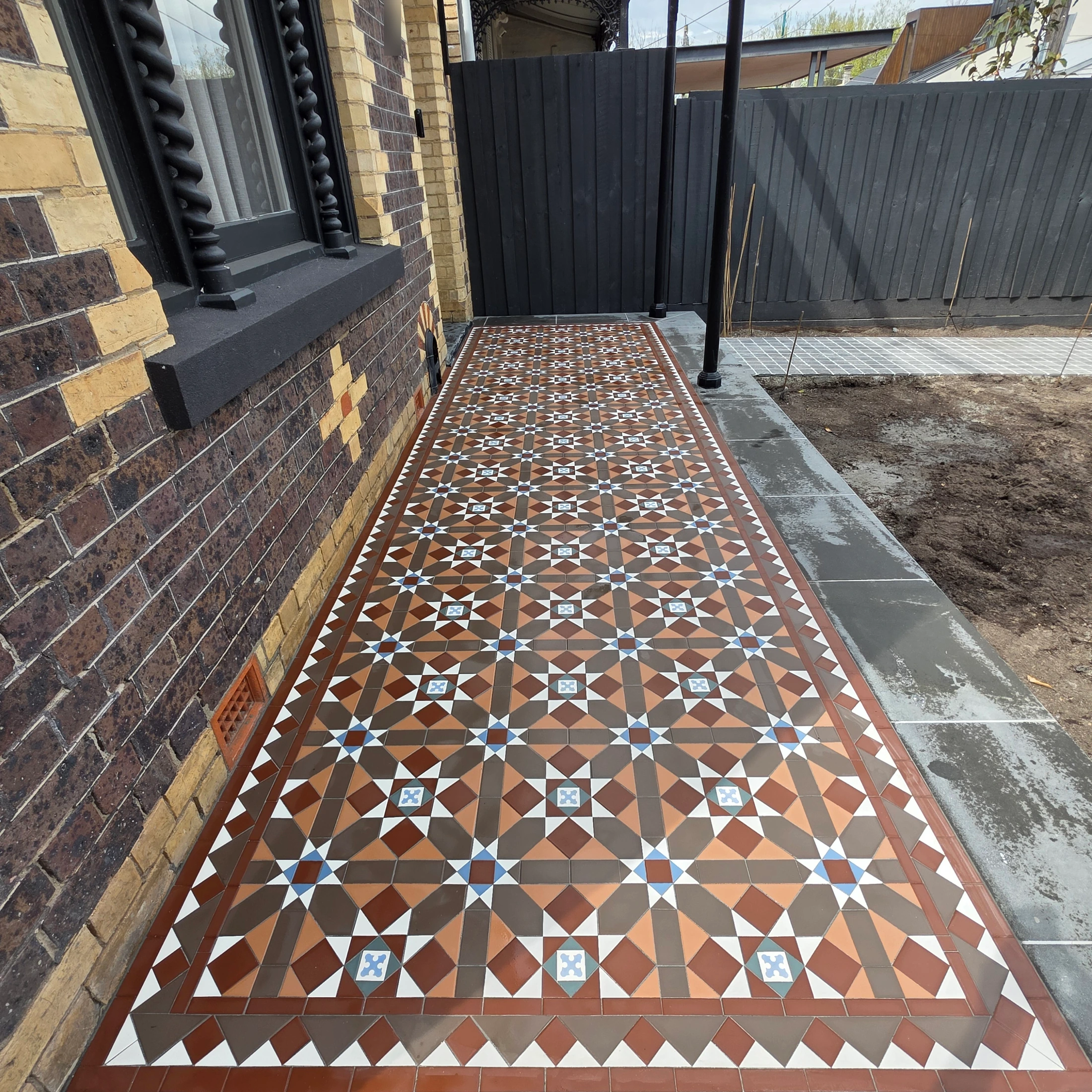
Reading Coburg North's architectural context
Merri-bek's North of Bell Street heritage study identifies several Merlynston areas in Coburg North as locally significant inter-war residential precincts. The cited character includes consistent house forms and detailing, detached siting, open front gardens and low front fences. The Station Heights Estate also records American Bungalow and Spanish Mission examples. These are useful design cues, not a claim that every Coburg North house shares the same period or is heritage protected.
The same locality also contains earlier fabric. The Victorian Heritage Database describes Toxteth Park as a symmetrical red-brick Victorian villa with tuck-pointed brickwork, chimneys, verandah elements and remnants of original planting. On a property with that kind of presence, a new tiled surface should be considered alongside the facade, entry sequence and existing thresholds rather than selected as an isolated pattern.
Designing paths, verandahs and floors
For a Coburg North verandah or entry path, begin with the geometry of the space: its width, steps, door position, sightlines and relationship to the front garden. Borders can clarify edges and transitions, while a restrained field pattern can sit comfortably with inter-war bungalow proportions. On an older Victorian facade, the pattern, border and edging may need a different balance so the new work does not compete with brickwork, joinery or a surviving verandah.
AHTC's design consultation can help develop a layout before supply and installation are coordinated. Existing tiled areas can be assessed for condition and retained where practical. Restoration decisions should be based on what is present at the property, including loose or missing tiles, worn thresholds, drainage interfaces and the condition of adjoining stone or render.
Check the property before external tile work
Merri-bek advises that external changes to a property in a heritage overlay require a planning permit. That does not mean every Coburg North home is affected. Before changing an external verandah, path or porch, check the property's planning controls and the relevant heritage record, then obtain independent planning or heritage advice where needed. A heritage-sensitive tile design is not the same thing as heritage authority approval.
A practical local service pathway
A useful first conversation can cover photographs, approximate dimensions, the property's architectural cues and whether the work is new installation or restoration. From there, the scope can be considered across design, tessellated tile supply, installation, restoration and stone bullnose or edging coordination. Site conditions and the particular building should guide the final specification.
Your Heritage Tiling Questions
Does every Coburg North property need heritage approval for new tiles?
No. Heritage controls are property-specific. Merri-bek says external changes to a property in a heritage overlay require a planning permit, so check the individual property's planning controls before external verandah, porch or pathway work.
Can a tessellated pattern suit an inter-war Coburg North bungalow?
It can, when the layout responds to the home's scale and details. Coburg North's documented Merlynston precincts include inter-war bungalows and other period forms, so proportion, border treatment, entry alignment and adjoining garden edges are useful starting points rather than a one-pattern-fits-all rule.
What should be considered when tiling beside an older Victorian facade?
Consider the facade's brickwork, verandah, thresholds, steps and existing garden relationship together. The Toxteth Park record shows why surviving brick, verandah and landscape elements can matter to a property's character; a site assessment can help determine whether new work should be complementary or whether existing tiles should be restored.
Can existing Coburg North tiles be restored instead of replaced?
Often the right approach depends on condition and what can be retained. Assessment can cover loose or missing tiles, worn areas, thresholds, drainage interfaces and adjoining edging before deciding between selective restoration, matching new work or a broader replacement.
Discuss Your Heritage Tiling Project
Share your location, project details and photographs using our enquiry form, or call 0433 932 711.