
Tessellated Tiles in Clapham, SA
For a Clapham home, tessellated tiles can connect a new verandah, entrance or pathway with the proportions and materials of the property. The right approach depends on the building, the area being tiled and whether existing fabric is being retained. We can discuss design, tessellated tile supply, installation, restoration and stone bullnose or edging coordination for work in Clapham.
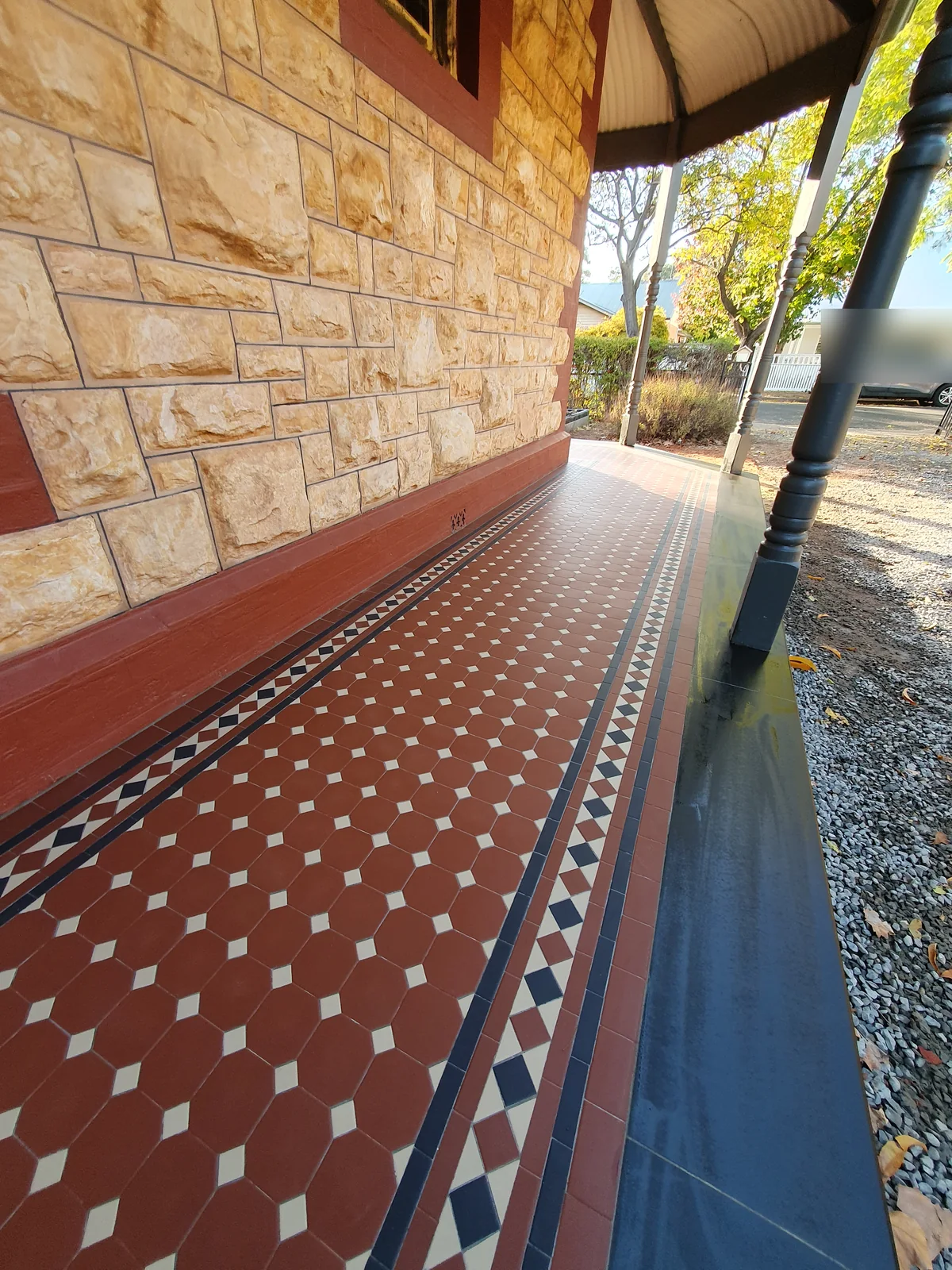
Clapham context and property-led design
Clapham sits within the City of Mitcham, a foothills council area south of Adelaide. Mitcham describes its suburbs as predominantly residential and notes a mix of historic dwellings, parks, gardens and later growth. That setting makes the individual building and its street relationship more useful design references than a single suburb-wide style label.
The City of Mitcham Heritage Survey records three Clapham places of local heritage value, including a house, a former shop and a house known as Carman Court or Dorset House. Those records show that Clapham has specific heritage evidence, while also making clear that heritage significance attaches to identified places rather than automatically to every property.
Planning a tiled entrance, verandah or pathway
Start with existing thresholds, steps, verandah posts, garden edges and sightlines from the street. A restrained border can help a pathway read as part of the house, while a more detailed field may suit a generous entrance or verandah. Layout, scale and transitions should be considered together rather than selected as isolated pattern samples.
Where an older surface remains, record its dimensions, edge treatment and relationship to adjoining materials before deciding whether to repair, extend or replace it. New work should be considered against the existing fabric, with practical attention to falls, drainage, movement and the way edges meet steps or walls.
Heritage checks before work
A heritage reference in the suburb does not by itself determine the status of a particular home. Before changing an older tiled area or a property identified in a heritage record, check the address and applicable controls through South Australia's official heritage and planning information, and ask the relevant authority what approvals or permissions may apply.
A tile consultation can then focus on the condition of the existing surface, the evidence available at the property and a suitable balance between repair, matching and new work. Heritage-sensitive design is a property-specific decision, not a promise that a particular treatment will be approved.
Tile services for Clapham homes
AHTC can discuss tessellated tile design, supply, installation and restoration for a Clapham project. The same conversation can cover matching an existing arrangement, developing a new border or field, and coordinating stone bullnose or edging where the design requires a durable transition.
Bring photographs, approximate dimensions and any information about the age or alterations of the property to an initial discussion. For a heritage-listed or otherwise controlled place, treat that material as preparation for a property-specific conversation rather than as evidence of automatic permission.
Your Heritage Tiling Questions
Does every Clapham home have heritage protection?
No. The Mitcham Heritage Survey identifies particular Clapham places of local heritage value, but that does not make every home in the suburb heritage listed. Check the individual property through South Australia's official heritage databases and the relevant planning authority before changing an older tiled area.
Can tessellated tiles suit a newer Clapham extension?
They can, when the layout responds to the extension and its relationship with the original house. Border width, pattern scale, thresholds and adjoining paving should be considered together so the new work feels deliberate without pretending to be original fabric.
Can an existing Clapham tiled path be restored rather than replaced?
That depends on the condition of the tiles, the substrate, drainage and how much of the original arrangement remains. A condition assessment and careful record of the existing pattern can help determine whether selective restoration, matching or a new section is more appropriate.
What should I prepare before discussing a Clapham tiling project?
Useful starting material includes clear photographs, approximate measurements, the intended area such as a verandah or pathway, and any heritage or planning information you already have. This helps the design conversation stay specific to the property and its existing edges.
Discuss Your Heritage Tiling Project
Share your location, project details and photographs using our enquiry form, or call 0433 932 711.