
Tessellated Tiles in Melrose Park, South Australia
Planning tessellated tiles in Melrose Park calls for a response to the individual property, not a one-size-fits-all suburb label. Whether the work involves a new verandah or pathway, a replacement floor, or ageing tiles that need careful attention, AHTC can help consider layout, tile selection, existing surfaces and the practical sequence for the site.
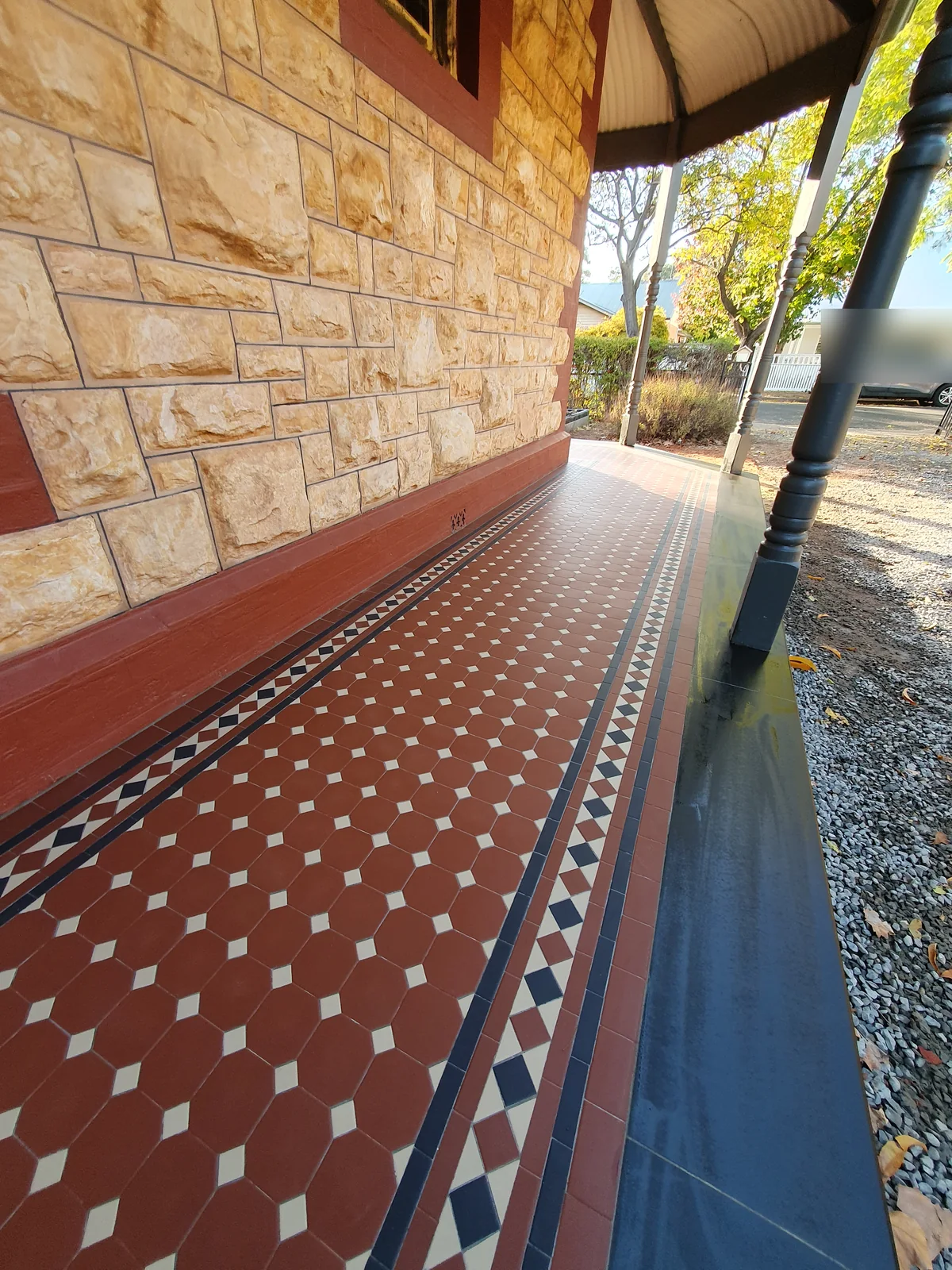
A property-led approach for Melrose Park projects
Melrose Park is part of the City of Mitcham in southern Adelaide. Council planning material identifies an employment-land investigation area in the suburb, while the South Australian planning map records an Industry/Commerce (Melrose Park) classification and different planning categories across the wider council area. That changing, mixed context makes it especially important to start with the actual building and site rather than assume that neighbouring properties share the same construction history or planning treatment.
For a home, useful early questions include whether original tilework remains, how the entry, verandah or path connects to the street, and whether new work should complement an established façade or provide a clearly contemporary transition. Where a property has a heritage listing, character-area control or other planning constraint, the owner should confirm the relevant requirements with the appropriate authority before work begins; tile advice is not heritage approval.
Design, restoration and installation choices
A measured design consultation can help establish border proportions, repeat, colour balance and transitions at doors or steps before tiles are ordered. For existing tessellated floors, the useful first step is a condition review: loose or missing tiles, movement, damp exposure, previous repairs and the relationship between the tiled surface and adjoining materials all affect whether selective restoration or a new installation is the better path.
New verandah and pathway work also benefits from site-led decisions about thresholds, falls, drainage exposure and pedestrian movement. AHTC's service scope includes tessellated tile supply, installation and restoration, with stone bullnose or edging coordination where the design calls for it. The appropriate materials and method remain dependent on the assessed project rather than a universal Melrose Park recipe.
Check the property before committing to a tile scheme
The City of Mitcham and South Australian planning material show why a suburb name is not a substitute for a property check. Confirm the title, planning controls, any heritage or character notation, access constraints and the condition of the existing surface before finalising a pattern or scope. If the project is part of a broader alteration, coordinate the tile work with the building designer or other relevant trades so levels and junctions are resolved together.
Once the site context and intended use are clear, AHTC can discuss a practical direction for supply, installation or restoration. The same approach can suit a modest entry path, a verandah edge or a larger internal floor, provided the design and technical choices are matched to the property.
Your Heritage Tiling Questions
Does every Melrose Park property have the same heritage or planning requirements?
No. Melrose Park includes different planning classifications and the council area contains varied urban contexts. Check the individual property and proposed work with the relevant authority before relying on any heritage, character or approval assumption.
Can existing tessellated tiles in a Melrose Park home be restored?
Often the answer depends on their condition and how the floor is performing. An assessment can consider missing or loose tiles, movement, moisture exposure, earlier repairs and whether a compatible replacement can be sourced before deciding between selective restoration and renewal.
What should be considered for a new tiled verandah or pathway?
Start with the route, thresholds, steps, drainage exposure and the relationship to the façade. Border scale, repeat and edging should then be developed around the actual dimensions and intended use rather than chosen from a generic pattern alone.
Can tile supply and installation be planned together?
Yes. Coordinating the design, tile selection, quantities, setting-out and installation sequence can reduce avoidable changes, while the final approach should follow the assessed site and the surrounding building work.
Discuss Your Heritage Tiling Project
Share your location, project details and photographs using our enquiry form, or call 0433 932 711.