
Tessellated tiles in Balnarring
Balnarring's small township setting on the Mornington Peninsula calls for tile choices that sit comfortably with coastal village character, established gardens and the property's own architecture. Authentic Heritage Tiling Co can help with tessellated tile design consultation, supply, installation and restoration, including stone bullnose or edging coordination where it suits the layout. The right approach depends on the existing surface, exposure, access and the relationship between the home, verandah and garden.
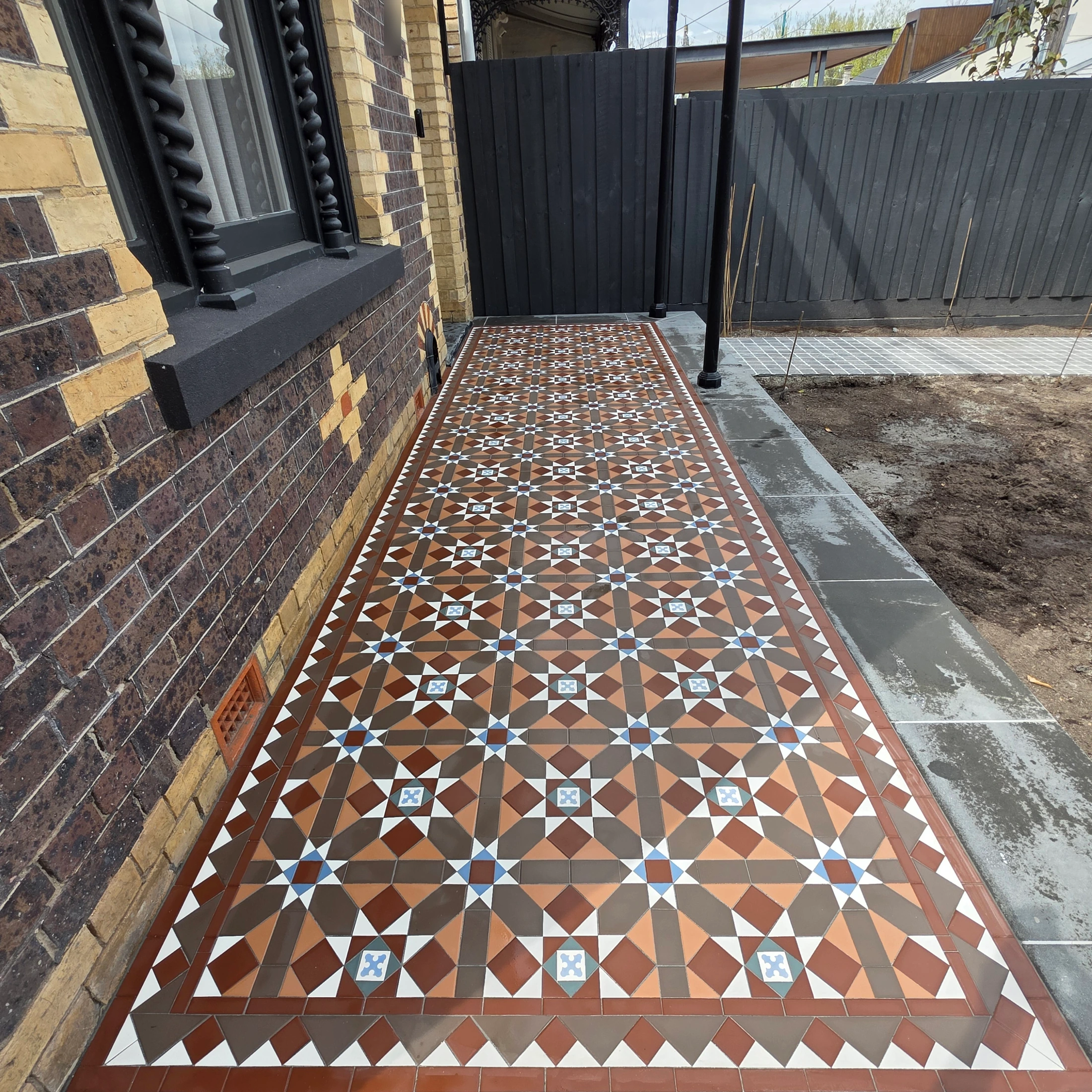
Tiling that responds to Balnarring's township setting
Mornington Peninsula Shire describes Balnarring as a small township in a rural setting near Western Port Bay, with green wedge land and native vegetation important to its wider setting. That does not make every property the same, but it is useful context when considering how a new tiled threshold, verandah or path should meet the garden and street.
For a Balnarring project, begin with the building rather than a presumed period label. Look at the roof and facade proportions, existing entry details, garden scale, sightlines and the way weather reaches the proposed tiled area. A restrained border, carefully proportioned field and compatible edging can support the architecture without making a new surface look artificially old.
Verandahs, paths and transitions
Balnarring's planning guidance places value on pedestrian-facing interfaces, articulated buildings, landscaping and a coastal village character. On a verandah or front path, those ideas translate into practical design questions: where the walking line falls, how a border meets a step, how water is shed, and whether the finish remains legible from the approach.
A tile layout should be coordinated with thresholds, door swings, drainage, existing paving and any stone bullnose or edge treatment. Outdoor exposure, salt-laden air, dirt carried from gardens and changing light can all affect the choice of pattern, finish and maintenance approach. A site review is preferable to assuming that one substrate or installation detail suits every Balnarring property.
Restoring existing tiles or planning a new surface
Where original or older tessellated tiles remain, document the pattern, dimensions, colour relationships, edge conditions and areas of loss before deciding what to replace. Cleaning, selective repair and sympathetic new work are different decisions, and the most appropriate balance depends on what survives and how the area is used.
For a new installation, the same discipline helps avoid a generic result. Design consultation can test scale, border rhythm, transitions and edging against the home and landscape. Where a property is affected by a heritage overlay or another planning control, confirm the applicable requirements with the relevant authority before works proceed; a tiling service is not a heritage approval.
A considered starting point for a Balnarring project
Useful project information includes photographs of the existing area, approximate dimensions, the intended use, access conditions and whether the work is a restoration or a new design. This allows the pattern, supply, installation sequence and any restoration questions to be considered together.
The Mornington Peninsula's character guidance recognises that built form, vegetation and topography work together. A tile design should therefore be judged in its actual setting, not only as a sample on a bench. The existing Balnarring service page can be used to begin a conversation about design consultation, tessellated tile supply, installation, restoration and coordinated edging.
Your Heritage Tiling Questions
Can tessellated tiles suit a Balnarring verandah or front path?
They can, provided the design and installation are considered for the particular building, exposure, drainage, access and garden setting. A consultation can review proportions, pattern, thresholds and edging rather than assuming that an indoor layout will transfer directly outdoors.
Should an older Balnarring tiled area always be replaced?
No. Existing tiles should be assessed first. Recording the surviving pattern, condition, areas of loss and edge details can help distinguish cleaning, selective repair, careful matching and full replacement as separate options.
What should be considered for a new tile design in Balnarring?
Consider the home's proportions, the proposed use, weather exposure, drainage, garden relationship, walking line, thresholds and any stone bullnose or other edging. Balnarring planning guidance also places emphasis on coastal-village character, landscaping and pedestrian-facing interfaces.
Do Balnarring tiling works need council approval?
Requirements depend on the property, the scope of work and applicable planning controls. The Balnarring Village provisions include specific buildings-and-works requirements, while heritage overlays and other controls may also matter. Check the relevant planning information for the property with Mornington Peninsula Shire before proceeding; tile design or installation advice is not approval advice.
Discuss Your Heritage Tiling Project
Share your location, project details and photographs using our enquiry form, or call 0433 932 711.