
Tessellated Tiles in Portsea, Victoria
Portsea projects can involve very different architectural starting points, from the Peninsula's limestone tradition to inter-war and post-war holiday houses. Tessellated tile design, supply, installation and restoration can be considered around the individual property's proportions, existing fabric, coastal setting and transitions to steps, paths or verandahs.
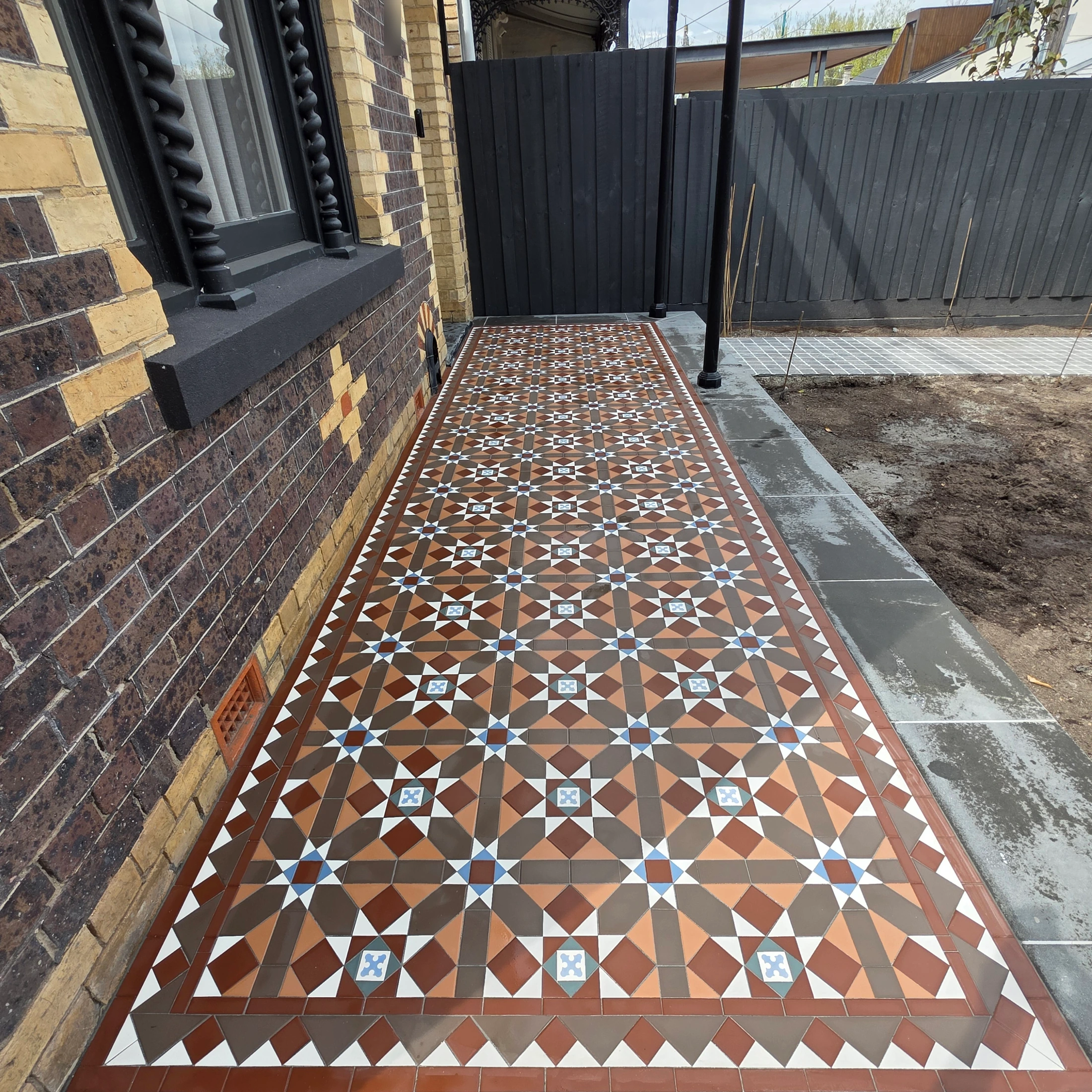
A coastal setting with more than one architectural language
Mornington Peninsula heritage research describes Portsea's earlier limestone construction tradition and its later role as a holiday destination. The same research records inter-war and post-war holiday houses, including modernist buildings with deliberately different plans, roof forms and relationships to vegetation. That variety is a reason to begin with the property rather than assume one Portsea pattern or period treatment.
For a limestone or masonry frontage, a tessellated layout may need to sit comfortably with strong wall texture, existing steps and the visual weight of the entrance. A timber holiday house or a more open modernist setting may call for a quieter border, a carefully scaled field or a transition that does not compete with the building's geometry. These are design questions to resolve through the site's proportions and surviving details, not suburb-wide rules.
Design, supply, installation and restoration
A design consultation can address pattern scale, colour balance, border sequence and the relationship between a tiled verandah, entry or pathway and the surrounding facade. Tessellated tile supply and installation can then be coordinated with the selected layout, access conditions, levels and the way the finished surface meets steps, garden edges or other paving. Stone bullnose or edging coordination may be relevant where a robust, clearly finished edge is required.
Where tiles already survive, an assessment should distinguish sound original fabric from loose, damaged or altered areas before replacement is considered. Matching involves more than colour: motif proportions, border order, grout lines, edge conditions and the amount of retained material all affect the result. Restoration, selective repair and new complementary work should remain separate options until the existing surface and its setting are understood.
Check the particular property before work begins
Mornington Peninsula Shire's review identifies selected Portsea places for heritage protection, but a citation for one property is not evidence that every Portsea home is listed or controlled in the same way. If a property is affected by a Heritage Overlay or another planning control, the applicable schedule and proposal determine what information or permission may be required.
The planning scheme lists possible heritage application material such as a heritage impact assessment, a heritage management plan, a structural report or landscape information, depending on the proposal. Owners should confirm the current controls and seek the appropriate independent advice before altering significant fabric. A tile consultation can support design and condition discussions, but it is not a planning approval.
Your Heritage Tiling Questions
Can tessellated tiles suit a Portsea limestone or masonry entrance?
They can, provided the pattern scale, border and edge treatment are developed around the frontage, steps and existing masonry. A site-led review helps avoid imposing a decorative layout that competes with the building's materials or proportions.
Should an existing Portsea tiled surface be restored or replaced?
Start with an inspection of the surviving tiles, pattern, edges and setting. That can help separate selective repair and matching from areas where new work or replacement is more appropriate.
Are all Portsea properties subject to the same heritage controls?
No. The Mornington Peninsula heritage review identifies selected places and precinct-related controls, but a particular property's status and applicable requirements must be checked separately with the relevant authority. The architectural evidence for one listed or assessed place should not be applied automatically to every home.
What should be considered for a Portsea verandah or pathway layout?
Consider the available width, approach direction, border proportions, thresholds, levels, drainage interfaces, exposure and the way the finish meets stone, masonry, timber or garden edges. These practical details help the pattern read clearly and perform appropriately at the property.
Does a Portsea heritage review citation mean tile work is automatically approved?
No. Heritage research identifies significance and may inform planning controls; it does not grant approval for proposed work. Confirm the current property-specific controls and any required application pathway before proceeding.
Discuss Your Heritage Tiling Project
Share your location, project details and photographs using our enquiry form, or call 0433 932 711.