
Tessellated tiles and heritage tiling in Sorrento
Sorrento's tile work sits within a layered coastal townscape. The Sorrento Historic Precinct includes commercial, residential, cliff-top and foreshore settings, while current local guidance pays close attention to streetscapes, views, vegetation, setbacks and the relationship between buildings and the street. AHTC can help with design consultation, tessellated tile supply, installation, restoration and stone bullnose or edging coordination, with the right response shaped by the individual property and the proposed work.
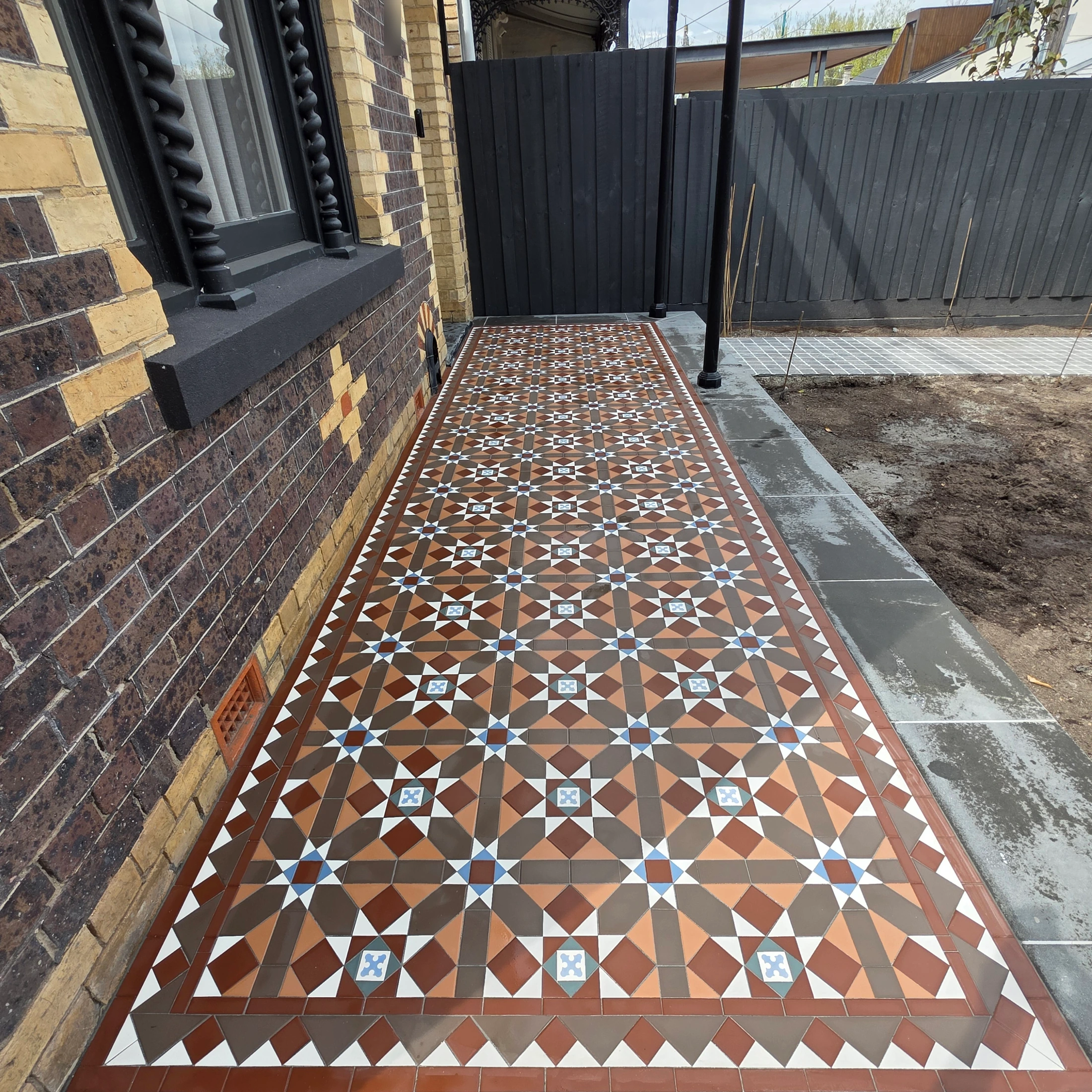
A layered historic and coastal setting
Sorrento is a locality within Mornington Peninsula Shire, on the peninsula southeast of Melbourne. Its current historic-precinct guidance does not treat the town as one uniform architectural scene. It distinguishes commercial, cliff-top, foreshore and residential contexts, each with different relationships to views, streets, vegetation, buildings and public movement.
For a new entry, verandah or pathway, those differences make the immediate frontage important. A tile pattern should be considered alongside the building's scale, the setback, the approach from the street and any existing garden, fence, masonry or steps. A broad period label is less useful than reading the actual property and its neighbours carefully.
Design cues from Sorrento's precincts
The Sorrento guidelines call for new work to respond positively to the location, height, mass, materials and external appearance of existing development. They also refer to verandahs, wide footpaths, Victorian and Edwardian shopfront characteristics, limestone buildings, low front fencing, roof form, planting and established setbacks in particular parts of the precinct.
These are useful context cues rather than a prescription for one tile pattern. A restrained border may help define a long path, while a smaller field or carefully proportioned transition may sit more comfortably at a compact entrance. Colour and geometry should be tested against the existing walling, joinery, stone, garden and street edge instead of being selected from a generic period assumption.
Check the property before changing existing fabric
The Shire identifies the Sorrento Historic Precinct as its most extensive heritage precinct, but that does not mean every Sorrento property has the same listing or controls. A Heritage Overlay may affect demolition, construction, external alteration, painting or repairs that change the appearance of a place, and other overlays may also apply.
Before removing an older tiled surface or altering a frontage, check the current planning map and the relevant property or precinct citation. Where heritage controls may apply, the Shire advises owners to seek pre-application heritage advice. Tile design and restoration guidance can support the project brief, but it is not planning permission or heritage-authority approval.
Heritage places since European settlement — Mornington Peninsula ShireHeritage Overlay and Planning Permits — Mornington Peninsula ShireHeritage studies — Mornington Peninsula Shire
Plan the threshold, pathway and edge as one composition
Sorrento's guidance repeatedly connects buildings with their public-facing setting: setbacks, front gardens, vegetation, views, low fencing, pedestrian movement and the relationship between houses and the street. For a tiled path or verandah, the threshold, steps, drainage falls and edge should therefore be reviewed together rather than treated as separate decorative decisions.
Design consultation can establish the pattern, border and colour balance before supply and installation are coordinated. Stone bullnose or edging may be considered where the site and surrounding construction call for a defined edge. The dimensions, substrate and junctions remain site-specific; no single installation detail should be assumed from the suburb name.
Restoration starts with understanding what remains
Where earlier tiles survive, begin by recording the existing pattern, border, colour relationships, condition and connection to adjoining fabric. Retention, selective repair, careful matching or a complementary new section may each be appropriate depending on what is present and what the property requires.
The Sorrento setting makes restraint particularly valuable around views, established planting, historic buildings and streetscape transitions. A considered restoration approach should preserve useful character where feasible while keeping the new work legible and technically suited to the actual entry, verandah or pathway.
Heritage places since European settlement — Mornington Peninsula Shire
Your Heritage Tiling Questions
Does every Sorrento property have the same heritage controls?
No. Sorrento contains a substantial historic precinct, but controls depend on the individual property, precinct and applicable overlays. Check the current Mornington Peninsula Planning Scheme map and relevant citation before planning external changes.
What local details can inform a Sorrento tessellated tile design?
The current precinct guidance highlights streetscape scale, setbacks, verandahs, views, planting, low front fencing, limestone buildings and the relationship between buildings and the street. These can inform proportion, border treatment and transitions, but the final design should be measured to the individual property.
Can tessellated tiles suit a Sorrento pathway or verandah?
They can be considered for either setting, provided the layout responds to the available width, steps, thresholds, drainage, adjoining garden and street relationship. Sorrento's different precinct contexts mean a commercial frontage, foreshore-edge property and residential entrance may need different design responses.
Should I check with the Shire before changing older tiles in Sorrento?
If the property may be within a Heritage Overlay or another controlled area, check the current planning information before work begins. The Shire advises heritage place owners to seek pre-application heritage advice, and the applicable requirements depend on the property and proposed scope.
Can an existing Sorrento tiled surface be restored rather than replaced?
An assessment can consider the surviving tiles, pattern, condition and adjoining fabric before deciding whether retention, selective repair, matching or complementary new work is appropriate. The property-specific heritage context should be checked before removal or external alteration.
Discuss Your Heritage Tiling Project
Share your location, project details and photographs using our enquiry form, or call 0433 932 711.