
Tessellated Tiles in Carrington, NSW
Carrington's harbour-edge setting and older working-port fabric call for a considered approach to tiled floors, verandahs and pathways. Authentic Heritage Tiling Co can help with design consultation, tessellated tile supply, installation, restoration and stone bullnose or edging coordination for projects in Carrington and the wider Newcastle area.
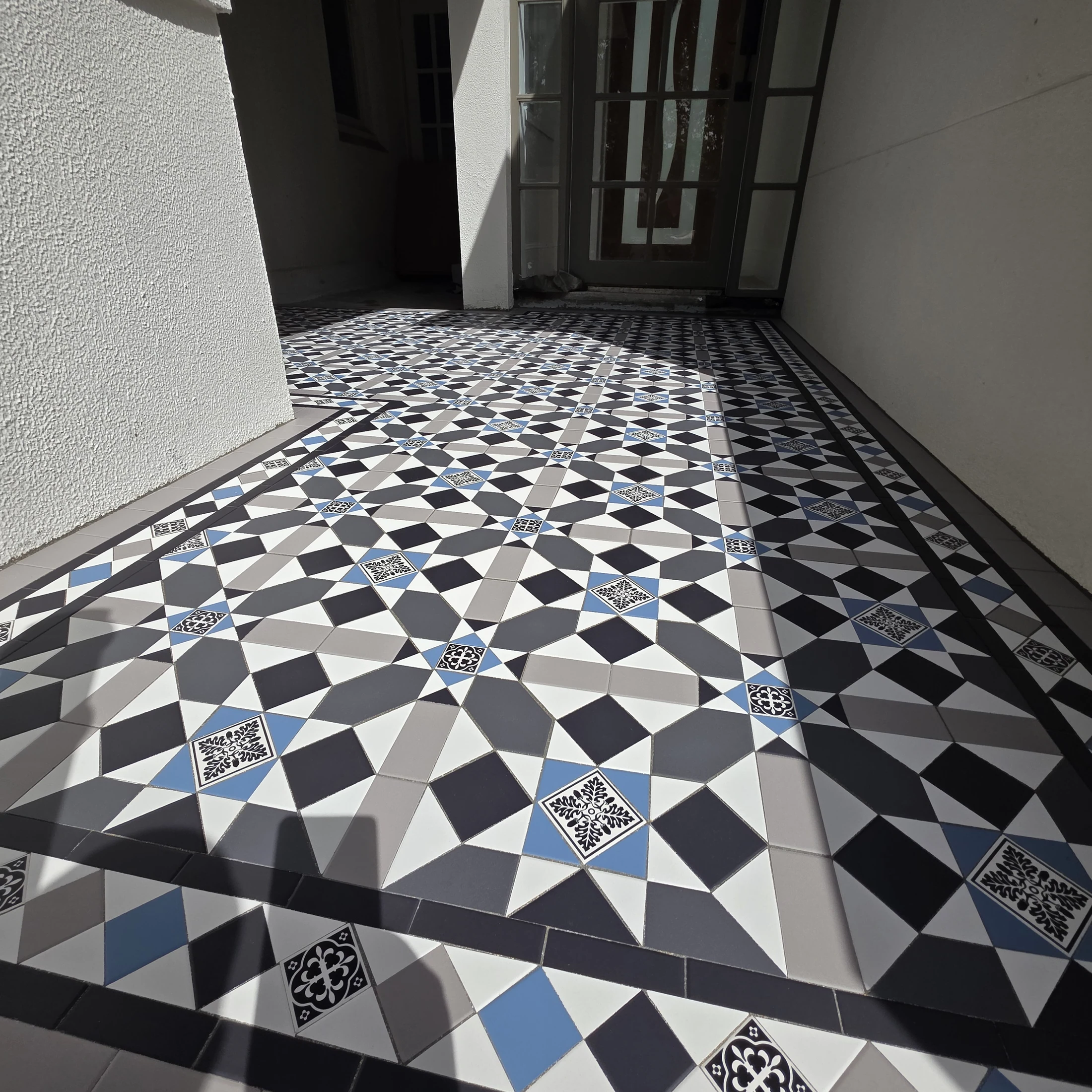
Tiling for Carrington's harbour-edge setting
Carrington is a distinct Newcastle suburb shaped by the Hunter River, Throsby Creek and a nineteenth-century street grid. The City of Newcastle describes a place where working-port history, older homes, commercial premises and a renewed Young Street environment sit together. That mix makes the surrounding building context important when selecting a tessellated pattern, border and transition detail.
For a verandah, entry or pathway, the design should respond to the proportions of the existing frontage and the way the space meets the street. A restrained border or a carefully matched geometric layout can support an older elevation without making an unsupported claim about its date or heritage status. Where a property has existing tiles, assessment of surviving colour, pattern, edges and soundness should come before deciding what to retain or replace.
Plan around the property, not a generic recipe
Carrington is low-lying and its local planning material identifies flood, drainage and soil considerations. Those site conditions can affect access, falls, transitions and the practical sequencing of outdoor work, so the proposed finish and installation approach should be confirmed after looking at the actual site rather than assumed from the suburb name.
Newcastle's heritage information separates listed items, conservation areas, archaeological sites and Aboriginal cultural heritage places. A property-led review can help identify whether additional advice or a planning check is appropriate; heritage-sensitive design does not itself mean that every Carrington property is listed or that approval is automatically required.
Tessellated tile services for Carrington projects
The work may begin with pattern and colour design for a new entry, verandah or pathway, or with an assessment of an existing tiled area. Supply and installation can be coordinated around the selected layout, while restoration focuses on preserving useful original fabric where that is practical. Stone bullnose or edging coordination can help resolve exposed borders and changes in level with a finish suited to the space.
Share the locality, the type of area and photographs through the existing enquiry form so the project can be discussed on its own dimensions, access and existing materials.
Your Heritage Tiling Questions
Does every Carrington property need a heritage approval for tessellated tiling?
No. Heritage status is property-specific. Check the relevant City of Newcastle heritage listings and maps for the property, and obtain project-specific planning advice where the proposed work or site requires it.
Can existing tessellated tiles in Carrington be restored?
Often the first step is an assessment of the existing tiles, including pattern, colour, edges, loose areas and the condition of the supporting surface. The appropriate balance between retention, selective repair and new work depends on what is found at the property.
What should be considered for a Carrington verandah or pathway?
Consider the frontage proportions, the relationship to the street, border and edge details, transitions at thresholds, drainage and access. Carrington's low-lying harbour setting means the site should be reviewed rather than applying a universal installation assumption.
Can a new pattern suit an older Carrington home?
Yes, when the layout is designed in response to the building and its setting. Pattern scale, border width, colour balance and the connection to existing steps or thresholds can create a coherent result without claiming that every home shares the same period or style.
Discuss Your Heritage Tiling Project
Share your location, project details and photographs using our enquiry form, or call 0433 932 711.