
Tessellated Tiles in Maitland, NSW
For a Maitland home, the right tessellated tile scheme needs to suit the building, the setting and the way the space is used. We can help with design consultation, tessellated tile supply, installation, restoration and stone bullnose or edging coordination for floors, verandahs and pathways across the Hunter region. Where a property sits in or near a documented heritage context, begin with the existing fabric and confirm any property-specific planning requirements before work is specified.
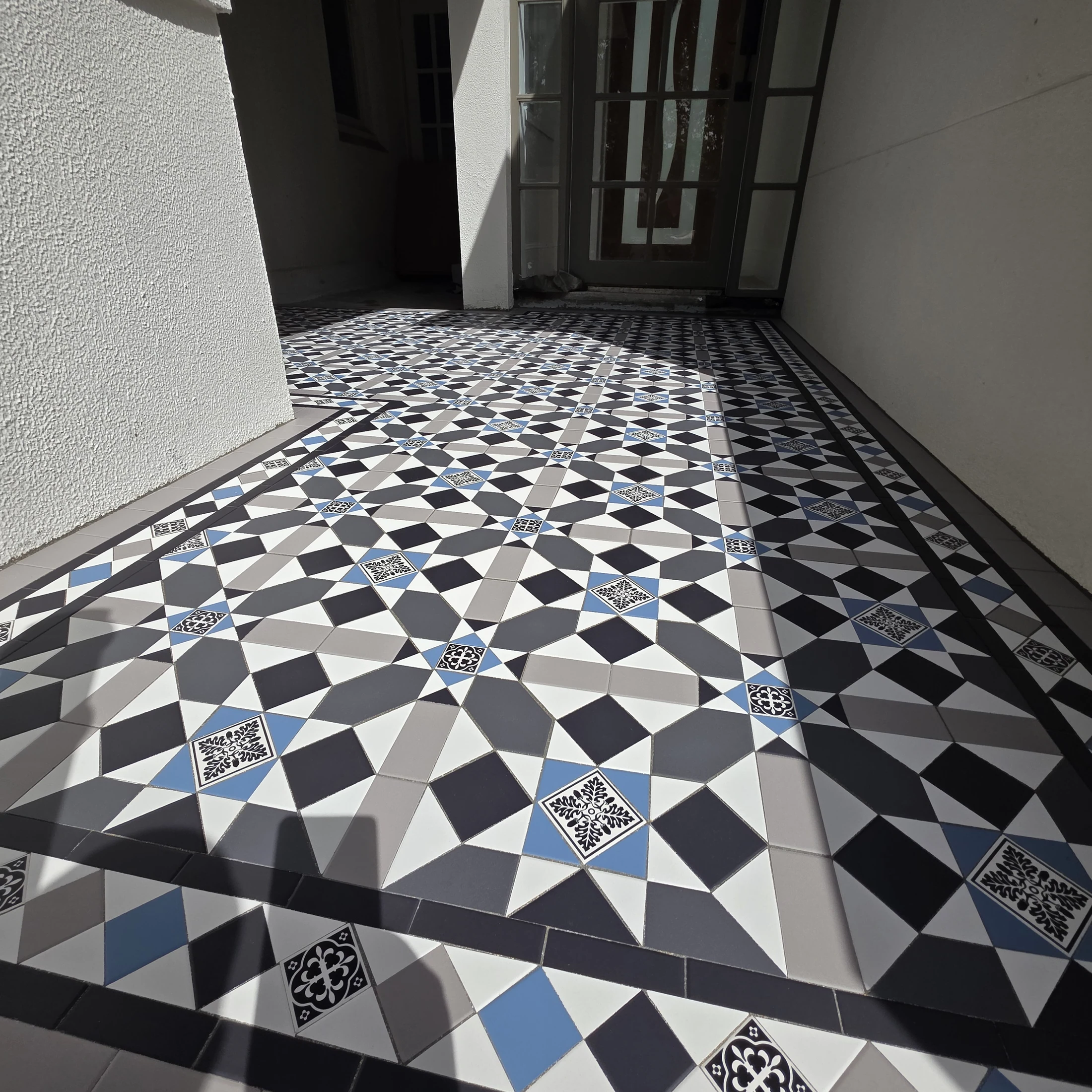
Designing with Maitland's historic streetscapes in mind
Maitland's architectural context is not uniform, but several local areas have a strong relationship between street pattern, building scale and surviving historic fabric. Council guidance describes Central Maitland's grid, intact High Street character and varied early-to-mid-nineteenth-century commercial, civic, religious and residential buildings. East Maitland retains an early town-plan grid, while Morpeth has an ordered Georgian-period plan and a distinct river and agricultural setting.
For a period property, a new tiled surface should be considered as part of that setting rather than as an isolated finish. Border proportions, thresholds, step geometry, colour balance and the relationship between a verandah or path and the building's front elevation can all affect the result. A contemporary scheme may still be appropriate when its scale, material choices and detailing respond carefully to the place.
These documented character areas do not mean every Maitland property is heritage-listed or located in a Heritage Conservation Area. A property-specific check is the sensible first step before altering an older floor, porch or pathway.
Tessellated tile choices for verandahs, paths and interiors
Maitland projects can call for different tile decisions depending on whether the work is a front verandah, a garden path, an entrance, an internal hall or a replacement section within an existing floor. We can work through pattern scale, border treatment, transition details and the visual relationship with masonry, painted joinery and established garden areas rather than applying one preset layout.
For exposed paths and verandahs, the design conversation should also cover falls, drainage, edges, access and how the tiled surface meets steps or adjacent paving. For an existing tessellated floor, retaining sound original work and matching the repair area may be more appropriate than replacing the whole surface. The suitable installation or restoration approach depends on what is found on site.
Check the property context before heritage-sensitive work
Maitland City Council states that development consent is required in most circumstances for work on a heritage house or property within a Heritage Conservation Area, and that some minor works require written confirmation before they begin. Council's Local Environmental Plan and Development Control Plan are the starting points for understanding the controls that may apply to a particular site.
A tiling consultation can help identify questions about existing fabric, access, thresholds, drainage and the intended finish, but it is not a substitute for council or planning advice. If your property is in or near a heritage item or conservation area, confirm the relevant requirements before ordering materials or commencing alteration work.
A regional Maitland service connection
Maitland is part of the Hunter region and is identified in NSW planning material as a regional city and strategic centre. The existing Newcastle grouping provides a useful regional service connection, but the design brief for your property should remain specific to the Maitland site, its building and its intended use.
Start with photographs, approximate dimensions and a description of whether the work is new tiling, restoration or a coordinated supply-and-installation project. From there, the design can be considered alongside the property's access, existing surfaces and local context.
Your Heritage Tiling Questions
Are all Maitland homes subject to heritage controls?
No. Maitland contains documented heritage items and Heritage Conservation Areas, but those controls are property- and area-specific. Check the property's status and the applicable Maitland planning requirements before altering an older floor, verandah or pathway.
Can tessellated tiles suit a Maitland verandah or pathway?
They can, when the layout is designed for the building and site. Border proportions, thresholds, steps, drainage, exposure and the relationship with existing masonry or garden edges should be resolved before the pattern and materials are finalised.
Should an existing Maitland tessellated floor be replaced or repaired?
That depends on the condition and significance of the surviving fabric. An assessment can distinguish sound original work from damaged or later sections and help determine whether selective restoration, careful matching or a broader replacement is appropriate.
Do I need to check with Maitland City Council before heritage-related tiling work?
Council advises that development consent is required in most circumstances for work on a heritage house or property within a Heritage Conservation Area. Some minor works may have a separate pathway, but written confirmation should be obtained where required before work starts.
What should I send for an initial Maitland tiling discussion?
Useful starting information includes clear photographs, approximate dimensions, the type of space, whether existing tiles are to be retained, and any known heritage or planning information. This helps frame the design, supply, installation or restoration discussion around the actual property.
Discuss Your Heritage Tiling Project
Share your location, project details and photographs using our enquiry form, or call 0433 932 711.