
Tessellated tiles in Beacon Hill
Beacon Hill's local landscape includes the Hawkesbury sandstone heath of Governor Phillip Lookout, while individual homes vary in age, layout and surviving finishes. For a Beacon Hill entry, verandah, pathway or interior floor, a considered tile plan starts with the property itself: how the area is used, what remains in place, and how a new pattern will meet adjoining surfaces. AHTC can assist with tessellated tile design, supply, installation and restoration, together with stone bullnose or edging coordination where it suits the project.
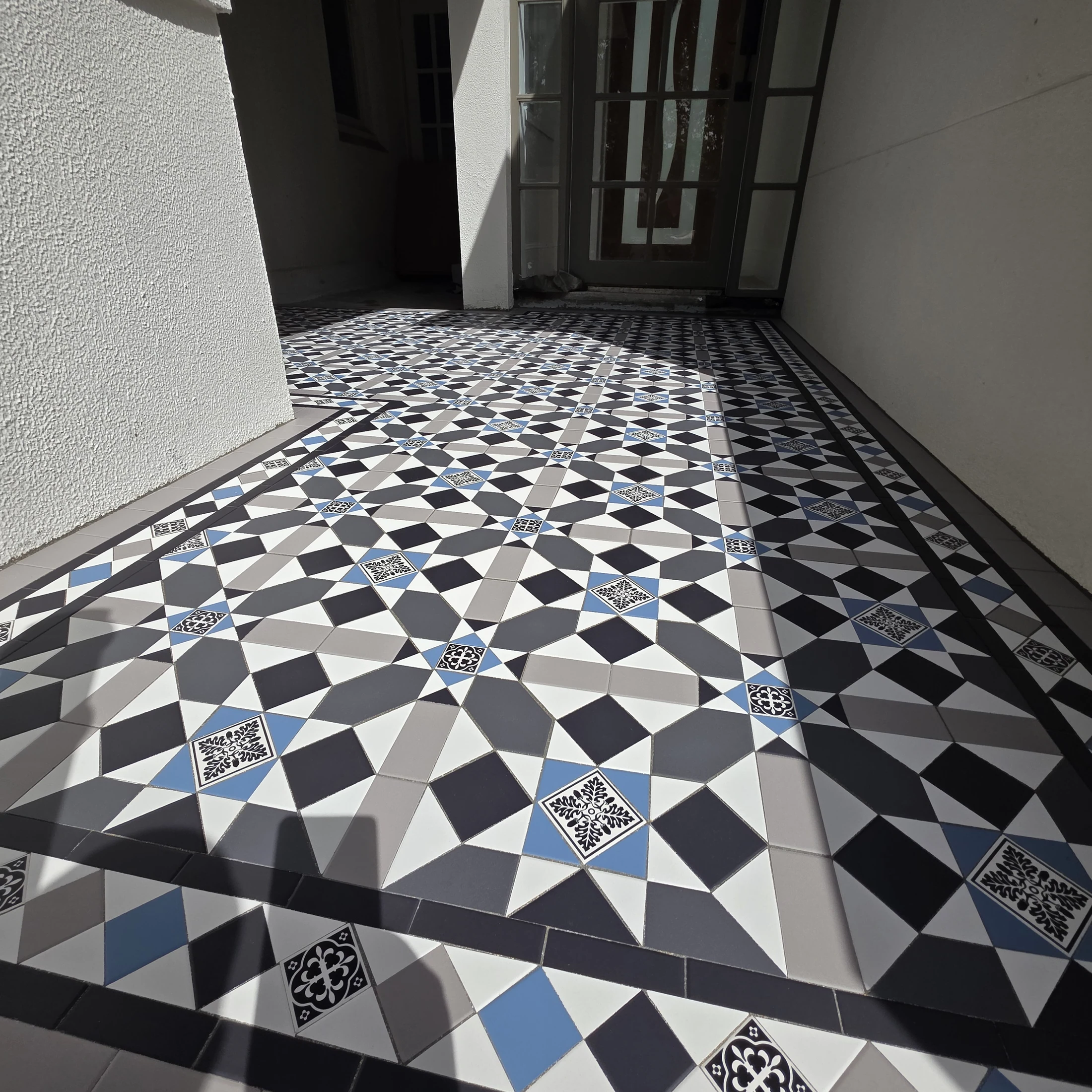
A property-led approach for Beacon Hill homes
Beacon Hill takes its name from the trigonometrical beacon installed on the summit in 1881. The council's description of the lookout records a high sandstone heath setting, but that landscape context should not be turned into a blanket architectural label for every house in the suburb.
When planning tessellated tiles here, the useful questions are practical and visual: is the work for an existing floor or a new surface, how does the entry meet the garden or driveway, and which border, threshold or edging will make the transition deliberate? Existing tiles, steps and adjacent masonry should be reviewed before a pattern or replacement scope is selected.
Governor Phillip Lookout | Northern Beaches CouncilAverage Tree Canopy Range of Suburbs in Greater Sydney | NSW Department of Planning, Industry and Environment
Design and installation for entries, verandahs and pathways
A tessellated layout can be developed around the proportions of a porch, hall, verandah or garden path rather than imposed as a generic repeat. Border width, orientation, transitions and the relationship to doors and steps all affect how the finished surface reads and how it connects to the rest of the property.
For a new installation, the site assessment should cover the existing surface, levels, drainage and access before the tile selection is finalised. AHTC can coordinate tessellated tile supply and installation, with stone bullnose or edging considered where the design and site require it.
Restoring existing tilework with care
Where older tessellated tiles remain, restoration begins with observing what is there: pattern, colour variation, edge details, previous repairs and areas of loss. Selective work may be preferable to removing sound original fabric, but the right scope depends on condition and access rather than on the suburb name alone.
A property should be checked through the relevant planning and heritage information before substantial external or fabric-changing work proceeds. The NSW State Heritage Inventory explains how to search heritage records and notes that council or agency information should be checked for currency. Heritage listing or approval status should never be assumed from a home's appearance or location.
Plan the next step for your Beacon Hill property
Useful starting information includes photographs of the existing surface, approximate dimensions, the suburb, and whether the brief is restoration, a new tessellated layout or coordinated supply and installation. That allows the design conversation to focus on the actual entry, verandah, pathway or floor rather than a generic period assumption.
For property-specific heritage or planning questions, confirm the current position with Northern Beaches Council or the relevant NSW authority before work begins. A tile consultation can then respond to the confirmed site conditions and the finish you want to retain or create.
Wards and suburbs — Northern Beaches CouncilState Heritage Inventory — NSW Government
Your Heritage Tiling Questions
Can tessellated tiles suit a Beacon Hill verandah or pathway?
They can be considered for a verandah, entry or pathway when the layout, levels, drainage, access and adjoining surfaces are assessed together. The proportions and transitions should be designed for the individual property rather than copied from a generic suburb style.
Does living in Beacon Hill mean my home is heritage-listed?
No. A suburb location does not by itself establish heritage listing or approval requirements. Check the relevant property and current council or NSW heritage records before assuming that controls apply; the NSW State Heritage Inventory provides search guidance.
What should I provide when asking about tile restoration in Beacon Hill?
Photographs showing the whole area and close details, approximate dimensions, access information and any known history of repairs are useful. Mention whether the priority is retaining existing fabric, matching a missing section or planning a new adjoining surface.
Can edging or bullnose details be coordinated with the tile layout?
Yes, stone bullnose or edging can be considered alongside the pattern, thresholds and exposed edges where it suits the site. The appropriate detail depends on the design, levels and adjoining materials identified during the project review.
Discuss Your Heritage Tiling Project
Share your location, project details and photographs using our enquiry form, or call 0433 932 711.