
Tessellated Tiles in Collaroy
Collaroy is a coastal Northern Beaches suburb with a documented local story that reaches from the beach's maritime history to later suburban development. For a Collaroy home, tessellated tiles can be planned as part of the property's setting: a new verandah or pathway may need a clear relationship with the house, while an older tiled surface may call for careful assessment before repair or replacement. AHTC can help with design consultation, tessellated tile supply, installation, restoration and stone bullnose or edging coordination.
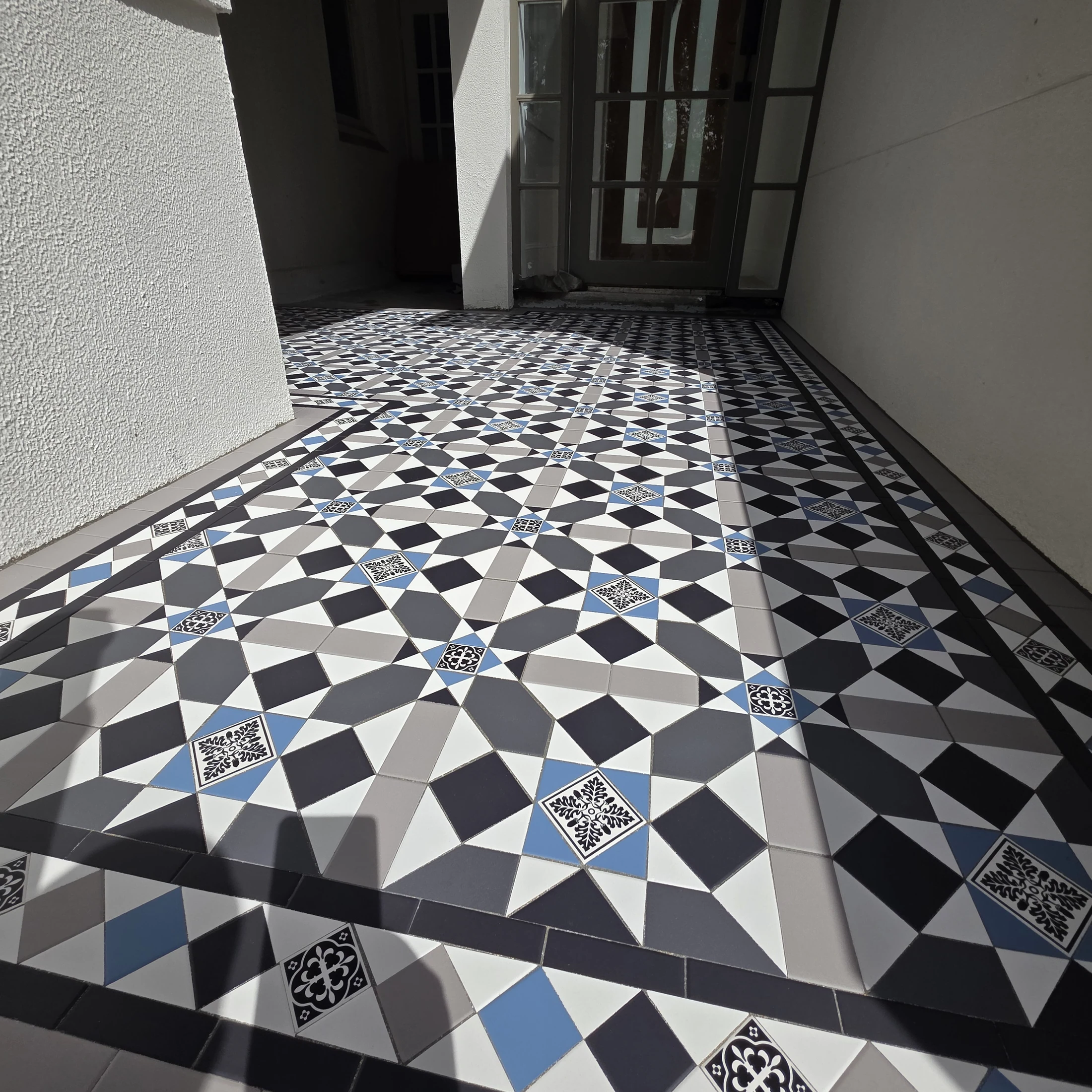
A local setting with a strong coastal story
Northern Beaches Council describes Collaroy as a distinctive coastal suburb and has documented how the locality changed from sand to suburb. The name itself carries a maritime connection: the NSW maritime heritage record explains that Collaroy and Collaroy Beach were named after the paddle steamer Collaroy, which ran ashore there in 1881.
That history does not prescribe one tile pattern for every property. It does suggest a useful starting point for design: consider how the entry, verandah, path or terrace meets the character of the house and the openness of its coastal setting, rather than selecting a pattern in isolation.
Collaroy: A brief history | Northern Beaches CouncilCollaroy PS | NSW Environment, Energy and Science
Plan the pattern around the property
For a new tiled area, begin with the room or outdoor threshold it needs to serve. Border proportions, doorway alignment, path width, stair transitions, drainage falls and the relationship between tile and stone edging should be resolved together. On an exposed verandah or pathway, the proposed finish also needs to be considered alongside weather, surface safety and maintenance.
Where an existing floor or border survives, record its dimensions, colours, motif and edge conditions before deciding what to retain. Matching is more reliable when the original layout and surrounding fabric are treated as evidence rather than assumed from a broad period label.
Check heritage significance before changing older fabric
A historic-looking property is not automatically a listed heritage item. Northern Beaches Council advises owners to check Schedule 5 and the relevant planning controls, and to consider nearby heritage items or conservation areas before planning changes. Its guidance describes sympathetic development through details such as form, materials, window placement, setback, colour and setting.
If a property is listed, or sits near a listed item, obtain the appropriate heritage and planning advice before removing an original tiled surface. Council also points owners to the State Heritage Inventory and its Local Studies collections when researching significance. AHTC's role is to assess the tile work and coordinate a suitable design, supply, installation or restoration approach; it is not to provide council approval.
FAQs about heritage — Northern Beaches CouncilInformation for owners of heritage items | Northern Beaches CouncilLocal history | Northern Beaches Council
Craftsmanship for verandahs, paths and existing floors
A considered tessellated-tile project brings design and making together. Consultation can cover pattern development, tile selection, setting-out and transitions before installation begins. Restoration work starts with the condition of the existing tiles and the surrounding surface, so the treatment can be tailored to what is actually present rather than applying a universal repair recipe.
For a Collaroy project, useful preparation includes photographs of the tiled area, approximate dimensions, the property's age if known, and any information about previous repairs or heritage listing. This gives the design and installation discussion a practical base while leaving property-specific planning decisions with the relevant authority.
Information for owners of heritage items | Northern Beaches CouncilFAQs about heritage — Northern Beaches Council
Your Heritage Tiling Questions
Does every older Collaroy home require heritage approval for tessellated tiling?
No general assumption should be made. Northern Beaches Council says owners should check Schedule 5 and the relevant LEP and DCP, especially for a heritage item, a property in a conservation area or work near a listed item. The applicable requirements depend on the property and the proposed work.
How can I research the history of a Collaroy property before restoring tiles?
Northern Beaches Council's Local History Collections include photographs, maps, plans, oral histories, council archives and conservation plans. Its Local Studies staff can also assist with local-history research, and Council directs owners to the NSW State Heritage Inventory when researching a heritage item.
Can new tessellated tiles suit a contemporary Collaroy renovation?
Yes. The design should be developed around the property's proportions, entry or verandah arrangement, pathway geometry and material palette. If the property or a nearby item has heritage significance, Council's guidance says changes should respect the relevant form, materials, setting and other character-defining details.
What should I provide when asking about a Collaroy tile project?
Share photographs of the existing or proposed area, approximate dimensions, the intended use, access information and any known heritage or planning details. For restoration, include close images of damaged, loose or missing tiles so the condition and possible next steps can be discussed accurately.
Discuss Your Heritage Tiling Project
Share your location, project details and photographs using our enquiry form, or call 0433 932 711.