
Tessellated tile services in Seaforth
Seaforth sits within Northern Beaches Council's Manly Ward and is recognised by Council as a local centre. For a Seaforth home, the right tessellated tile approach depends on the setting: a sheltered verandah, a sloping garden path, a waterfront-facing edge or an existing floor each calls for careful attention to proportion, drainage, transitions and the condition of the supporting surface. AHTC can help with design consultation, tessellated tile supply, installation and restoration, including stone bullnose or edging coordination where it suits the project.
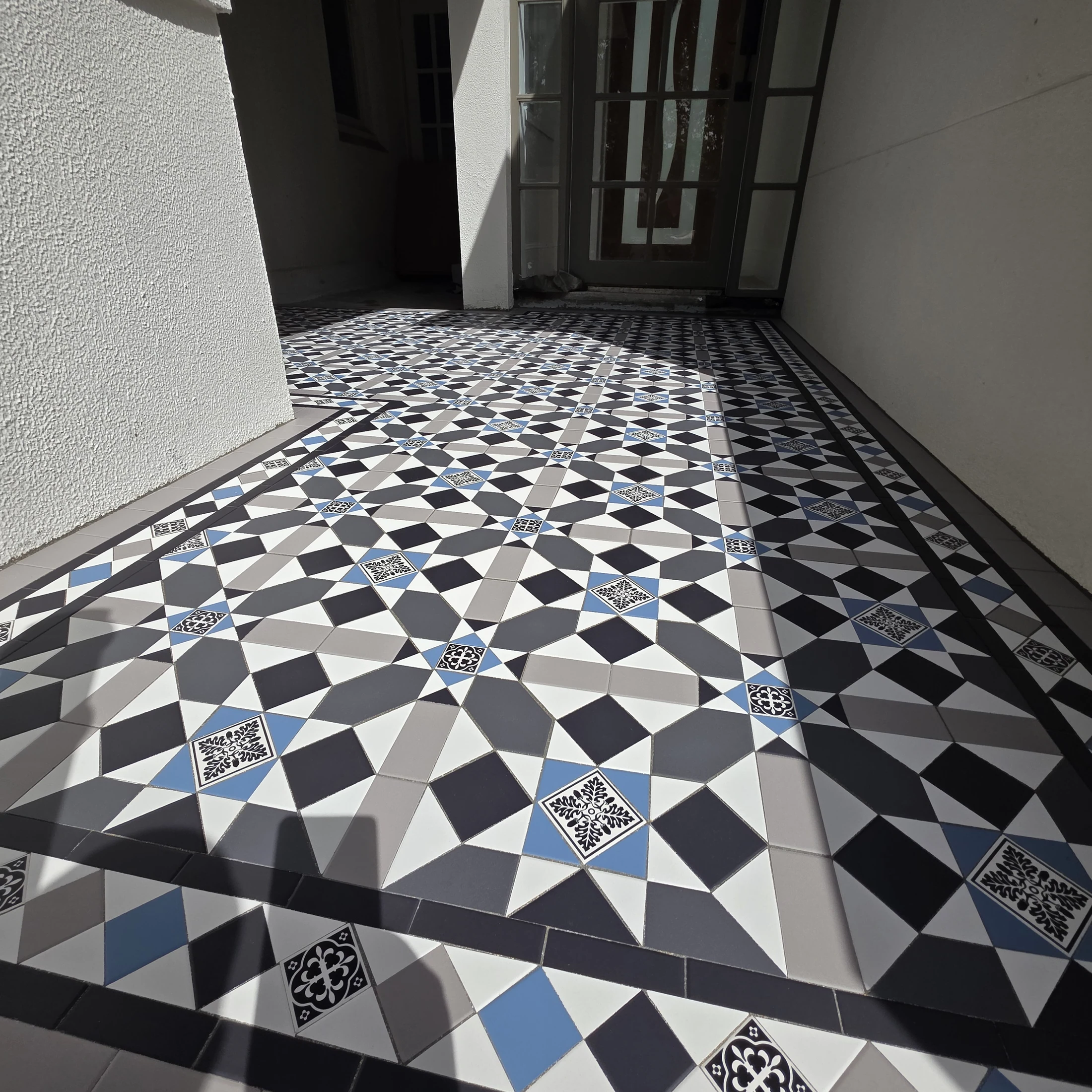
Designing for Seaforth's harbour-side setting
Seaforth's local evidence includes steep contours, a public link from Seaforth Crescent towards Middle Harbour, sandstone waterfront fabric, bushland and views towards the Spit and South Head. On a sloping site, a tile layout should be considered together with thresholds, falls, water movement and safe transitions rather than treated as a flat pattern alone.
For a pathway or verandah, the design conversation can begin with the home's approach, the width of the route, the relationship between border and field pattern, and how the finish meets steps, garden edges or existing stone. These are project decisions, not a universal Seaforth formula; an on-site review helps determine what can be retained and what needs new work.
Plan of Management for Community Lands — Laura Street Reserve and Wharf, SeaforthLocal centres — Northern Beaches Council
Check the property before changing original fabric
Seaforth-specific planning material identifies Dalwood Home as a local heritage item and records archaeological items around The Spit. That does not make every Seaforth property heritage-listed. Before replacing an older tiled floor, front path, steps or edging, check the property's listing, any conservation-area status and the relevant Northern Beaches planning controls.
Council guidance says that sympathetic work may retain a property's significant form, materials, window placement, setback and colour. It also says that work on a non-listed property near a heritage item should respect the nearby item's style, scale, setback, materials, finishes, colours and setting. AHTC's role is to help assess the tile and stone work; heritage or planning advice remains property-specific and should be confirmed with Council where required.
Appendix E — Heritage, NSW Planning PortalFAQs about heritage — Northern Beaches CouncilAppendix F — Draft Northern Beaches LEP 202X
Retain, match or renew with a clear brief
Where original tessellated tiles survive, start with condition, extent and significance. Retention and carefully matched repair may be preferable to replacing an intact field, while a new section may need its own clearly resolved relationship to the existing work. Colour, scale, border rhythm and the way the pattern meets a wall or step can make the difference between a considered addition and a disconnected patch.
For new work, design inspiration can come from the home's proportions and the path or verandah it serves rather than from an assumed suburb-wide style. A restrained border, a legible entry sequence and a coordinated stone bullnose or edge can give a sloping or waterfront-facing approach a durable visual order without claiming that every Seaforth house shares the same period or architectural character.
FAQs about heritage — Northern Beaches CouncilPlan of Management for Community Lands — Laura Street Reserve and Wharf, Seaforth
Plan the work around access, edges and existing surfaces
A useful brief records what is already there, where people walk, how the surface meets doors and steps, and which edges need protection or rebuilding. On a steep site, access and sequencing matter as much as the tile selection. On an older floor, lifting or cutting may expose conditions that cannot be responsibly specified from photographs alone.
Bring photographs, approximate dimensions and any available planning or heritage information to the design discussion. This keeps the pattern, supply, installation and restoration decisions connected from the beginning.
Plan of Management for Community Lands — Laura Street Reserve and Wharf, SeaforthFAQs about heritage — Northern Beaches CouncilExempt development — NSW Planning
Your Heritage Tiling Questions
Are all Seaforth homes heritage-listed?
No. The available planning material identifies particular heritage and archaeological items, including Dalwood Home and items associated with The Spit, but that does not establish a suburb-wide listing. Check the individual property and applicable Northern Beaches planning controls before altering older fabric.
Can a non-listed Seaforth property still need heritage consideration?
Yes. Northern Beaches Council advises that work on a non-listed property near a heritage item should respect the nearby item's style, scale, setback, external materials, finishes, colours and setting. Whether approval or a heritage report is needed depends on the property and proposed work.
What should I consider for tessellated tiles on a sloping Seaforth pathway?
Begin with the route's falls, thresholds, steps, drainage, access and edge conditions, then resolve the field pattern and border around those constraints. Seaforth's documented steep contours and harbour connections make a site-led assessment more useful than applying a standard layout.
Can existing tessellated tiles be restored rather than replaced?
Often the first question is whether the original work can be retained, repaired or matched in selected areas. The answer depends on condition, extent, substrate and the significance of the existing fabric. A design and condition review can separate repairable areas from sections that need new work.
Discuss Your Heritage Tiling Project
Share your location, project details and photographs using our enquiry form, or call 0433 932 711.