
Tessellated tiles in Willunga
Willunga's historic township and surrounding properties call for tile decisions that respond to the building, not a generic period label. Authentic Heritage Tiling Co can help with tessellated tile design consultation, supply, installation and restoration, including verandahs, paths and selected interior floors. The right starting point is the property's existing fabric, proportions, access and intended use.
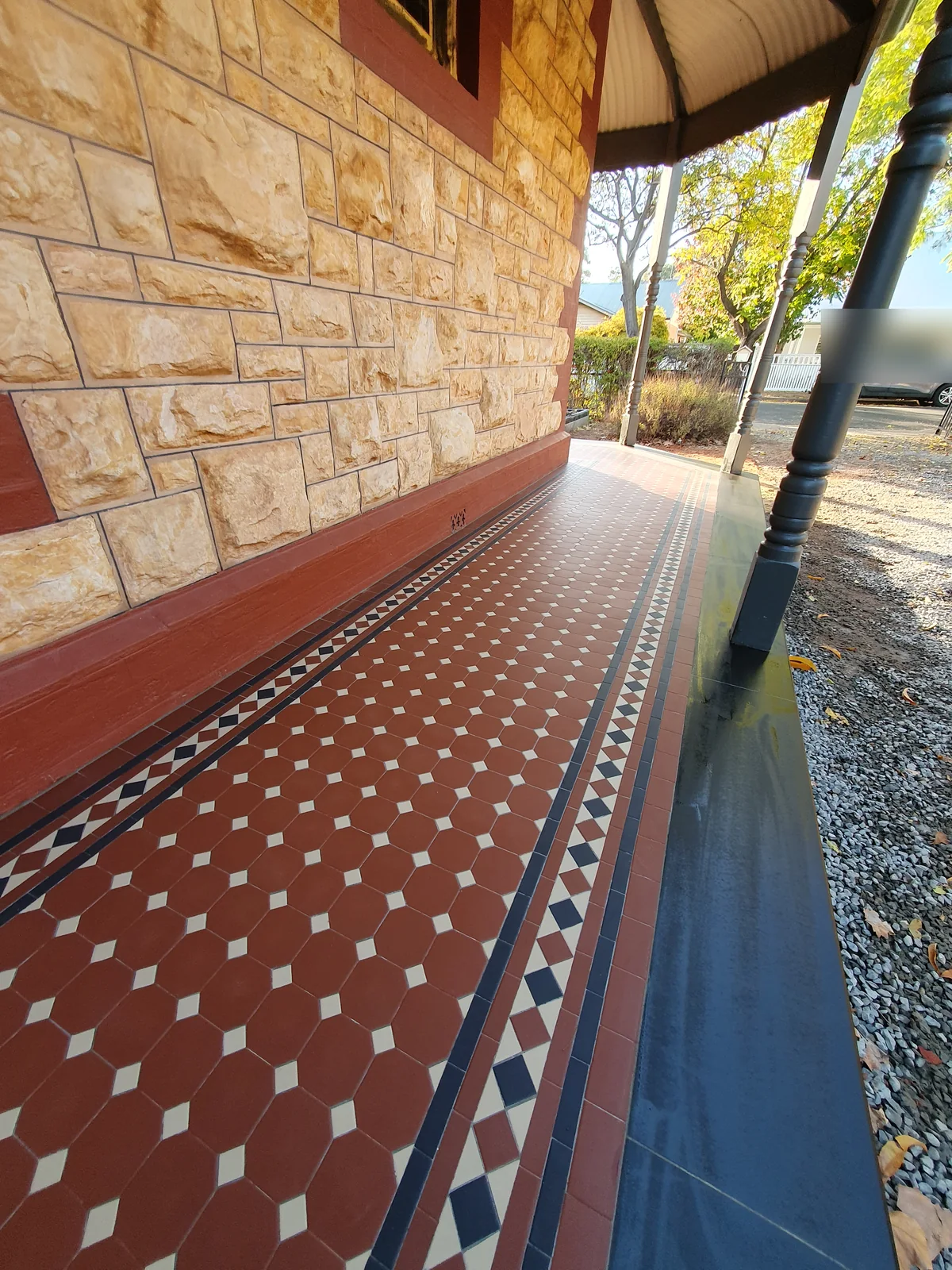
A historic Willunga setting
The Willunga District Heritage Survey records a historic conservation zone and identifies the streetscapes around St Peters Terrace, the High Street commercial area and Church Road as important parts of the township's character. The South Australian heritage database also records a wide range of local and State heritage places in Willunga. That history is useful context, but it does not mean every home is heritage-listed or that every renovation follows the same requirements.
The same survey describes early Willunga buildings as largely unembellished vernacular forms, including distinctive cottages and farmhouses. For a tiled verandah, entry or pathway, a restrained layout can often sit more comfortably with that character than an over-elaborate pattern. Any design should still be based on the individual building and the work area rather than assumed from the suburb name.
Designing tessellated tiles for a Willunga property
For a period cottage or farmhouse, review the threshold, verandah width, path geometry and sightlines before settling on a tessellated layout. Border scale, field proportions and transitions should support the building's existing lines. Where a newer addition meets an older section, a clear junction may be more honest than forcing a pattern across both eras.
Willunga planning character material refers to simple rectilinear forms, steeply pitched roofs, restrained detailing and materials including slate, bluestone, sandstone, brick or masonry in the relevant town-centre context. These references can inform a measured palette and edge treatment, but they are not a universal specification for private properties.
Restoration, replacement and new work
Existing tiles can contain useful evidence about original colours, borders, thresholds and the way a floor was altered over time. A condition review should distinguish sound original fabric from later repairs before deciding whether to retain, selectively repair or replace sections. New supply and installation can be planned to sit alongside retained work where a compatible transition is achievable.
South Australian heritage guidance recommends respecting historical context, understanding the impact of change and preferring reversible work where possible. If a property or its setting is heritage-listed, or if planning controls apply, confirm the relevant requirements with the appropriate authority before work begins. A tiling consultation can inform design and sequencing but does not provide heritage approval.
Tessellated tile services for Willunga
The service conversation can cover pattern development, tessellated tile supply, installation planning, restoration and stone bullnose or edging coordination. For a Willunga verandah or path, practical review should include falls, thresholds, drainage exposure, the relationship to existing masonry and how the finished edge meets adjoining surfaces.
For an indoor floor, the focus may instead be on the surviving pattern, room proportions, movement between old and new areas and a repair approach that does not erase useful evidence. Share photographs and dimensions through the existing enquiry form so the brief can be considered before a site-specific recommendation is made.
Your Heritage Tiling Questions
Does every Willunga home need heritage approval for tessellated tiles?
No. Willunga contains listed heritage places, but listing status is property-specific. Check the South Australian Heritage Places Database and the relevant Planning and Design Code or council advice for the particular property before altering a listed place or its setting.
What tile approach suits a Willunga cottage or farmhouse?
Start with the building's proportions, existing thresholds, verandah or path geometry and any surviving tile evidence. A restrained field and border can be appropriate in some settings, but the pattern, colour balance and edge detail should be developed for the individual property rather than assumed from a general period label.
Can existing Willunga tessellated tiles be restored rather than replaced?
Often the first step is to assess what remains, including loose, cracked, missing or later-repaired sections. Retention, selective repair and replacement are different options, and the suitable balance depends on condition, significance, availability of compatible tiles and the intended use of the space.
Are tessellated tiles suitable for a Willunga verandah or pathway?
They can be considered for a verandah or pathway when the layout, falls, thresholds, exposure and edge conditions are properly reviewed. The design should respond to the building and site, with drainage and transitions resolved before installation rather than treated as afterthoughts.
Discuss Your Heritage Tiling Project
Share your location, project details and photographs using our enquiry form, or call 0433 932 711.