
Tessellated Tiles in Rosehill, NSW
Rosehill's setting beside the Duck River and its layered history—from the subdivision of Elizabeth Farm to the racecourse and the manufacturing activity that followed—call for tile choices that respond to the property rather than a generic period label. For a verandah, entry, pathway or interior floor, begin by identifying what is original, what has been altered and how the proposed work will meet the existing building. AHTC can help with tessellated tile design, supply, installation and restoration planning for Rosehill projects.
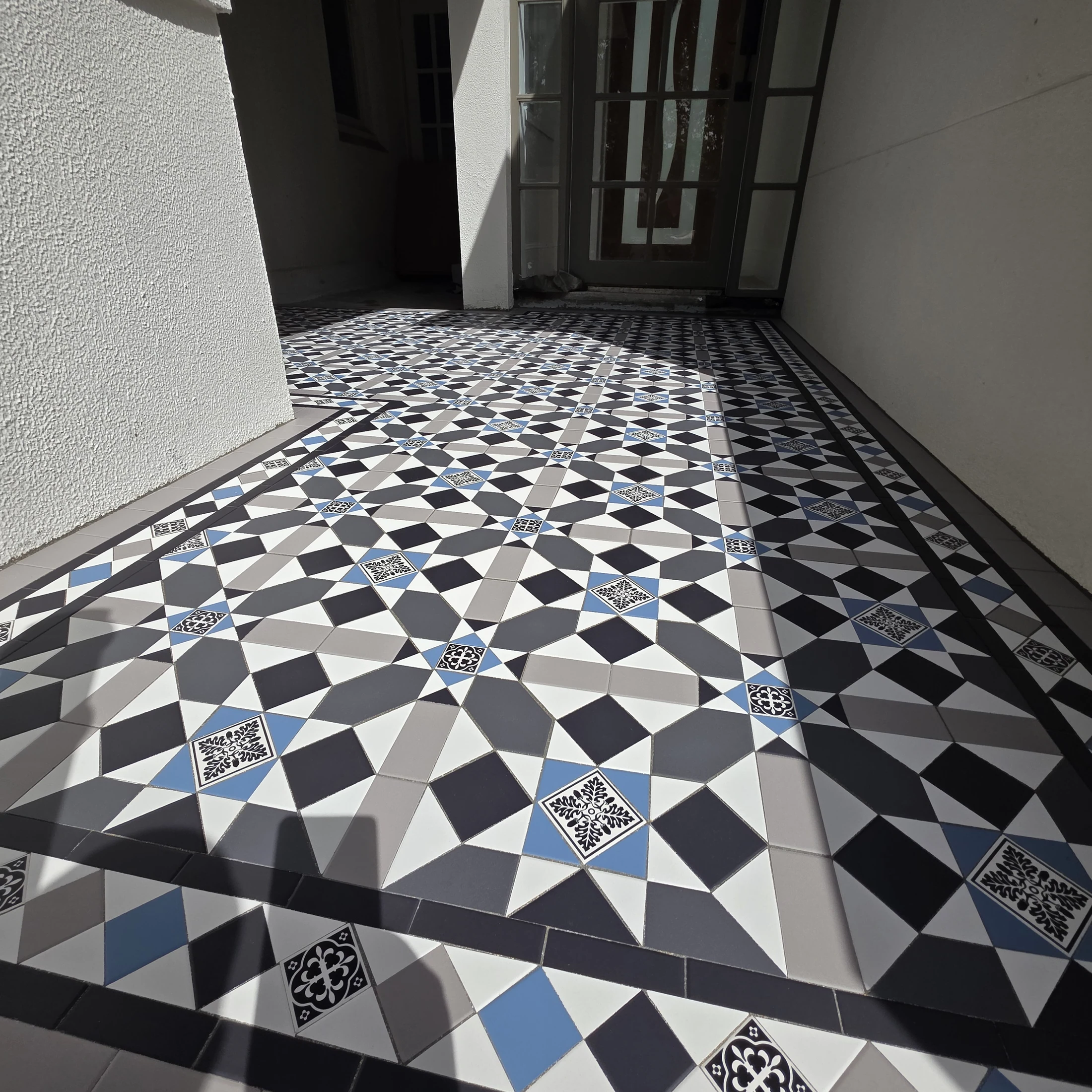
A Rosehill context shaped by river, transport and change
Rosehill borders the Duck River and developed through several distinct phases. The estate associated with Elizabeth Farm was subdivided in 1880 under the Rosehill name, while Rosehill Racecourse opened in 1885. River frontage and rail connections later encouraged manufacturing. That layered context is useful when considering a period home: the right tile layout should be read with the building's own fabric, not assumed from the suburb name alone.
A historical account also records a Wunderlich plant in Rosehill producing red tiles associated with contemporary Federation housing. This provides a meaningful local connection to tile-making history, but it does not establish that any particular home retains those products or that all Rosehill houses share a Federation character.
Design around the property you have
For an existing tiled surface, record the surviving field, borders, corners, thresholds and areas of loss before selecting replacements. Colour, scale, geometry and the relationship between the main field and border can matter as much as the tile itself. Where a new verandah or pathway is being planned, consider how its proportions, edge treatment and transition to the house will sit with the existing façade and levels.
Rosehill's changing precinct context makes a clear distinction between original-fabric work and new work especially helpful. A repair may aim to retain and carefully match what remains; a new installation can be sympathetic without pretending to be historic. The final choice should follow the property's evidence, access and exposure rather than an assumed universal recipe.
Check heritage and planning information before changing a surface
The City of Parramatta publishes heritage information and explains that its Local Environmental Plan and Development Control Plan may need to be considered when changes are proposed to heritage properties. It also notes that work affecting heritage items or properties in heritage conservation areas may require an approval pathway before work starts.
Those controls are property-specific. A Rosehill address should be checked against the current council planning and heritage information before restoration, replacement or associated building work is finalised. Heritage-sensitive tile advice is not a substitute for council or other statutory advice, and a historical association does not by itself mean a property is listed.
Make room for careful craftsmanship during change
The NSW Government's Camellia-Rosehill Place Strategy is intended to guide renewal over 20 years and addresses homes, employment, transport, open space and river access. That strategic change does not determine the character of an individual house, but it reinforces the value of documenting existing details before work begins.
Good tessellated work depends on disciplined setting-out, considered junctions and a finish that belongs to the building. Discuss the intended use, available evidence and practical conditions early so supply, installation or restoration decisions can be coordinated rather than made in isolation.
Your Heritage Tiling Questions
Does every Rosehill property have heritage protection?
No. Heritage status is property- and area-specific. The City of Parramatta publishes heritage controls and information for properties and heritage conservation areas, so check the individual address and current planning information before assuming that a listing or approval pathway applies.
Why might Rosehill's history matter when choosing tessellated tiles?
Rosehill has connections with Elizabeth Farm, the 1885 racecourse and later manufacturing. A local historical account also records tile production at a Wunderlich plant in Rosehill. These facts can inform research and design conversations, but the existing building should determine whether matching, complementary new work or another approach is appropriate.
Can an existing Rosehill tile floor be restored rather than replaced?
That depends on the condition and extent of surviving fabric. Begin with an assessment of loose, damaged or missing tiles, borders, thresholds and the surrounding surface. A restoration plan can then distinguish retainable material from areas that need carefully considered repair or new work.
Are Camellia-Rosehill planning changes the same as heritage approval for my home?
No. The NSW Government's Camellia-Rosehill Place Strategy is a strategic renewal framework and does not itself rezone land. It is separate from checking the planning and heritage controls that may apply to an individual property or proposed alteration.
Discuss Your Heritage Tiling Project
Share your location, project details and photographs using our enquiry form, or call 0433 932 711.