
Tessellated tiles in Cranebrook
Cranebrook homes can call for different tile decisions depending on the property's age, existing surfaces, outdoor exposure and the way verandahs or paths connect with the house. We can help develop a tessellated tile design, coordinate tile supply, plan installation or assess existing work for careful restoration. Where a property may be affected by heritage controls, the first step is to check the individual site's planning and heritage position rather than assume a suburb-wide rule.
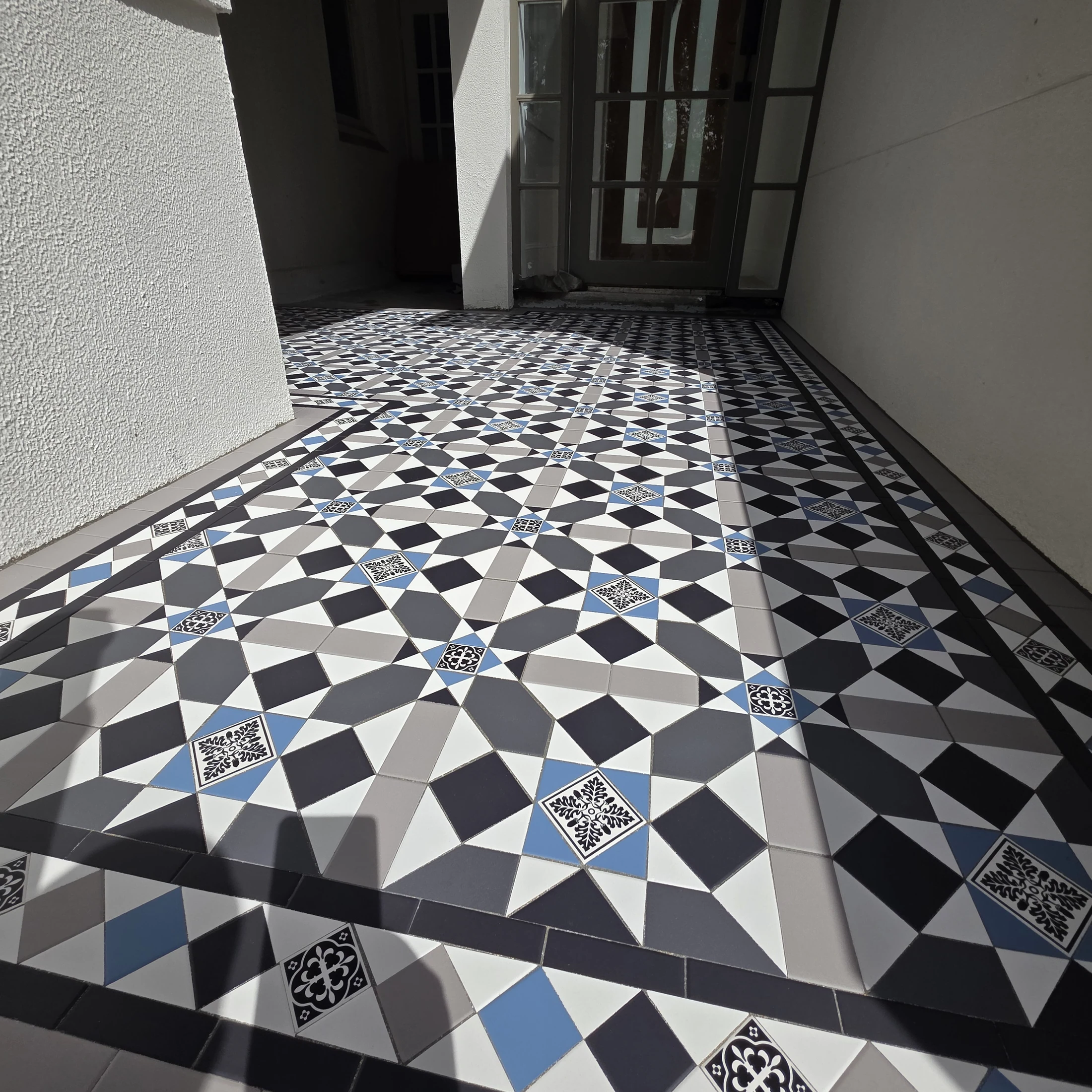
A property-led approach for Cranebrook homes
Cranebrook is part of Penrith City and the Western City District of Greater Sydney. Council and NSW planning material describe a locality shaped by open-space connections, waterways and Cranebrook Wetlands, while local neighbourhood planning highlights outdoor life, pathways and reserves. For a tiled entry, verandah or garden path, those conditions make proportion, transitions and surface drainage more useful starting points than a one-size-fits-all pattern.
A Penrith City Council study using 2006 data recorded a high proportion of separate houses in Cranebrook. That historical observation can help frame conversations about front entries, porch thresholds and outdoor circulation, but the existing house and site should decide the design. We look at the available dimensions, adjoining materials, levels and the intended character before recommending a layout or tile combination.
Designing verandahs, entries and pathways
A Cranebrook pathway or verandah may need a design that works with the home's existing lines rather than competing with them. We can discuss border proportions, repeat geometry, thresholds and how the pattern meets steps, garden edges or other paving. For new work, installation planning should account for the actual substrate, falls, access and the relationship between interior and exterior levels; no universal base or method is assumed before the site is understood.
Tile supply and installation can be considered together so the selected pattern, colours and edge details remain practical for the measured area. Stone bullnose or edging coordination may also be relevant where a path, step or verandah needs a defined finish. The appropriate scope depends on the property and the chosen design.
Restoring existing tiles with the right checks
If original or older tessellated tiles remain, assessment should begin with what can be retained. Matching surviving geometry, colour and border logic may matter more than replacing a whole area. We can discuss restoration, selective repair and compatible new sections after looking at the condition, movement, moisture and previous alterations.
Penrith City Council explains that heritage items and conservation areas are managed through applicable planning controls and that consent may be required for alterations or demolition of listed places. That is a property-specific planning question, not an assumption about every Cranebrook home. Owners should confirm the site's position with Council or an appropriately qualified heritage adviser before undertaking regulated work; tile advice does not replace that check.
Material choices for an outdoor-connected setting
Cranebrook's documented outdoor and landscape context is a useful reminder to consider how a tiled surface meets planting, shade and water movement. The Council's bush food trail project beside Ariel Crescent forms part of the Great West Walk and includes planting and educational signage. For a private project, that does not prescribe a pattern, but it supports a careful look at transitions, edges, slip considerations and maintenance where tiled areas meet gardens or paths.
A site conversation can separate the visual brief from the technical questions: whether existing tiles are worth retaining, how a new pattern should be set out, what edging is needed, and how the finished surface will be used. This keeps the design connected to the actual Cranebrook property without claiming that all homes share one architectural style.
Your Heritage Tiling Questions
Can you help with tessellated tiles for a Cranebrook verandah or front path?
Yes. We can discuss design, tile supply, installation planning and stone bullnose or edging coordination for a verandah, entry or pathway. The layout should be developed from the measured space, existing materials, levels and how the area is used.
Does a Cranebrook property automatically need heritage approval for tile work?
No automatic suburb-wide rule should be assumed. Penrith City Council advises checking whether the individual property is a listed heritage item or within a heritage conservation area, because applicable controls may require consent for certain alterations. Confirm the site's position with Council before regulated work begins.
Can older tessellated tiles be restored instead of replaced?
Often the first question is what can be retained, but the answer depends on the condition, movement, moisture, previous repairs and the availability of a compatible match. An assessment can distinguish selective repair from areas that need carefully designed new work.
What should be considered for a Cranebrook outdoor tiled area?
Consider the connection to gardens and paths, surface falls, drainage, exposure, thresholds, steps, edge details and everyday use. Cranebrook's documented open-space and waterway context makes site-specific transitions and maintenance worth discussing, without prescribing one universal construction method.
Discuss Your Heritage Tiling Project
Share your location, project details and photographs using our enquiry form, or call 0433 932 711.