
Tessellated Tiles in Alberton
Alberton's streetscape brings together single-storey villas, cottages, bungalows, terraces and rows within a documented 1860–1950 historic area. For a verandah, path, entrance or interior floor, a useful tile design begins with the property rather than a preset pattern: consider the proportions of the space, surviving details, transitions and the way new work will sit beside the building. Authentic Heritage Tiling Co. can help with design consultation, tessellated tile supply, installation, restoration and stone bullnose or edging coordination.
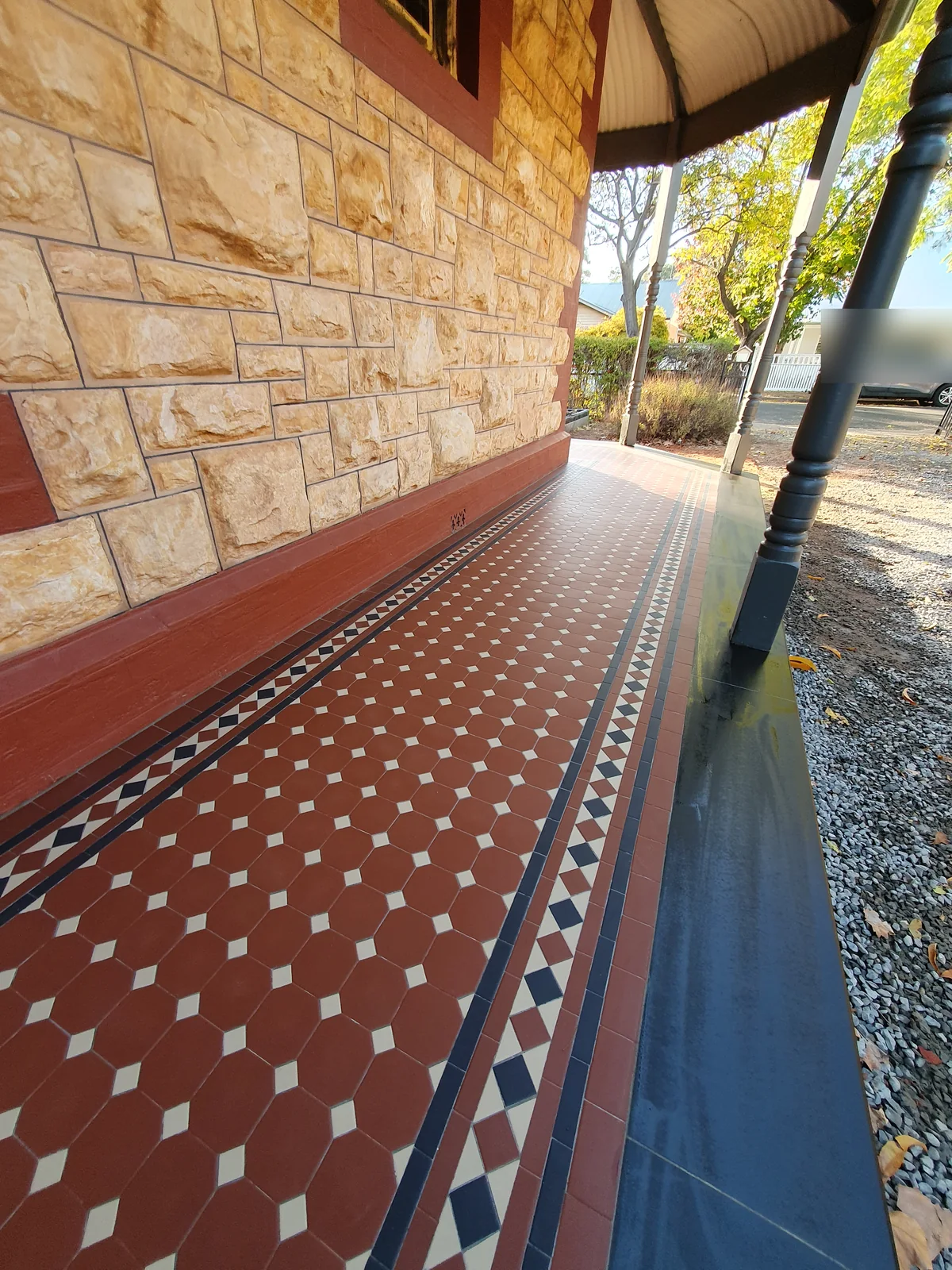
Designing for Alberton's historic streetscape
The Alberton / Rosewater Historic Area Statement records a modified grid, varied front setbacks and predominantly single-storey buildings, with villas, bungalows, cottages, terraces and rows. Those differences matter when choosing a tessellated layout: a narrow front path, a generous verandah and an internal hall each need their own border, scale and transition decisions.
Existing brickwork, stone, joinery, thresholds and fence lines can provide useful cues without turning a whole suburb into one design. A restrained palette may suit a quiet cottage approach, while a more defined border can help a larger verandah or entry read clearly. The aim is a coherent relationship between new tilework and the particular house.
Historic Area Statements and Character Area Statements: City of Port Adelaide Enfield | PlanSA
Take care with existing fabric and listed places
Alberton contains both local and state heritage places, including the station complex, former shops, community buildings and residential places. A heritage-looking street is not the same as a heritage-listed property, so the first step is to check the individual property and the proposed work rather than assume a standard approval pathway.
Where original tiles or related fabric remain, restoration may call for careful documentation, compatible repair decisions and a clear distinction between retained material and new work. For a listed place or a property within a relevant overlay, the City of Port Adelaide Enfield and the South Australian heritage resources should be consulted before commitments are made.
Heritage and historic conservation | City of Port Adelaide Enfield
A material context shaped by transport and community history
Alberton Railway Station opened in 1856 and remains a prominent local heritage reference. The council's account of its restoration describes original ceilings, bluestone stonework and internal brick walls retained alongside carefully crafted new elements. That approach is a useful reminder for tile planning: colour, edge detail and transitions should be considered with the surrounding materials, not selected in isolation.
For a new pathway or verandah, discuss exposure, drainage, levels, access and the junction with existing masonry before finalising the pattern. For an older tiled surface, an assessment can separate loose or damaged areas from fabric worth retaining and help establish whether restoration, selective replacement or a new related installation is the most appropriate direction.
Historic Area Statements and Character Area Statements: City of Port Adelaide Enfield | PlanSA
Plan the tilework around the property
A design consultation can cover pattern proportions, border treatment, tile supply, installation sequencing and the coordination of stone bullnose or edging where it is appropriate to the setting. The practical brief should account for the existing substrate, doorway levels, drainage and how the finished surface will meet steps, garden edges or other materials.
If the project involves a heritage-listed property, a historic-area overlay or surviving original fabric, allow time for the relevant property-specific checks. The local context can guide a sensitive result, but it cannot replace advice from the responsible planning or heritage authority.
Heritage and historic conservation | City of Port Adelaide Enfield
Your Heritage Tiling Questions
Are all homes in Alberton heritage-listed?
No. Alberton has an identified historic-area context and a number of individual local and state heritage places, but listing is property-specific. Check the official South Australian Heritage Places Database and seek council or Heritage South Australia guidance for the property and proposed work.
What should I consider when choosing tessellated tiles for an Alberton verandah?
Start with the verandah's proportions, the house's existing materials, the entry thresholds and the relationship to the front path or garden. Border width, pattern scale, levels, drainage and the transition to adjoining surfaces should be resolved together rather than selected as separate details.
Can original Alberton tessellated tiles be restored?
Often an assessment can identify what is sound, what is loose or damaged and what can be retained. The appropriate approach depends on the existing tiles, substrate, moisture and access, so restoration or selective replacement should be planned after inspecting the actual surface.
Does a heritage listing automatically mean tile work cannot proceed?
A listing does not by itself answer the approval question. The type and location of the proposed work, the place's listing and any applicable planning controls need to be checked with the relevant authority before work is committed.
Can tile design include stone edging or bullnose details?
Yes, stone bullnose or edging can be considered where it suits the property's proportions, levels and surrounding materials. It should be coordinated with the tile layout, steps, drainage and adjoining paving rather than added as an isolated finish.
Discuss Your Heritage Tiling Project
Share your location, project details and photographs using our enquiry form, or call 0433 932 711.