
Tessellated Tiles in Cheltenham, SA
For a Cheltenham home, a tessellated floor or pathway needs to sit comfortably with the property's proportions, frontage and existing materials. AHTC can help with design consultation, tessellated tile supply, installation, restoration and stone bullnose or edging coordination. Where a property is near a recorded heritage place or retains older fabric, the right approach starts with inspecting what is there rather than assuming a standard replacement is suitable.
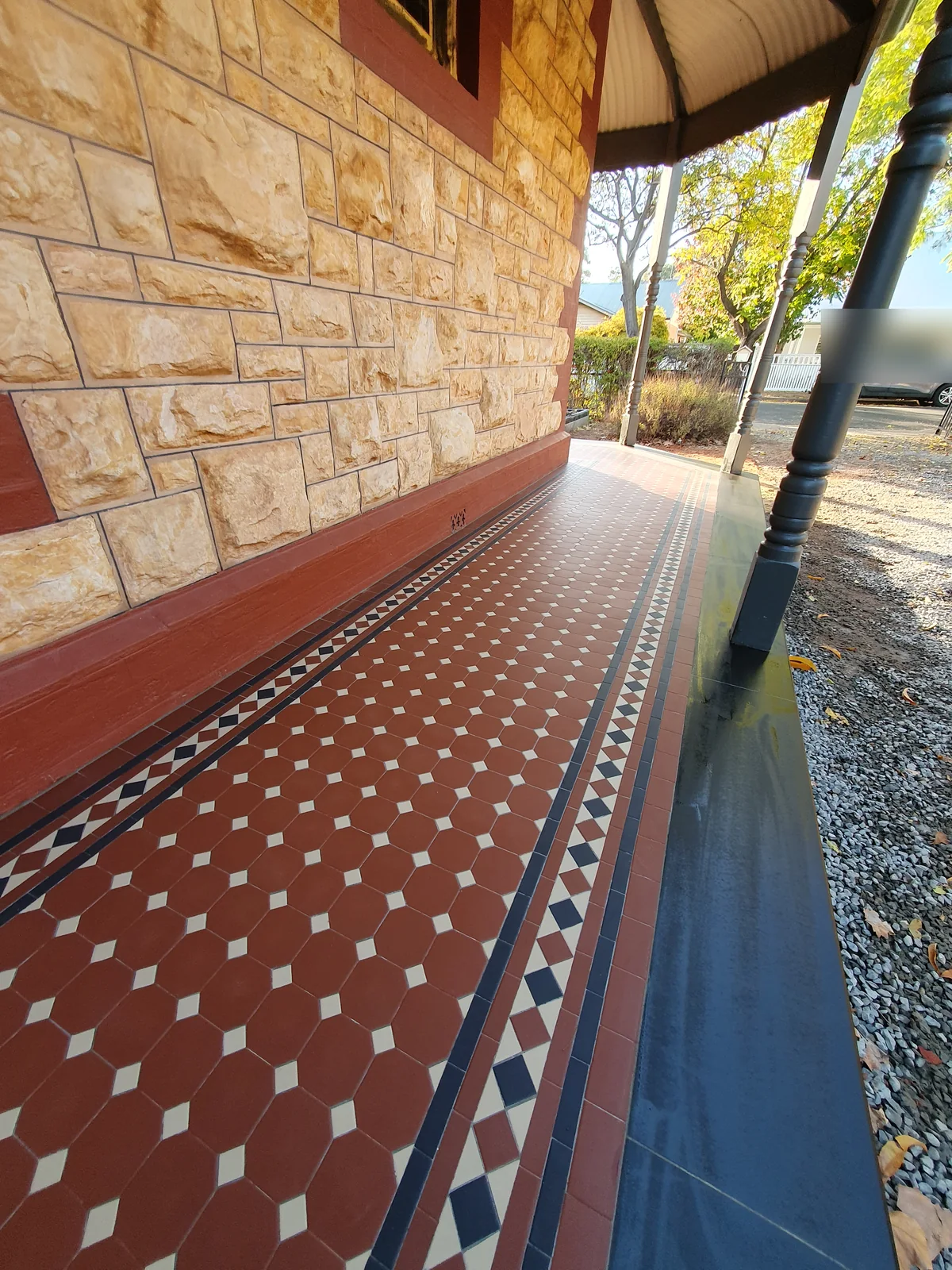
Tiling that responds to Cheltenham's established streetscape
Cheltenham was laid out as a village in the nineteenth century, and its early streets, cemetery, railway setting and later civic buildings contribute to a layered suburban context. That does not make every home heritage-listed, but it is a useful reason to consider scale, entry sequence and the relationship between a new tiled surface and the front of the property.
For a verandah, porch or front path, design decisions can include border width, repeat size, edge treatment, threshold transitions and how the pattern meets steps or garden edges. A restrained layout may suit an early cottage, while a more decorative scheme may need careful proportioning so it does not compete with the building.
The former Cheltenham Congregational Church, racecourse entrance gates and fence, and other identified places appear in the South Australian Heritage Places Database. If your property itself is listed or work may affect a listed place, check the specific record and current planning requirements before proceeding. AHTC's role is to discuss the tiling work and its design implications, not to provide heritage approval.
Restoration and new work for Cheltenham properties
Existing tessellated tiles can carry useful evidence about the original pattern, colour balance, border and wear. An assessment can separate sound areas from loose, cracked or missing tiles and help determine whether selective restoration, careful replacement or a new adjoining area is the more coherent outcome.
For new work, the surrounding architecture and practical site conditions matter as much as the pattern. Access, drainage, thresholds, exposure and the relationship between tiled areas and stone or other edging should be considered before a layout is finalised. Supply and installation can be coordinated around the agreed design rather than treated as unrelated decisions.
Check the property, not just the suburb name
A suburb can contain both ordinary properties and individually identified heritage places. Before changing an older verandah, path or floor, check the property's planning and heritage information and ask the relevant authority what rules apply to the proposed work. The South Australian database notes that the implications depend on the particular place and its setting.
AHTC can then help translate the property's existing details into practical tile decisions, including matching, repairs, new pattern design and stone bullnose or edging coordination.
Your Heritage Tiling Questions
Can you restore tessellated tiles in a Cheltenham home?
Yes. Restoration can be considered after reviewing the existing tiles, pattern, condition and surrounding construction. The appropriate scope may be selective repair, matching missing areas or a carefully designed new section.
Does living in Cheltenham mean my property is heritage-listed?
No. Heritage status is property-specific. The South Australian Heritage Places Database identifies particular places in Cheltenham, but a suburb-wide assumption should not be made. Check the individual property and the current planning requirements before altering older fabric.
What should be considered for a Cheltenham tessellated pathway?
Consider the path's width, border and repeat, steps and thresholds, drainage, exposure, access and how the tile meets garden or stone edging. The pattern should support the entry and the building rather than be selected in isolation.
Can tessellated tiles be coordinated with stone bullnose edging?
Yes. Stone bullnose or edging coordination can be included in the design discussion so the edge, levels, transitions and tile pattern are resolved together.
Discuss Your Heritage Tiling Project
Share your location, project details and photographs using our enquiry form, or call 0433 932 711.