
Tessellated Tiles in Exeter, South Australia
Exeter sits within Adelaide's north-western suburbs and the City of Port Adelaide Enfield. The locality has an identified Exeter Historic Area Statement, and the State Heritage Register records a heritage-listed former cooperative store dwelling in Exeter. For a verandah, pathway, porch or interior floor, tile choices should respond to the building's existing proportions, fabric and setting rather than applying a generic period look.
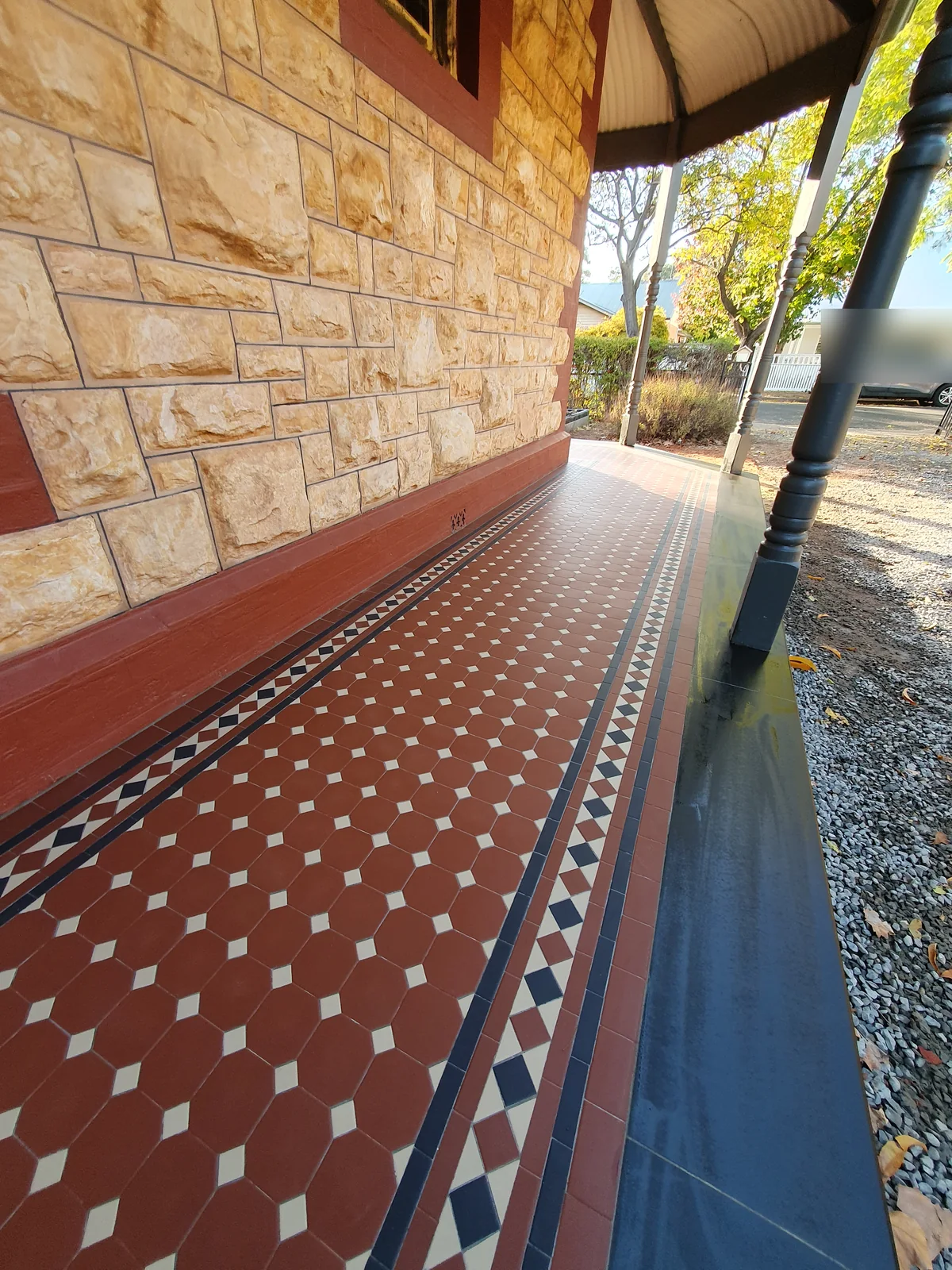
Tiling decisions for Exeter's historic-area context
The South Australian planning material identifies an Exeter Historic Area Statement, while the PAE Built Heritage Strategy recognises residential areas at Exeter among the area's historic places. That context makes the relationship between a tiled surface and the existing home important: consider the entry sequence, thresholds, front elevation, established street character and any surviving original details before selecting a pattern or border.
An historic-area reference does not mean every property is individually heritage-listed. A property-specific check is sensible before work that changes an established frontage or affects a listed place. Where original tiles survive, assessment and careful matching may be more appropriate than removing sound fabric simply to introduce a new design.
Historic Area Statements and Character Area Statements: City of Port Adelaide Enfield | PlanSAPAE Built Heritage Strategy 2022
Plan the pattern around the property
For Exeter homes, begin with the space and its transitions. A restrained field with a considered border can help a narrow path read clearly, while a verandah may need a layout that aligns with posts, steps and door openings. Existing levels, drainage, substrate condition and junctions with paving or garden edges should be reviewed before installation details are settled.
AHTC can assist with design consultation, tessellated tile supply, installation, restoration and coordination of stone bullnose or edging where it suits the project. The appropriate scope depends on the surface and the condition found on site; restoration and new installation are not automatically the same process.
Check the property's heritage status before changing original fabric
The State Heritage Register includes a former Port Adelaide and Le Fevre's Peninsula Cooperative Society Ltd Store dwelling in Exeter. That listing is evidence about a particular place, not a statement that all Exeter homes have the same status. If your property is listed or sits within a relevant planning area, obtain the appropriate property-specific advice before altering original tiles, steps, thresholds or other fabric.
A short project brief with photographs, dimensions, the intended area and any known existing tile pattern can help frame a useful conversation about repair, matching, replacement or new work.
Historic Area Statements and Character Area Statements: City of Port Adelaide Enfield | PlanSAPAE Built Heritage Strategy 2022
Your Heritage Tiling Questions
Does an Exeter Historic Area Statement mean my home is heritage-listed?
No. An historic-area statement describes a planning area with recognised historic characteristics; it does not by itself establish that every property is individually listed. Check the status of the specific property before changing original fabric.
Can original tessellated tiles in an Exeter home be restored rather than replaced?
Often the first step is an assessment of what remains, including loose or damaged tiles, earlier repairs, edges and the supporting surface. If the existing fabric is suitable, a repair or matching approach may better retain the character of the place than wholesale replacement.
Where can tessellated tiles be used around an Exeter property?
Common applications include verandahs, entry paths, porch floors, thresholds and selected interior floors. The layout should be tested against the property's proportions, access, levels and transitions before materials are ordered.
What should I provide when asking about an Exeter tiling project?
Useful starting information includes the suburb, the area to be tiled, approximate dimensions, photographs, access details and whether existing tiles or a heritage listing are involved. This helps separate a restoration question from a new design and installation brief.
Discuss Your Heritage Tiling Project
Share your location, project details and photographs using our enquiry form, or call 0433 932 711.