
Tessellated Tiles in Kooyong
Kooyong's inner south-eastern Melbourne setting includes a documented heritage precinct of Federation/Edwardian and Interwar homes, with cohesive streetscapes, established gardens and carefully proportioned setbacks. For a new verandah, pathway or interior floor, the tile layout should respond to the property rather than imitate a period label. We can help with design consultation, tessellated tile supply, installation, restoration and stone bullnose or edging coordination.
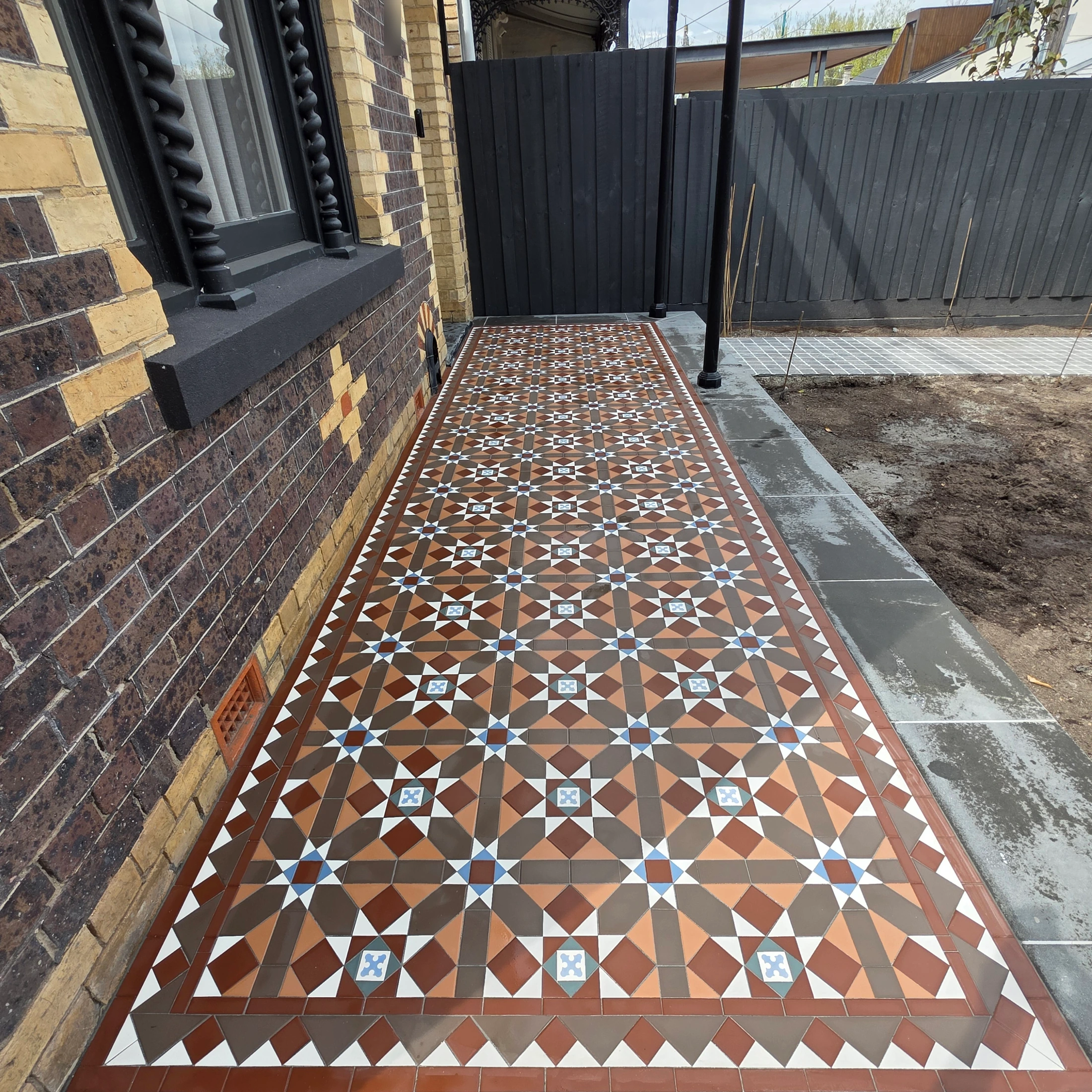
Tiling that sits comfortably with Kooyong's streetscapes
The Kooyong Precinct is described in local heritage material as a relatively intact group of Federation/Edwardian and Interwar streetscapes. Face brick, render, tile and timber joinery appear alongside hipped and gabled roofs, verandahs, chimneys and consistent setbacks. These relationships are useful design cues when selecting a tessellated floor, but they do not mean every Kooyong property has the same history or controls.
A considered scheme can begin with the home's existing proportions, entry sequence and visible edges. Border width, field scale, colour balance and the transition to brick, stone or garden areas should be resolved together. For a restoration, surviving tiles and adjacent finishes should be assessed before any replacement pattern is selected.
Verandahs, paths and thresholds
Kooyong's documented low-density homes and established streetscapes make the approach to a front door especially visible. Tessellated tiles can define a verandah or path with a measured border and a field that follows the available width, while thresholds and steps need to be planned with adjoining surfaces and drainage in mind.
For a new installation, consultation should cover the intended use, dimensions, access and relationship to the home's existing materials. Stone bullnose or edging coordination can help finish exposed steps and changes of level without adding an unrelated visual element.
Restoration decisions for older tilework
Where original or early tilework remains, the first decision is whether it can be retained and repaired, rather than replaced by a new pattern. Condition, previous alterations, missing pieces and the relationship between the floor and surrounding joinery all matter. A close visual match may be preferable to a dramatic redesign when the existing surface contributes to the property's character.
The Kooyong Precinct is heritage-listed at a local level, but heritage status and permit requirements are property-specific. Check the applicable planning controls with the relevant authority before works that may affect a place within an overlay; a tiling consultation does not itself provide heritage or planning approval.
Plan the tile work around the property
A useful starting point is a brief describing the area to be tiled, whether the work is new or restorative, the desired relationship to existing brick, render, timber or stone, and any access or sequencing constraints. From there, design consultation can guide the pattern and border, supply can be coordinated with the chosen scheme, and installation or restoration can be planned for the specific surface.
Share photographs and dimensions through the existing enquiry form so the initial discussion can focus on the property's visible context. Site-specific heritage and planning checks remain the owner's responsibility with the relevant authority.
Your Heritage Tiling Questions
Does every Kooyong home have heritage protection?
No. The Kooyong Precinct is a local Heritage Overlay place, but controls depend on the property's location and the applicable planning scheme. Check the specific property with the relevant authority before assuming an approval is needed or not needed.
What tile approach suits a Federation or Interwar Kooyong home?
Start with the home's proportions and surviving details rather than applying a generic period pattern. A measured border, a restrained field and colours that sit with existing brick, render, timber or stone can help a new floor relate to the building without pretending to recreate an undocumented original.
Can existing tessellated tiles in Kooyong be restored?
Often the right first step is an assessment of what remains, including loose or damaged tiles, previous repairs and the adjoining surface. That helps determine whether selective restoration, carefully matched replacement or a new design is the most appropriate direction for the property.
Are tessellated tiles suitable for a Kooyong verandah or pathway?
They can be, when the layout, edge details, thresholds, access and surface conditions are planned together. Border proportions and transitions to steps, garden edges or existing paving should be resolved for the particular site rather than copied from another property.
Discuss Your Heritage Tiling Project
Share your location, project details and photographs using our enquiry form, or call 0433 932 711.