
Tessellated tiles in Hope Valley, SA
Hope Valley combines an established residential setting with the documented history of one of the oldest townships in the City of Tea Tree Gully area. For a verandah, entry, path or interior floor, a considered tessellated-tile scheme should respond to the building's proportions, existing fabric and the way the property meets its garden and street. Authentic Heritage Tiling Co. can help with design consultation, tile supply, installation, restoration and stone bullnose or edging coordination.
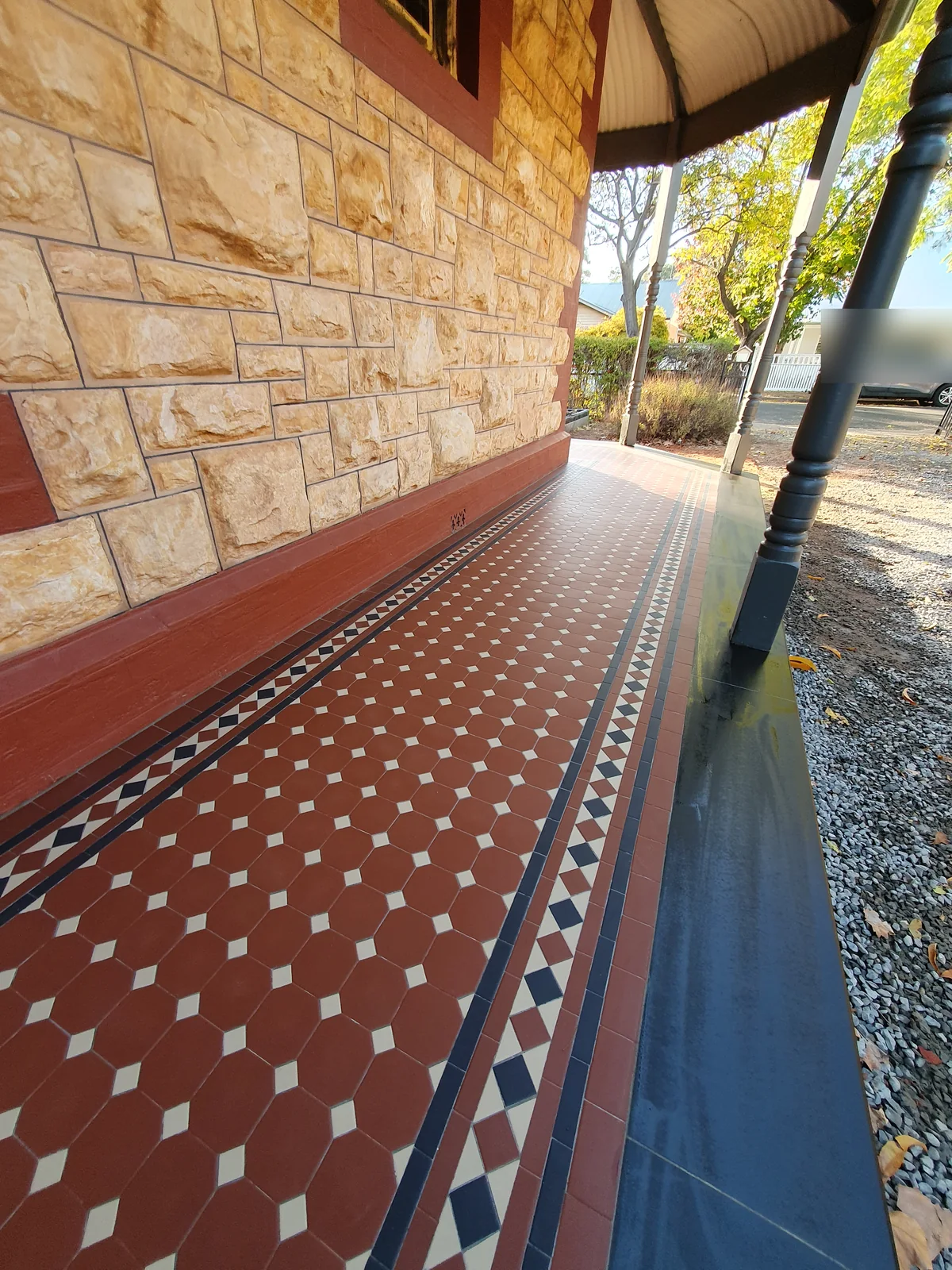
A historic township context within metropolitan Adelaide
The City of Tea Tree Gully Heritage Survey records Hope Valley's settlement from the 1840s and describes it as the oldest township in the current city area. Early shops, a hotel, school, cemetery and places of worship formed a service township connected to surrounding agricultural land and passing traffic. That history is useful design context, but it should not be turned into a claim that every Hope Valley house is historic or protected.
The same survey records individual heritage examples in Hope Valley, including the Tolley's Winery building and gatehouse and the former Methodist Chapel. When a project involves an older dwelling or a property close to a recorded place, the right approach is to inspect the actual building and check the applicable planning and heritage controls before deciding whether to retain, match or replace tilework.
Design choices for verandahs, entries and paths
Hope Valley projects can involve a compact entry, a covered verandah, a garden path or a larger interior floor. Start with the geometry of the space: border widths, doorway alignment, thresholds and the relationship between the field pattern and the building's openings. A restrained border can help a narrow path read clearly, while a broader verandah may allow a more legible central field and edge treatment.
Existing steps, drainage, movement joints, damp conditions and adjoining paving all affect the practical design. Colour and pattern should be assessed against the property's masonry, joinery and garden rather than selected from a period label alone. Where a stone bullnose or other edge is needed, its profile and transition should be coordinated with the tile layout and the site's finished levels.
Restoring existing tessellated tilework carefully
For an older Hope Valley floor or verandah, assessment should precede assumptions about removal. Record the surviving pattern, edge condition, colour variation, loose or cracked pieces and any changes around doors or drainage points. A repair may involve selective replacement and careful integration, while a more altered surface may call for a new scheme that respects the proportions of the original setting without pretending to reproduce undocumented details.
A heritage-sensitive result is property-specific. The existence of a local heritage listing or an older township history does not itself grant approval or require a particular tile method. Where a place is individually listed or affected by a planning control, confirm the relevant requirements with the appropriate authority before work proceeds.
Planning a Hope Valley tiling project
A useful first brief includes photographs of the existing surface, approximate dimensions, the intended use and any known concerns about movement, water or access. Design consultation can then focus on pattern scale, colour balance, border and transition details before supply and installation are coordinated. Restoration work should keep the assessment of existing fabric separate from new installation decisions.
For a property-led conversation, begin with the preserved Hope Valley service route and the wider Tea Tree Gully area directory. The appropriate scope may be design, supply, installation, restoration or a combination, depending on what the site inspection establishes.
Your Heritage Tiling Questions
Does Hope Valley have heritage homes?
Hope Valley has a documented early township history and individual heritage examples recorded in the City of Tea Tree Gully Heritage Survey. That does not mean every home is heritage-listed. The property itself and the applicable planning controls need to be checked before design or restoration decisions are made.
Can tessellated tiles suit a Hope Valley verandah or entry?
They can, provided the layout responds to the space and the existing building. Border proportions, thresholds, steps, drainage, adjoining paving and the relationship with masonry and joinery should be considered together rather than choosing a pattern in isolation.
Should old Hope Valley tessellated tiles be removed before they are assessed?
Not necessarily. Photograph and assess the surviving pattern, loose or cracked pieces, edges, thresholds and moisture or movement concerns first. Selective repair, matching or a carefully related new scheme may each be appropriate, depending on the condition and significance of the actual surface.
Is heritage approval automatically required for tile work in Hope Valley?
No automatic conclusion should be made from the suburb name or its history. If the property is individually listed or affected by a relevant planning control, confirm the requirements with the appropriate authority before work begins. A tiling consultation is not an approval or heritage endorsement.
Discuss Your Heritage Tiling Project
Share your location, project details and photographs using our enquiry form, or call 0433 932 711.