
Tessellated Tiles in St Agnes
For St Agnes homes and properties, tessellated tiling can connect a new verandah, entry or pathway with the proportions and materials already present. We help assess the setting, develop a suitable pattern, coordinate tessellated tile supply and plan installation or careful restoration around the condition of the existing surface.
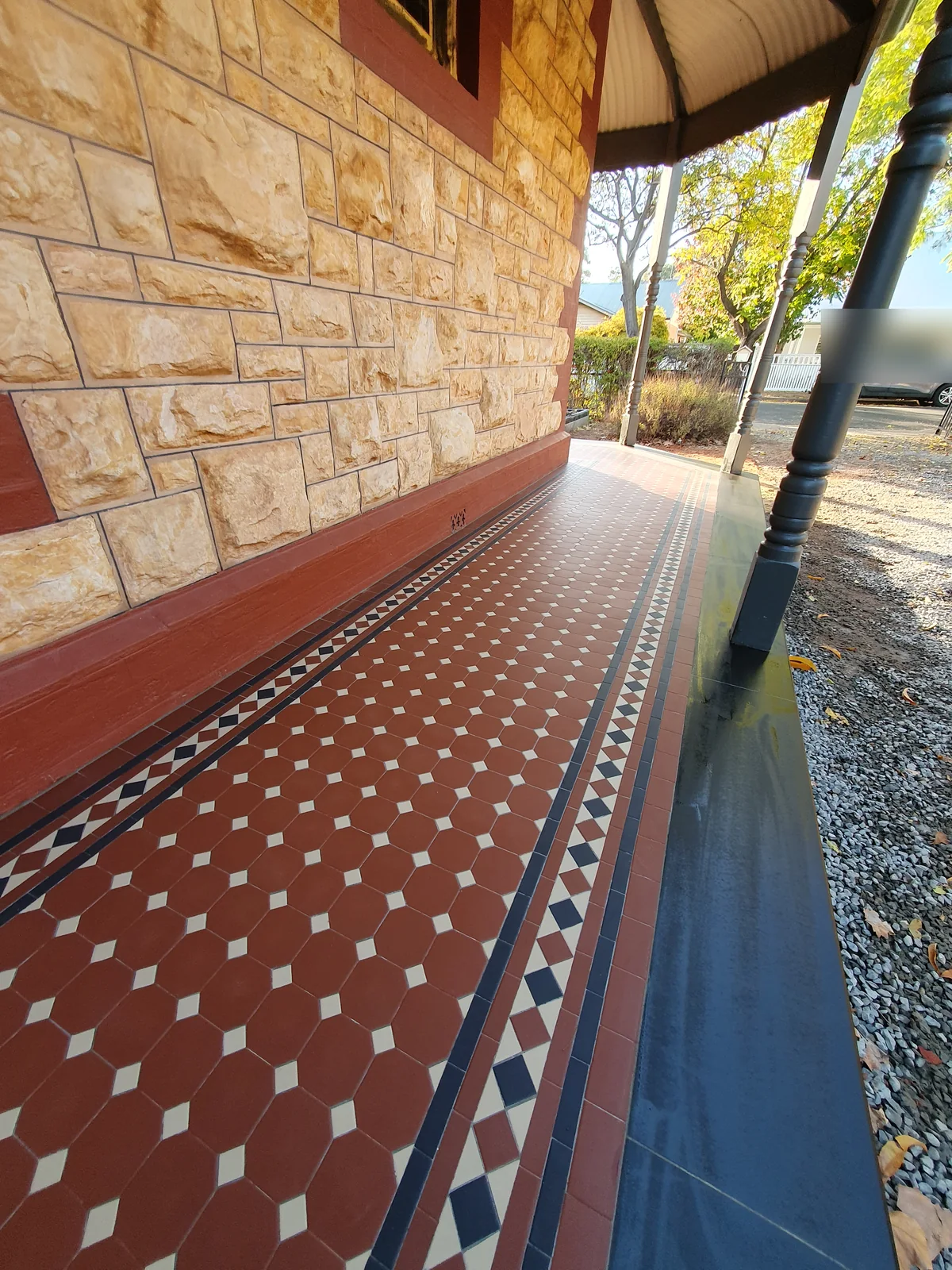
Tiling with the St Agnes setting in mind
St Agnes sits within the City of Tea Tree Gully's north-eastern Adelaide context, close to established community facilities, reserves and the Modbury area. That setting includes everyday suburban housing as well as links to the older Tea Tree Gully township, so a useful design conversation starts with the individual property rather than assuming a single architectural style across the suburb.
The council's township material records a retained historic core with significant buildings and commemorative landmarks. For a St Agnes project, that is a reason to look carefully at the property's frontage, steps, garden edges and existing finishes, not a reason to describe an ordinary home as heritage-listed.
Patterns for verandahs, entries and pathways
A front path or verandah in St Agnes benefits from decisions about scale before colour: the width of the field, border proportion, thresholds, steps and the relationship to the facade should be considered together. A restrained border can clarify a long approach, while a more detailed geometric field may suit a prominent entry where the surrounding architecture can carry the visual weight.
Where an existing pattern remains, matching should be based on measured dimensions, colour relationships and the condition of the original tiles. Where the work is new, the pattern can be designed to sit comfortably with the home's lines without pretending that new tiles are historic fabric. Stone bullnose or edging coordination can also help resolve exposed steps and transitions when the site calls for it.
Existing tiles, condition and property checks
Restoration begins with understanding what is actually present: loose or cracked tiles, uneven areas, failed edges, moisture-related damage and later repairs may each need a different response. A site assessment can separate salvageable original work from sections where a carefully matched replacement is more practical.
If a property is within a mapped heritage area or has a listed place, representative-building or other planning control, the applicable requirements should be checked before work is set. PlanSA directs property owners to SAPPA and the Planning and Design Code for current, location-specific information. Heritage-sensitive design advice is not the same as heritage approval, so any required application or consent should be confirmed with the relevant authority.
A practical St Agnes tiling consultation
Bring photographs, approximate dimensions and any available information about when the tiles were laid. We can then discuss design consultation, tessellated tile supply, installation, restoration and the coordination of stone bullnose or edging where those services suit the project. The same approach works for a new pathway as it does for an existing verandah that needs repair or thoughtful extension.
Your Heritage Tiling Questions
Are all homes in St Agnes heritage properties?
No. St Agnes is a broad suburban locality, and historic character documented for the Tea Tree Gully township should not be applied to every property. Check the actual address and relevant planning information before assuming a heritage control applies.
Can existing tessellated tiles in St Agnes be restored rather than replaced?
Often the right choice depends on the condition and extent of the surviving work. An assessment can consider loose or cracked tiles, damaged edges, uneven areas and later repairs before deciding what can be retained, matched or renewed.
What should I consider for a St Agnes tiled pathway?
Consider the path width, border, thresholds, steps, drainage and how the pattern relates to the home's entry and facade. A measured layout helps the pattern remain legible without overwhelming a narrow approach.
Do I need to check planning requirements before tiling?
If the property may be affected by a heritage area, listing, overlay or other planning control, check the current address-specific information in SAPPA and the Planning and Design Code, then confirm any required approval with the relevant authority.
Discuss Your Heritage Tiling Project
Share your location, project details and photographs using our enquiry form, or call 0433 932 711.