
Tessellated Tiles in Clarence Park
Clarence Park's established streets include homes and streetscapes shaped by late nineteenth-century, turn-of-the-century and inter-war development. For a verandah, entry, pathway or interior floor, tessellated tile choices work best when they respond to the property's proportions, surviving details and the way new work meets older fabric. AHTC can assist with design consultation, tessellated tile supply, installation and restoration, with stone bullnose or edging coordination where it suits the project.
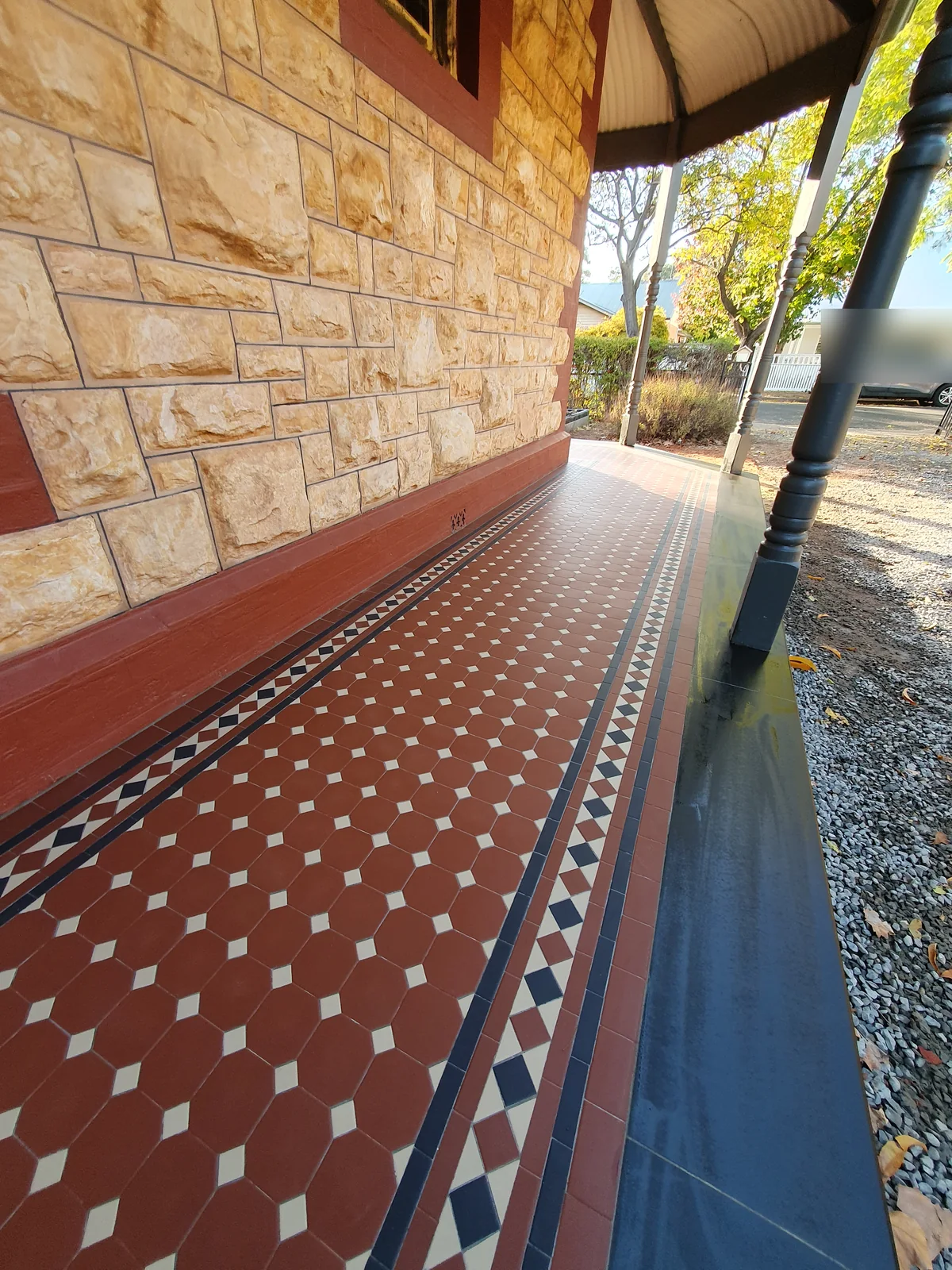
Working with Clarence Park's established character
The South Australian character statement for Residential Spacious Clarence Park describes a broad 1880–1940 pattern: wider streets, generous allotments, consistent setbacks and garden settings. It also identifies Victorian and turn-of-the-century cottages and villas alongside inter-war bungalows, Tudor, art deco and related forms. That range makes a property-led approach more useful than assuming one tile pattern belongs across the suburb.
Open verandahs, hipped or gable roofs, chimneys, front fences and timber or masonry detailing can all affect the scale and edge treatment of a tiled area. A consultation can consider whether a new layout should quietly complement those features or whether surviving tiles call for careful matching and selective repair.
Materials, edges and transitions
The local statement records sandstone, bluestone, brick, glazed brick, stucco, rendered masonry and timber joinery among the area's characteristic materials. These references can help frame choices for borders, thresholds, steps and stone bullnose or edging, while the actual decision still depends on the property's existing fabric, exposure, levels and drainage.
For an older verandah or pathway, the junction between tile and wall, threshold or garden edge deserves as much attention as the pattern itself. Existing tiles should be assessed before removal, and any replacement should be planned around what can genuinely be retained, repaired or matched.
Check the property, not just the suburb name
Clarence Park includes recorded local heritage places, including a former corner shop and dwelling at Mills Street. A suburb-wide character statement and an individual heritage listing are different kinds of information. Before altering an older property, confirm the property's current planning and heritage controls with the relevant South Australian and council sources.
AHTC's role is to help with design, tile selection, supply, installation or restoration planning. It does not replace property-specific planning advice or guarantee an approval outcome.
Tessellated tile design and restoration for Clarence Park projects
Whether the brief is a new verandah, a front path, an entrance floor or restoration of an existing tessellated surface, the useful starting point is the building and site. AHTC can discuss pattern proportion, border treatment, tile supply, installation sequencing and restoration options, then coordinate stone bullnose or edging where required by the design.
Share photographs and dimensions through the existing enquiry form so the first discussion can focus on the property's layout, visible condition and the outcome you want.
Your Heritage Tiling Questions
Are all Clarence Park homes heritage-listed?
No. Clarence Park has an identified historic-area character and individual local heritage places, but those are not the same as every property being listed. Check the specific property and current planning controls before making heritage-related assumptions.
What tile approach suits an older Clarence Park verandah?
Start with the verandah's proportions, surviving details, thresholds and relationship to the front garden or path. The local character statement describes open verandahs, traditional roof forms, front fences and several historic housing eras, so a considered pattern and border should respond to the individual house rather than use a one-size-fits-all treatment.
Can existing tessellated tiles be restored instead of replaced?
Often the first step is an assessment of what remains, including loose, cracked, missing or visually altered tiles and the transitions at edges and thresholds. Restoration or selective replacement can then be considered against the condition and the intended use of the area.
Should I check heritage controls before tiling in Clarence Park?
Yes. The suburb has a documented historic-area context and individual local heritage places. Confirm the controls applying to the specific property with the relevant council and South Australian planning or heritage sources before altering older fabric.
Discuss Your Heritage Tiling Project
Share your location, project details and photographs using our enquiry form, or call 0433 932 711.