
Tessellated Tile Services in Blackburn South
Blackburn South sits within the City of Whitehorse, east of Melbourne, where post-war residential design forms part of the local architectural story. Tessellated tiles can be planned for a new verandah or pathway, matched to a period-influenced façade, or considered carefully when an existing tiled surface needs repair. Authentic Heritage Tiling Co. can discuss design, tessellated tile supply, installation, restoration and stone bullnose or edging coordination for your property.
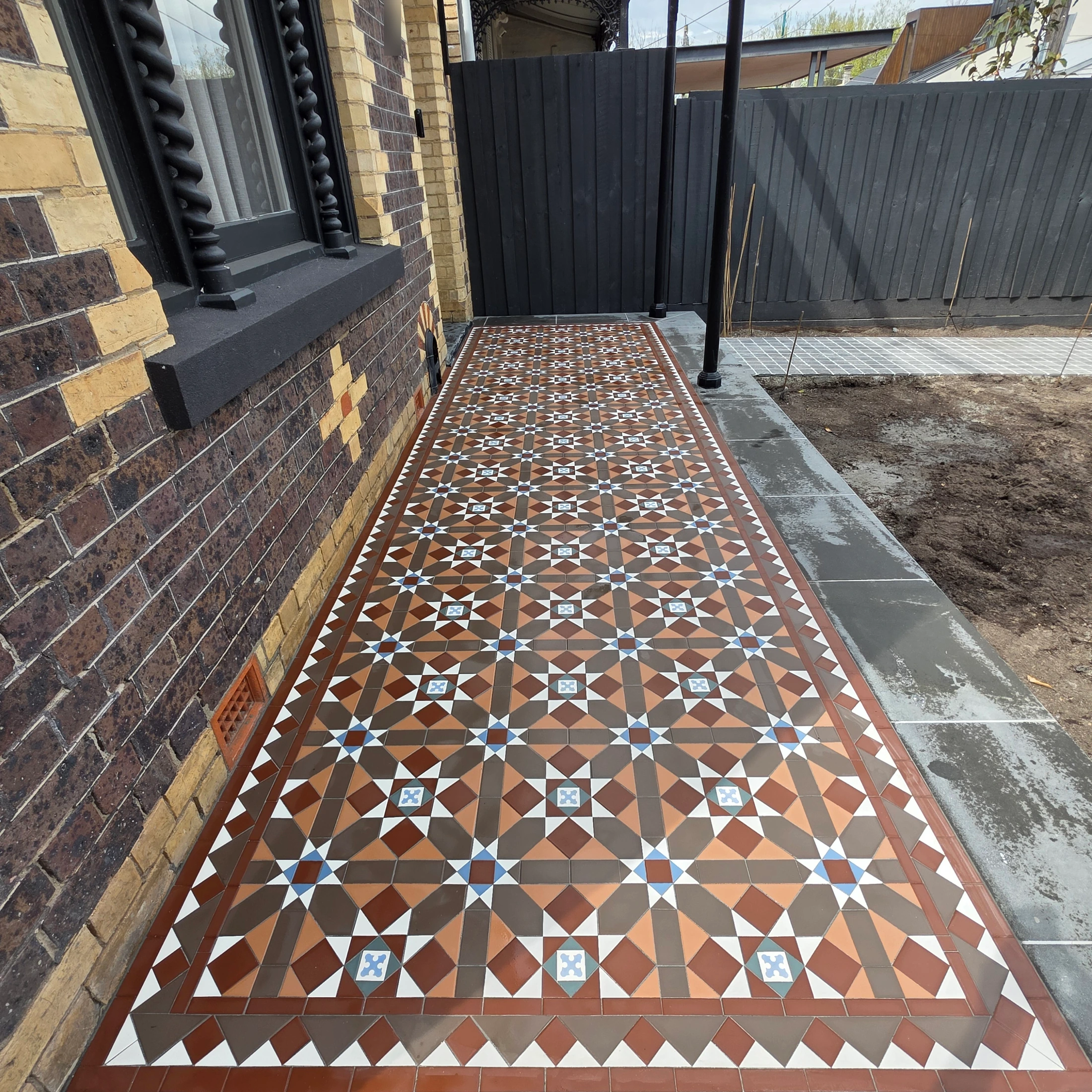
A post-war Whitehorse context with room for individual character
The City of Whitehorse Heritage Review records Blackburn South among the suburbs associated with a group of Age/RVIA Small Homes Service houses from the post-war period. The review describes these houses as modest dwellings with varied planning and finishes, including gabled, hipped and skillion roof forms, timber cladding and brick veneer. That is useful context for design work, but it is not a claim that every Blackburn South home shares one style or heritage status.
For a Blackburn South verandah, porch or garden path, the most convincing tile layout usually begins with the house itself: its entry proportions, roofline, brick or painted surfaces, existing steps and the way the path meets the frontage. A restrained border, a considered field pattern and an edge detail can give a new surface a settled relationship with the building without pretending to reproduce an unverified original.
Where an older tiled surface survives, assessment should separate sound original material from later repairs, movement, cracking, staining or failed edges. Any proposed intervention should be based on what is found on site, with matching and selective replacement considered before unnecessary removal.
Planning a Blackburn South verandah or pathway
Verandah and pathway tiles are read at close range as well as from the street. Set-out should account for thresholds, step noses, drainage falls, garden edges and the relationship between the tiled field and the façade. A design consultation can test proportion and colour before supply and installation are coordinated.
For homes with post-war or later alterations, a new tessellated pattern does not need to imitate a historic detail that has not been verified. It can instead use scale, border width and tonal balance to sit comfortably with the existing architecture. Stone bullnose or edging coordination may be appropriate where steps or exposed edges need a durable, visually resolved finish.
Check the property before altering original fabric
Whitehorse explains that heritage protection is applied through specific statutory listings and Heritage Overlays, while community registers do not themselves provide legal protection. The council recommends using Whitehorse Maps to check the individual property, street or neighbourhood before building or demolition work.
A heritage-sensitive tile brief should therefore record the existing surface, adjoining fabric and any relevant planning information without assuming that a suburb label decides the outcome. Where a Heritage Overlay or another control applies, obtain the appropriate planning advice before work begins. Tile design and installation advice is not a substitute for a council or qualified planning assessment.
Your Heritage Tiling Questions
Are all Blackburn South homes heritage listed?
No. The Whitehorse Heritage Review identifies particular houses and group listings, but heritage controls are property-specific. Check the address on Whitehorse Maps and review the applicable planning controls before altering an older home.
Can tessellated tiles suit a post-war Blackburn South home?
They can, when the pattern, scale and edge treatment are designed in relation to the house. Whitehorse's documented post-war housing examples are varied, so the brief should respond to the individual façade rather than assume one suburb-wide formula.
What should be considered for a Blackburn South tiled pathway?
Consider the approach to the entry, path width, border and field proportions, step transitions, drainage and exposed edges. Existing tiles and adjoining materials should be assessed before a layout is finalised.
Do I need to check planning controls before restoring tiles?
If the work forms part of alteration, extension or other building activity, check the property-specific zone and overlays first. Whitehorse advises that planning permission may be required for work affecting a property in a Heritage Overlay.
Discuss Your Heritage Tiling Project
Share your location, project details and photographs using our enquiry form, or call 0433 932 711.