
Tessellated Tiles in Box Hill
Box Hill combines an established metropolitan neighbourhood with a fast-changing activity-centre setting. For a verandah, pathway, entry or interior floor, the right tessellated tile approach starts with the property: understand the existing fabric, confirm the intended pattern and edging, then plan supply, installation or restoration around the site. Where a property may be affected by a Whitehorse Heritage Overlay, check the relevant planning information before work begins.
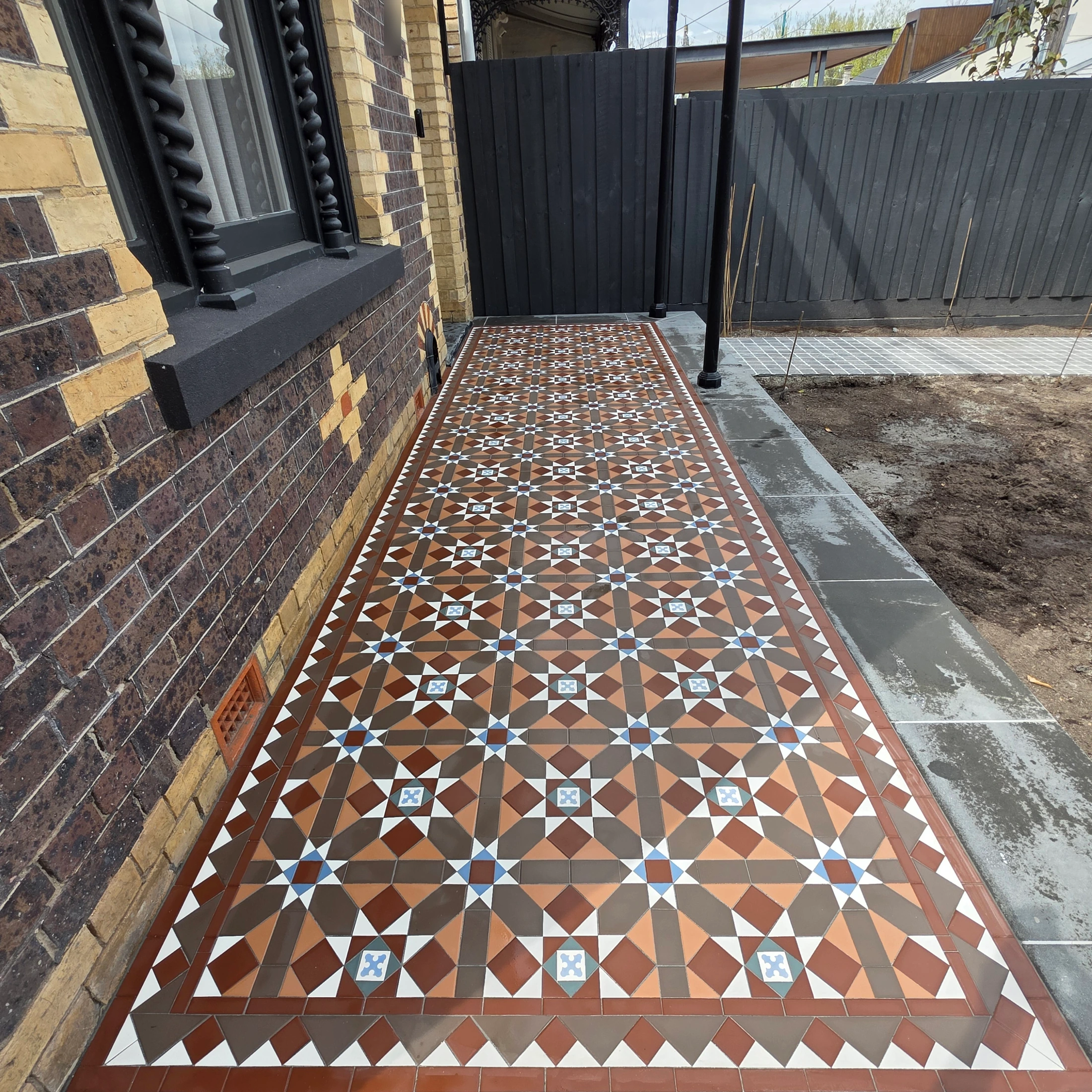
A Box Hill setting with both established fabric and new growth
Whitehorse City Council lists Box Hill as one of its suburbs and identifies the locality as a Metropolitan Activity Centre and Suburban Rail Loop Precinct. That combination means a Box Hill property can sit within an established residential setting while its wider centre continues to experience planning attention, growth and investment.
For tile work, the practical response is not to assume one period style across the suburb. Look closely at the building, its entry sequence and the surfaces that remain. A restrained layout may suit a contemporary alteration, while a carefully matched border or repaired section may better support an established verandah or pathway. The design should respond to the actual property rather than imitate a historical style without evidence.
Check the property before altering heritage fabric
Whitehorse uses Heritage Overlays for individual places and precincts, and Council provides property and precinct citations through Whitehorse Maps. A Heritage Overlay can affect demolition, construction, alteration or extension, so it is sensible to check the property record before removing an old tiled surface or changing a visible front approach.
The local heritage policy applies to land in a Heritage Overlay and to immediately adjacent lots. It encourages work that respects significant fabric, setting, scale, materials and colour, while allowing new work to remain distinguishable from the original. A tile consultation can therefore begin with photographs, measurements and any available historical evidence, followed by a discussion of what should be retained, repaired, matched or newly designed.
Plan tessellated tiles around the way the property is used
For a Box Hill verandah or pathway, consider the approach from the street, door thresholds, drainage exposure, border proportions and how the pattern will meet steps or other finishes. For an interior floor, review the room geometry, sightlines and the relationship between a central field and its border before selecting a layout.
Where existing tiles survive, restoration may involve documenting the pattern and condition first, then deciding whether selective repair, compatible replacement or a new adjoining section is the most appropriate course. AHTC can discuss design consultation, tessellated tile supply, installation, restoration and stone bullnose or edging coordination for the particular project.
A considered starting point for a Box Hill project
Share the location, photographs, approximate dimensions and what you know about the existing surface. It is useful to note whether the work is a repair, a continuation of an existing pattern, or a new installation for a verandah, pathway, entry or room.
That information allows the design conversation to stay grounded in the property's architecture and the intended use. If Council records indicate a Heritage Overlay, obtain the applicable advice before committing to demolition or external changes; heritage-sensitive tile work is not a substitute for planning approval where approval is required.
Your Heritage Tiling Questions
Is every Box Hill property heritage protected?
No. Whitehorse describes heritage protection through individual listings and precinct-based Heritage Overlays. Check the particular property or precinct in Whitehorse Maps and review its citation rather than assuming the whole suburb has the same status.
Should I check planning information before replacing old outdoor tiles in Box Hill?
Yes, especially for a visible verandah, entry or pathway. Whitehorse says planning permission may be required for demolition, construction, alteration or extension in a Heritage Overlay, and its local policy also applies to lots immediately adjacent to overlay land. Confirm the property's position and seek the relevant Council advice before removing fabric.
Can new tessellated tile work suit a heritage property without copying it?
It can be designed to respect the original building while remaining distinguishable. Whitehorse's policy supports sympathetic materials, colour and form, and also says alterations may use a contemporary approach that relates to existing fabric. The right choice depends on the property's significance, setting and available evidence.
What should I send when asking about a Box Hill tiling project?
Start with clear photographs, approximate dimensions, the property's suburb and the intended area, such as a verandah, pathway, entry or interior floor. If tiles already exist, include close views of the pattern, edges and damaged sections so the design and restoration discussion can address the actual surface.
Discuss Your Heritage Tiling Project
Share your location, project details and photographs using our enquiry form, or call 0433 932 711.