
Tessellated Tiles in Box Hill North
Box Hill North is a Whitehorse suburb in Melbourne's eastern middle ring, with local heritage references and established landscape qualities that can matter when planning a tiled entry, verandah or pathway. A property-led brief helps relate pattern, scale and edging to the building, the frontage and the existing site rather than assuming one suburb-wide style.
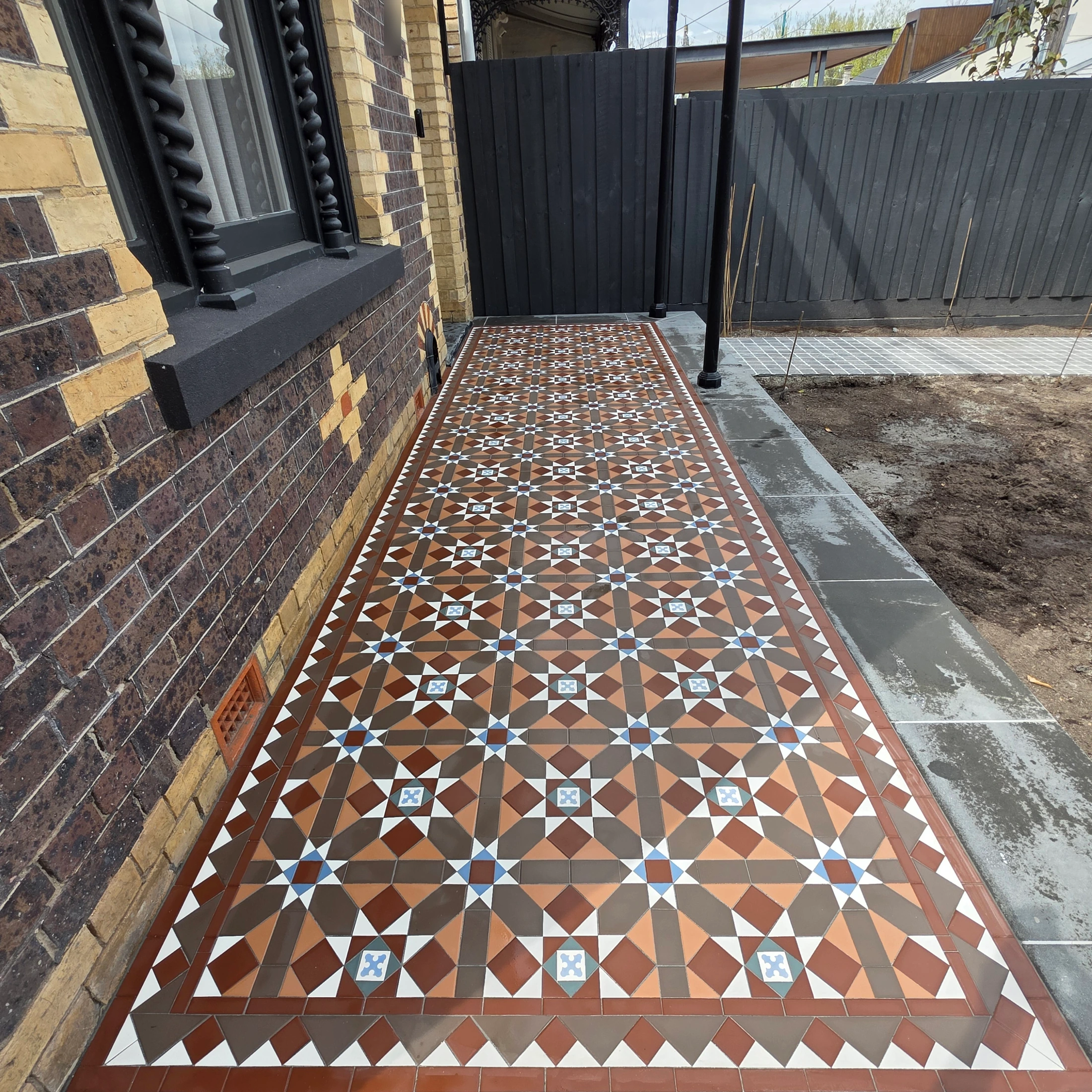
A Whitehorse setting with heritage and landscape context
Box Hill North sits within the City of Whitehorse, east of Melbourne. Plan Melbourne identifies Box Hill as a metropolitan activity centre and places it within the city's middle-ring planning context. That does not prescribe a tile pattern for every nearby home, but it is a useful reminder that established streets, changing housing forms and practical access conditions may meet in the same project.
Whitehorse Council's heritage material records the former Wesleyan Chapel in Box Hill North on the Victorian Heritage Register and publishes local heritage studies and planning guidance. Council also records mature trees in Box Hill North that contribute to streetscape and wider landscape amenity. These facts support careful site reading without suggesting that all houses or gardens in the suburb have the same heritage status.
Let the property set the scale and pattern
For a new entry, verandah, path or courtyard, begin with the proportions of the frontage and the way people move through it. A narrow border can frame a simple field, while a more detailed centre may suit a contained threshold. Consider sightlines from the street, existing brickwork or stone, steps, garden edges and transitions to other paving before settling on colours and geometry.
Box Hill North's documented canopy and landscape features also make the junction between hard surface and garden worth resolving early. Access, falls, drainage, tree-root constraints and the finished level at doors or paths should be assessed on the individual site. These are design and construction questions, not assumptions that a council control applies to every property.
Check the property's heritage position before altering older fabric
A period appearance, a local historical reference or a potential-heritage entry does not by itself prove that a property is protected. Whitehorse Council directs owners to its map and property or precinct citations to check whether a site is affected by a Heritage Overlay. The council also explains that permission may be needed for some demolition, construction, alteration or extension work in an overlay, depending on the property and proposal.
Where older tessellated tiles survive, photograph the overall layout and close details before removing or extending anything. Record borders, corners, worn areas, missing pieces and junctions with steps or walls. That information can help distinguish retention and restoration from a sympathetic new section, while any planning or heritage question remains with the relevant authority.
A practical starting point for a Box Hill North tile project
Useful first information includes photographs, approximate dimensions, access constraints and the relationship between the proposed surface and adjoining finishes. For restoration, include clear views of the pattern, edge treatment and areas of loss. For new work, note whether the brief concerns a verandah, front path, entry, courtyard or another defined area.
The existing Box Hill North service page can bring together design consultation, tessellated tile supply, installation, restoration and stone bullnose or edging coordination. The Whitehorse route is retained as the local service destination, while property-specific heritage checks should be made before work where they may apply.
Your Heritage Tiling Questions
Is every Box Hill North property heritage-listed?
No. Council's heritage information is property- and precinct-specific. Whitehorse recommends checking the current map and the relevant property or precinct citation; a suburb name, older appearance or potential-heritage reference is not proof that every home is protected.
Can tessellated tiles suit a Box Hill North verandah or pathway?
They can be considered where the pattern, scale, edging, levels, drainage and relationship to the building are assessed together. The suitable arrangement depends on the particular frontage and proposed use rather than on a suburb-wide template.
What should I photograph before asking about tile restoration?
Photograph the whole tiled area as well as borders, corners, steps, worn sections, missing tiles and junctions with other surfaces. Approximate dimensions and access information can also help clarify whether the brief is retention, selective restoration, extension or new work.
Does Box Hill North's metropolitan setting determine the design of my tiles?
No. Metropolitan classification describes the locality's planning context, not a required pattern or architectural style. The design should respond to the property's proportions, existing materials, landscape setting and practical conditions.
Where should I check before changing tiles on an older property?
Start with Whitehorse Council's current heritage map and the citation or planning information for the individual property or precinct. If an overlay or other control may apply, obtain the relevant planning or heritage advice before commencing work.
Discuss Your Heritage Tiling Project
Share your location, project details and photographs using our enquiry form, or call 0433 932 711.