
Tessellated tile services in Mitcham
Mitcham brings together established residential streets, a well-connected activity centre and locally documented examples of late-Edwardian and inter-war housing. For a verandah, entrance, pathway or interior floor, tessellated tile choices work best when they respond to the building's proportions, existing materials and the way the space is used. AHTC can help with design consultation, tessellated tile supply, installation, restoration and stone bullnose or edging coordination across Mitcham and the wider Whitehorse area.
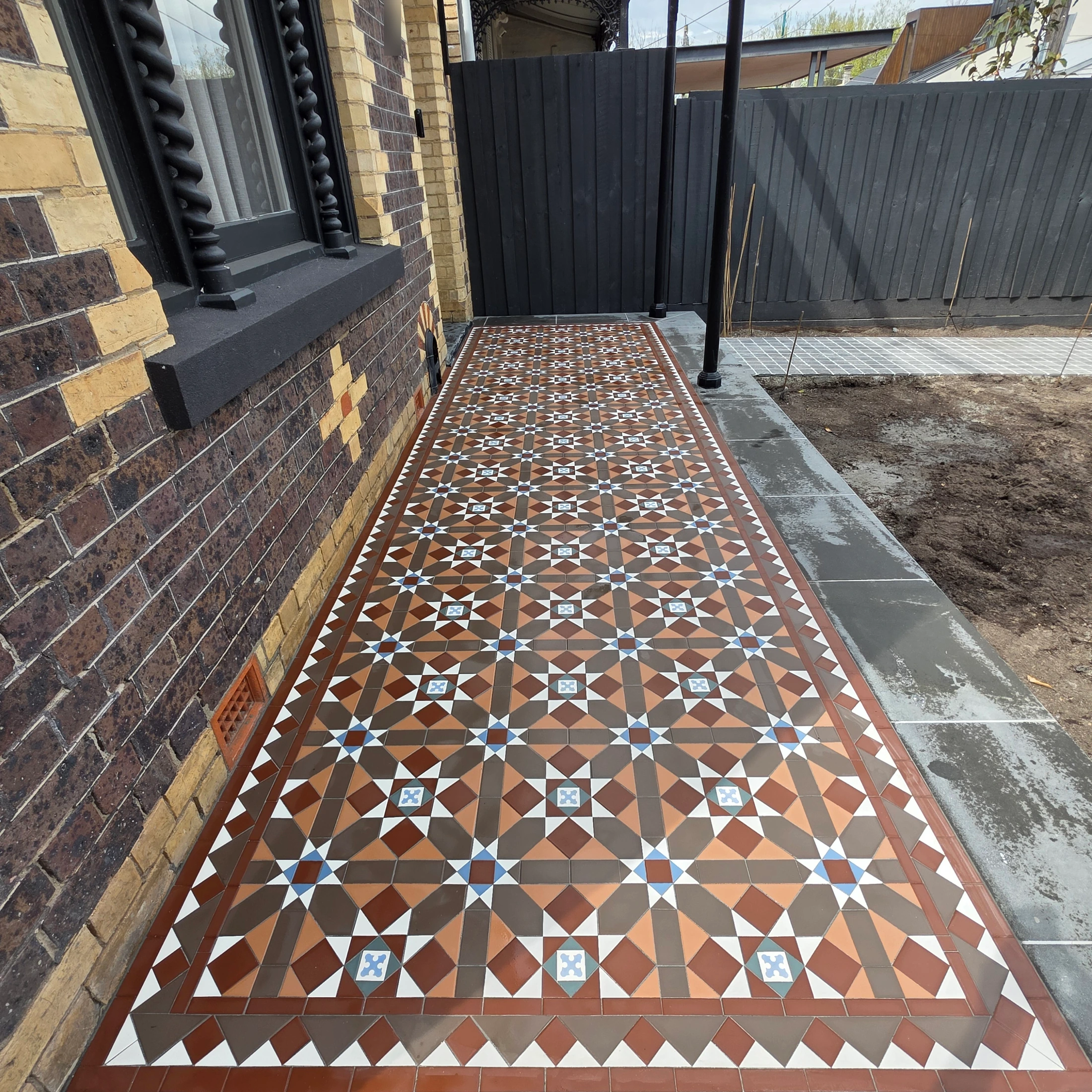
Tiling that respects Mitcham's varied residential character
Whitehorse's heritage material records a Thomas Street precinct of relatively well-preserved late-Edwardian and inter-war homes. Its described character includes single-storey detached houses, weatherboard walls, hipped or gabled roofs, front porches, side driveways and generally consistent setbacks. These details can be useful design cues when a new tiled threshold or verandah needs to sit comfortably with an existing façade.
That context is not a description of every Mitcham property. The suburb also includes contemporary homes, altered dwellings and activity-centre development. A considered tile scheme should therefore begin with the individual building, the surviving fabric and the intended use of the space rather than an assumed period label.
Verandahs, pathways and carefully resolved edges
For a Mitcham verandah or front path, proportion and transitions matter as much as the tile pattern. Consider how the layout meets the front step, driveway, garden edge and door threshold. A border can clarify the geometry of a narrow path, while a restrained field pattern may better suit a modest porch or a home with strong weatherboard lines.
Where an existing edge is being retained, stone bullnose or another coordinated edging treatment can help make the change legible without making the new work look disconnected. The appropriate detail depends on levels, drainage, substrate condition and the materials already present on the property.
A property-led approach as Mitcham changes
Mitcham's station and activity-centre planning places attention on public space, landscape, interfaces and sun access while the surrounding area accommodates more housing and activity. On a residential project, that makes the relationship between the tiled area and its wider setting worth considering: access, shade, planting, levels and the visual weight of the façade can all affect the finished result.
If a property sits within a heritage precinct or has older fabric worth retaining, begin with a condition review and check the applicable planning controls before removing or covering original work. A heritage record can identify a place or precinct as significant, but it does not mean every nearby home is listed or that a particular tile treatment is automatically required.
From tile selection to installation or restoration
AHTC's Mitcham service page can support the project from early design decisions through tile supply and installation. For existing tessellated floors, restoration starts with understanding what remains, how the surface has been used and which areas need repair rather than assuming that a full replacement is the best answer.
Pattern scale, colour balance, border width, slip considerations and the junction with adjoining surfaces should be resolved together. For a new build or renovation, the tile layout should be coordinated with the finished floor levels and access sequence. For older fabric, the priority may be a sympathetic repair and a clear distinction between retained material and new work.
Your Heritage Tiling Questions
Can tessellated tiles suit a Mitcham weatherboard or Californian Bungalow-style home?
They can, when the layout responds to the home's scale and existing details. The documented Thomas Street precinct includes weatherboard homes, front porches and late-Edwardian or inter-war housing, so a carefully proportioned verandah or path scheme may be more appropriate than an oversized or highly busy pattern. The individual façade and site should guide the final design.
Does being near a Mitcham heritage precinct mean my home automatically needs heritage approval?
No. A heritage precinct record does not by itself establish the controls applying to every nearby property. Check the property's current planning information and seek project-specific advice before altering older fabric. Heritage-sensitive design is still useful where no formal listing applies, but it should not be presented as an automatic approval requirement.
What should be considered for a Mitcham tiled pathway or verandah?
Start with the path width, door and step transitions, drainage, finished levels, garden or driveway interfaces and the building's existing materials. A border, restrained field pattern or coordinated stone edging may each be suitable in different settings. Site conditions and use should be assessed before selecting a final layout or installation detail.
Can an older Mitcham tessellated floor be restored instead of replaced?
Often the first step is to assess the surviving tiles, movement, drainage, substrate and areas of loss. That assessment can clarify whether selective restoration, careful matching or a more extensive renewal is appropriate. The right choice depends on the condition and significance of the particular floor, not simply its age.
Discuss Your Heritage Tiling Project
Share your location, project details and photographs using our enquiry form, or call 0433 932 711.