
Tessellated Tiles in Chatswood
Chatswood combines a busy metropolitan centre with established residential streets and heritage contexts that can change from one property to the next. For a verandah, entry, pathway or interior floor, tessellated tile work should respond to the building, the existing pattern and the way the site is used. AHTC can help with design consultation, tessellated tile supply, installation and restoration, including stone bullnose or edging coordination where appropriate.
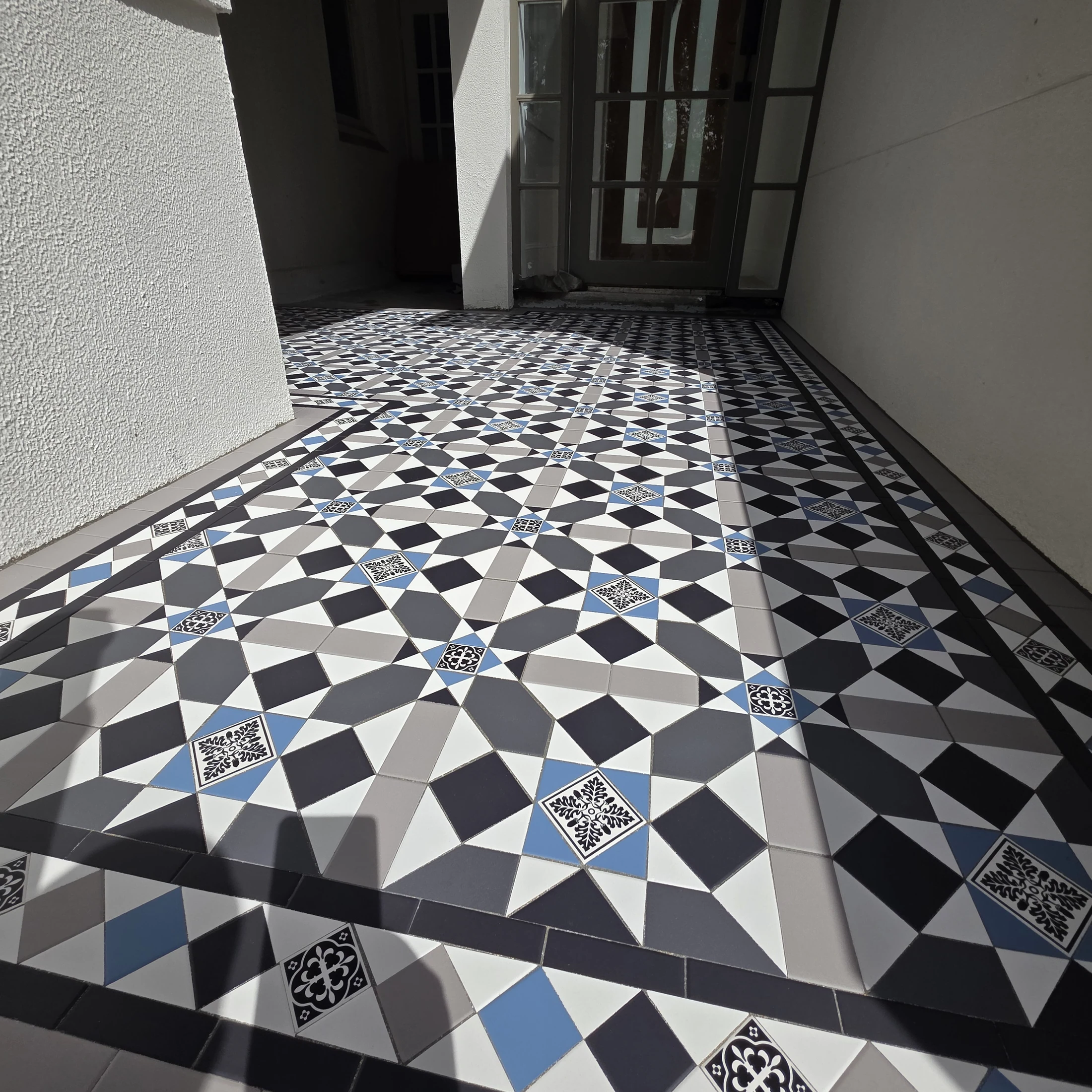
A Chatswood setting with different scales and site conditions
Chatswood's CBD sits on the Pacific Highway ridge, with land falling east across the centre and more steeply west toward the Lane Cove River. That change in level can matter when planning an external tiled approach, verandah or pathway: thresholds, transitions, drainage exposure and the relationship between the tile layout and the surrounding ground should be considered at the property rather than assumed from a suburb-wide template.
The Chatswood CBD heritage strategy also examines the North and South Chatswood Heritage Conservation Areas at the edges of the centre. Their presence is a reminder that a metropolitan suburb can contain both contemporary development and streets where the setting and surviving fabric call for a more restrained response.
Start with the property, not just the suburb name
Willoughby Council distinguishes local heritage items from places on the State Heritage Register and provides mapped heritage information through the Willoughby LEP. A Chatswood address is not automatically heritage listed, and being in Chatswood does not by itself establish that a particular floor, verandah or pathway is protected. Check the property's applicable planning and heritage information before finalising the scope.
Where original or earlier tile work survives, document its layout, borders, colours, wear and junctions before selecting replacement work. A new installation can then be designed to sit comfortably with the building without pretending that every Chatswood property shares one period, pattern or approval pathway.
Heritage Items | Willoughby City CouncilHeritage Conservation Areas | Willoughby City Council
Design inspiration for verandahs, entries and pathways
For a Chatswood verandah or front path, the most useful starting points are the proportions of the space, the existing architectural lines and the way the route is approached from the street. A border can define an edge, a restrained field can keep a narrow passage legible, and a carefully considered transition can connect new work to steps, thresholds or stone edging. The right arrangement depends on the measured site and the desired relationship with the building.
Where restoration is involved, retain as much sound original fabric as practical and separate repair decisions from new-work decisions. Matching should consider geometry, colour balance, border logic and the visual effect of small areas of wear, not simply a nominal tile name. AHTC's design consultation, supply, installation and restoration services can be coordinated around that property-led assessment.
Plan heritage-sensitive work carefully
Willoughby Council says that minor or maintenance work to local heritage items or buildings within heritage conservation areas may still require notification or written local heritage exemption confirmation before work starts. Its guidance refers to owner consent, site photographs and a schedule of materials, colours and finishes as part of an exemption request. Confirm the property's requirements with Council or the relevant planning authority before work begins; tile advice is not a substitute for a statutory assessment.
A useful brief can include photographs of existing tiles, a simple plan of the area, notes on access and levels, and any known heritage or planning information. This gives design and installation discussions a clear basis while keeping property-specific approvals with the responsible authority.
Gain exemption from requiring development consent for heritage works | Willoughby City Council
Your Heritage Tiling Questions
Are all Chatswood homes in a heritage conservation area?
No. Chatswood contains different property and planning contexts. Willoughby Council identifies particular heritage conservation areas and heritage items, and the applicable status must be checked for the individual property rather than inferred from the suburb name.
Can I replace or restore tiles on a Chatswood verandah without checking first?
Check first if the property is a local heritage item or is within a heritage conservation area. Willoughby Council says minor or maintenance work may still require notification or written local heritage exemption confirmation before work starts.
What should I collect before discussing a Chatswood tile project?
Photographs of the existing work, the approximate area and pattern, notes about steps or changes in level, and any relevant planning or heritage information will help establish a useful brief. The final design should be based on the property and its existing fabric.
Can a new tessellated pathway suit a sloping Chatswood site?
It can be planned around the actual site, but the design needs to consider levels, thresholds, transitions, drainage exposure and the relationship to the building. Chatswood's ridge-and-slope setting means those conditions should be assessed on site rather than assumed from a standard layout.
Discuss Your Heritage Tiling Project
Share your location, project details and photographs using our enquiry form, or call 0433 932 711.