
Tessellated Tiles in Austinmer
Austinmer's coastal village setting brings together beachside exposure, the Illawarra escarpment and a varied streetscape of older and newer homes. For a verandah, entry, pathway or interior floor, tessellated tile choices should respond to the property's proportions, existing materials and the way the space meets the garden, street or coastline. AHTC can help with design consultation, tessellated tile supply, installation, restoration and stone bullnose or edging coordination.
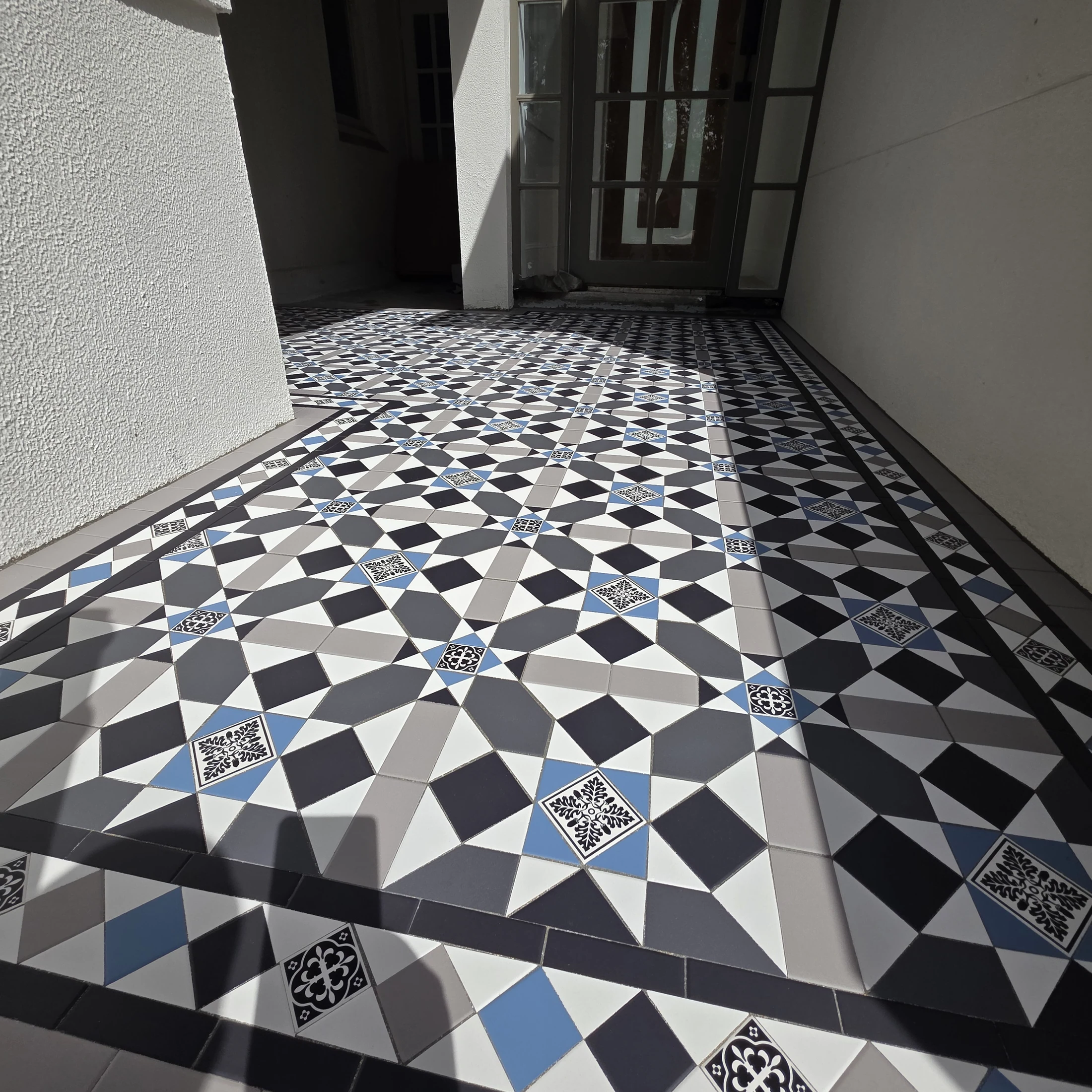
Designing for Austinmer's coastal village character
Austinmer developed through rural settlement, coal-mining and railway-era growth before becoming known as a seaside resort. That layered history is still useful when choosing a floor pattern: a restrained border, carefully scaled field and compatible threshold can sit more comfortably in an older cottage or shopfront than an oversized, high-contrast layout.
The local setting also matters. Coastal light, salt-laden air, sloping sites and the visual relationship between the plain and escarpment can make an entrance or pathway feel especially exposed. Design consultation should consider drainage, transitions, slip considerations and how the tile tones sit with weatherboard, brick, rendered walls, planting and existing stonework. These are design and condition questions to assess at the property, not a universal Austinmer specification.
Working carefully with existing fabric
Wollongong's planning documents identify the Austinmer–Moore Street and The Grove area as a local Heritage Conservation Area. The documented character includes pre-war allotments, early shopfronts, mature street trees, larger lots and a mix of housing forms. That does not mean every Austinmer property is heritage-listed, but it does make a careful review of the property's setting and surviving details worthwhile.
Where original tiles, borders, thresholds or adjacent masonry remain, restoration or selective repair may be preferable to removing sound fabric. A site assessment can compare the existing pattern, dimensions, wear and colour variation with proposed supply. If a property is individually listed or within a relevant conservation area, check Wollongong City Council requirements before external works begin; heritage advice and any required exemption are separate from the tile design service.
Verandahs, pathways and stone edging
For Austinmer verandahs and garden paths, the pattern needs to work with the route into the home as well as the view from the street. Border width, steps, landings and door thresholds should be measured together so the design does not finish awkwardly at a narrowing or change in level. Existing paving and garden edges can also influence whether a new tiled path should read as a defined strip or a quieter transition.
Stone bullnose or edging coordination can help resolve exposed edges, steps and changes between tiled and untiled surfaces. The appropriate detail depends on the substrate, falls, drainage, adjoining materials and the condition of any retained work. AHTC can discuss these decisions as part of the design and installation planning rather than assuming one construction detail suits every coastal site.
Check the property before external changes
Wollongong City Council states that different rules may apply to heritage properties and some properties in a Heritage Conservation Area. External repainting, repointing, verandah work, roof and gutter changes and other visible maintenance may need heritage advice or an exemption before work starts. Confirm the property's status and proposed scope with Council rather than relying on a suburb-wide assumption.
AHTC's role is to help with tile design, supply, installation and restoration decisions. Council remains the source for planning and heritage requirements, and any approval or exemption should be obtained before relevant work begins.
Your Heritage Tiling Questions
Is every Austinmer home covered by heritage controls?
No. Austinmer includes a recognised Heritage Conservation Area and individually listed places, but that does not make every home heritage-listed. Check the specific property's listing and planning context with Wollongong City Council before external changes.
Can existing tessellated tiles in an Austinmer home be restored?
Often the first step is an assessment of what remains: pattern, tile sizes, borders, loose or damaged areas, substrate and adjoining thresholds. Where original fabric is sound enough to retain, selective restoration can be considered alongside carefully matched replacement supply.
What should be considered for an Austinmer tiled pathway or verandah?
Consider the property's approach, steps, falls, drainage, exposure, thresholds, slip requirements, garden edges and the relationship between the tile pattern and the building. A site-led layout is more reliable than applying a generic pattern or construction detail.
Do I need to speak with Council before heritage-sensitive tile work?
If the property is heritage-listed or within a relevant Heritage Conservation Area, Council advises seeking heritage advice before work. Some minor works that change an external appearance may require a Heritage Exemption, and work should not begin until any required approval is in place.
Discuss Your Heritage Tiling Project
Share your location, project details and photographs using our enquiry form, or call 0433 932 711.