
Tessellated tiles in Fairy Meadow
Fairy Meadow sits north of Wollongong in the Illawarra, with a layered history that includes early village subdivision, farming, industry and rail. For a home, verandah or pathway here, a good tiling decision starts with the property itself: its existing fabric, proportions, exposure and the way new work meets older surfaces. We can help with tessellated tile design consultation, supply, installation, restoration and stone bullnose or edging coordination.
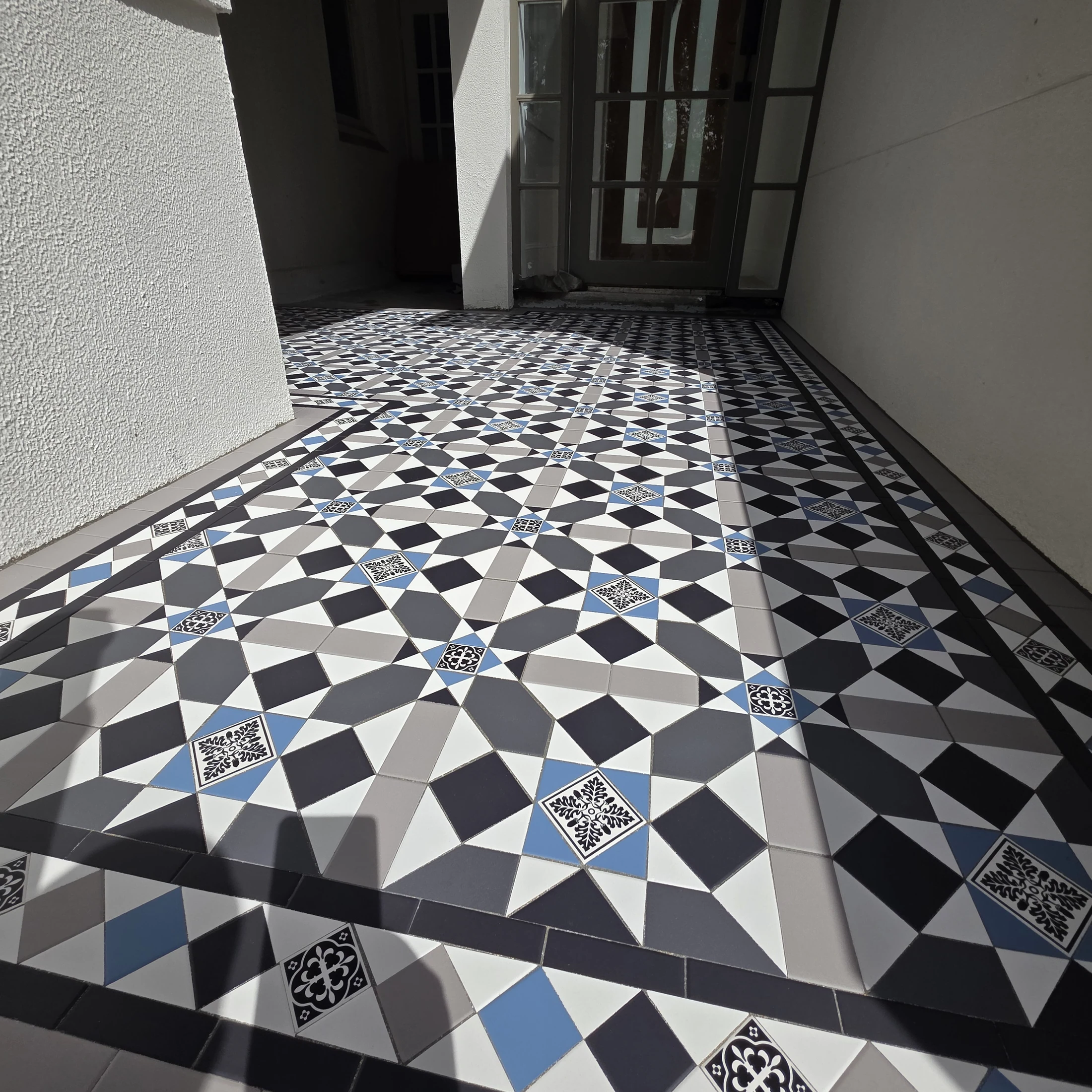
A property-led approach for Fairy Meadow homes
Fairy Meadow is not defined by one uniform housing style. Wollongong City Libraries records a predominantly urbanised setting, with a long sequence of agricultural, industrial, transport and community uses. That makes the existing house and its street-facing details more useful than a generic period label when planning a tiled verandah, entry or pathway.
Where an older dwelling retains a tiled threshold, step, border or verandah, begin by recording what survives before choosing a replacement. Tile dimensions, border rhythm, stair nosings, levels and the relationship with brickwork or rendered walls can all affect whether new work feels settled. A new layout may suit a newer addition, while a restrained repair or carefully matched extension may be more appropriate beside original fabric.
The council's current strategic planning statement recognises that newer, denser development may replace older single dwellings in some locations. If a project involves an addition or a changed frontage, consider the transition between old and new work early, rather than treating the tiled area as an isolated finish.
Restoring original tile details with care
The local history record identifies an individual Inter-War functionalist dwelling as an unusual example in the Illawarra. That is a reminder to assess a particular property's evidence rather than assume every Fairy Meadow house is heritage listed or requires the same treatment.
For an older tiled surface, the useful first questions are what is original, what has already been altered, where water or movement has affected the surface, and whether a repair can retain sound material. NSW heritage guidance uses a former Fairy Meadow migrant-camp building to illustrate conservation and adaptation to a new use, and recommends early discussion with the relevant council heritage or planning staff where a heritage place or precinct may be affected. A tiling consultation does not replace that property-specific check.
Verandahs, paths and changing levels
Fairy Meadow's official local history describes a highly modified Cabbage Tree Creek catchment and a history of flooding. For external tiled areas, design conversations should therefore include falls, thresholds, drainage interfaces, step geometry and how the finished surface meets adjoining ground or garden areas. These are site questions, not a universal construction recipe.
On a verandah or front path, the pattern can help establish a clear route and reinforce the proportions of the architecture. Borders, corner turns and bullnose or other edging should be selected alongside the levels and exposure of the site. We can coordinate the design, tile supply, installation and stone edging discussion around the property rather than prescribe one pattern for every address.
Planning a Fairy Meadow tiling project
Share photographs and dimensions of the area, along with any visible cracks, loose tiles, damp edges or changes in level. It is also helpful to note whether the work is a new verandah or path, a repair to an existing pattern, or part of a broader renovation. That information helps shape a sensible conversation about design, supply, installation or restoration.
For properties with a recorded heritage item, a heritage setting or an uncertain planning history, confirm the applicable requirements with Wollongong City Council before work begins. Our role is to provide tiling and design guidance; council or the relevant planning authority determines property-specific controls and approvals.
Your Heritage Tiling Questions
Can you help match tessellated tiles in an older Fairy Meadow home?
Yes. Matching starts with the existing evidence: tile size, colours, border arrangement, condition, levels and the way the tiled area meets the building. We can discuss restoration, selective replacement or a new layout that sits comfortably beside retained work. A historic appearance alone does not establish that a property is heritage listed.
What should I consider for a Fairy Meadow verandah or pathway?
Consider the property's proportions, thresholds, steps, exposure and drainage interfaces before finalising the pattern. Fairy Meadow's documented Cabbage Tree Creek catchment and flooding history make level and water-management discussions particularly important for external work, but the correct detail depends on the site.
Does every older-looking property in Fairy Meadow need heritage approval?
No general assumption should be made. Local history records individual historic examples, while planning and heritage requirements depend on the particular property, its listing or conservation setting and the proposed work. Check with Wollongong City Council or the relevant planning authority where that status is uncertain.
Can new tiling work sit alongside a newer addition?
It can, when the junction is designed deliberately. The layout, border scale, edging, thresholds and levels can distinguish new work while maintaining a calm relationship with retained fabric. Wollongong's planning statement notes that newer, denser development may replace older single dwellings in some locations, so the transition should be considered as part of the overall design.
Discuss Your Heritage Tiling Project
Share your location, project details and photographs using our enquiry form, or call 0433 932 711.