
Tessellated Tiles in Kiama
Kiama sits on the south coast of New South Wales in the Illawarra region. For homes and buildings in and around the town, tessellated tile decisions are best made with the property's setting, period details and practical exposure in view. AHTC can help with design consultation, tessellated tile supply, installation, restoration and stone bullnose or edging coordination, with regional service connections through Wollongong.
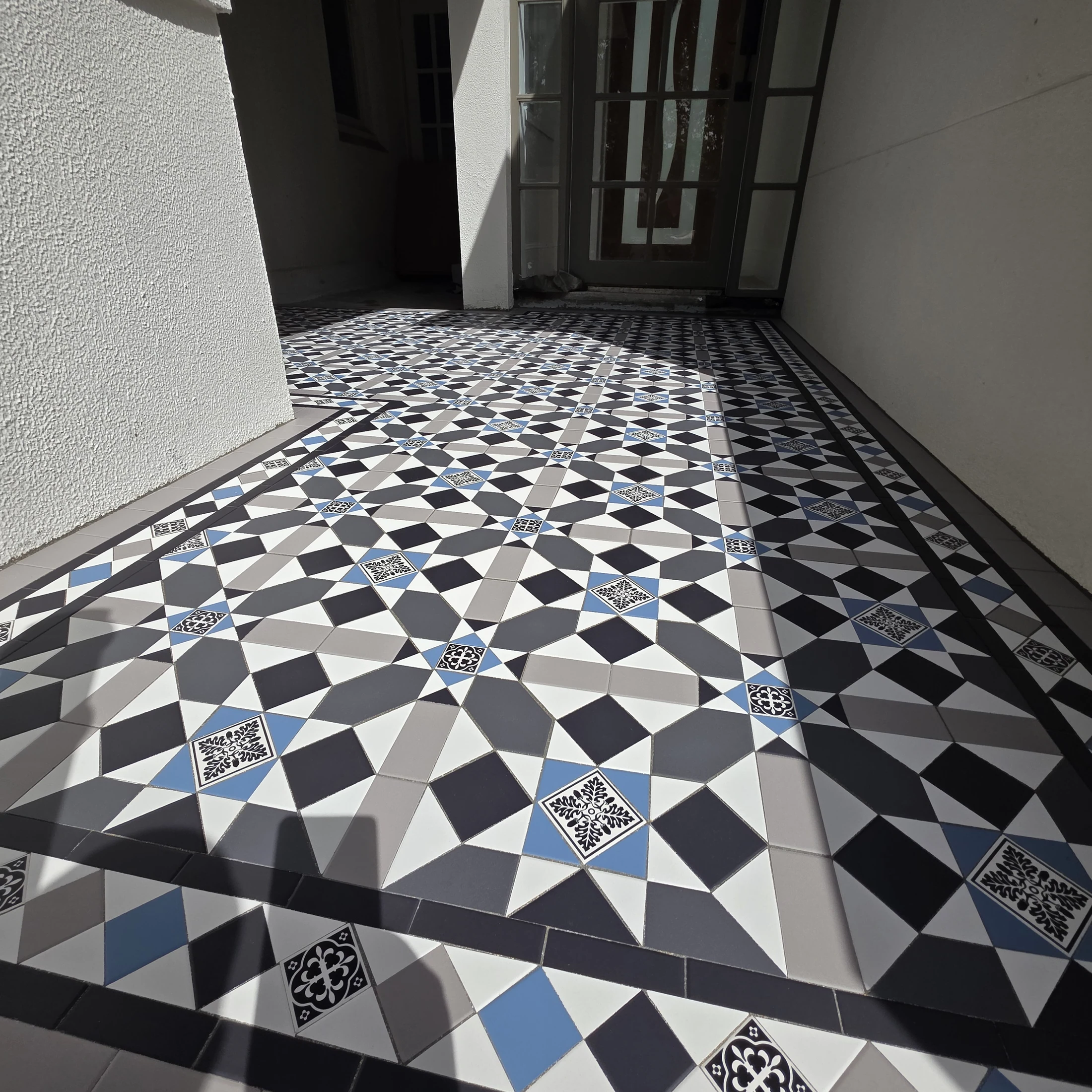
Tiling that belongs to the Kiama setting
Kiama's municipality combines coastal landscapes, escarpment, rural settings and established town streets. That mix makes the right tile scale, border treatment, colour relationship and transition detail a property-led decision rather than a one-size-fits-all selection.
Where a property sits in or near a heritage conservation area, the existing verandah, entry, pathway and principal elevation deserve particular attention. The aim is to complement surviving character without making an unverified claim that every Kiama home is heritage-listed.
Restoring verandahs, paths and original tile details
Kiama's heritage guidance encourages the retention and repair of original architectural details, including verandah elements and tile work in principal elevations. For an older entry or verandah, assessment should start with what remains: edges, thresholds, pattern geometry, adjoining masonry and the way the surface meets steps or garden paths.
The council's guidance also addresses visible roofs, materials and textures, and the treatment of tessellated or glazed tiling on heritage items. A property-specific heritage and planning check should be made before work begins where a listing or conservation-area control may apply; heritage controls do not mean every property requires the same treatment.
Design, supply, installation and restoration
AHTC's regional service can help coordinate a tile scheme around the home's proportions and use. That may include a new verandah or pathway layout, matching and replacing damaged tessellated tiles, restoration planning, and stone bullnose or edging coordination where the threshold and perimeter need a considered finish.
The existing Wollongong regional destination provides the wider service context for Kiama enquiries.
Your Heritage Tiling Questions
Is Kiama considered part of Sydney for this service?
No. Kiama is on the south coast of New South Wales in the Illawarra region, and Kiama Council is classified as a Regional Town/City. The existing route is retained within a Wollongong service grouping for regional navigation, not as a statement that Kiama is in metropolitan Sydney.
Does every Kiama home need heritage approval for new tiles?
Not necessarily. Heritage requirements depend on the property's listing, location and the relevant planning controls. Kiama has identified heritage items and conservation areas, so a property-specific check is sensible before altering original verandahs, principal elevations, roofs or tile work.
Can tessellated tiles be used on a Kiama verandah or pathway?
They can be considered where the layout, exposure, thresholds, drainage and character of the property support them. For an older or heritage-sensitive property, the existing pattern, edge and adjoining details should be assessed before choosing a new scheme or replacing damaged areas.
Can original Kiama tile work be restored rather than replaced?
Often the first question is what can be retained and repaired. A site assessment can consider surviving tiles, borders, steps, verandah details and transitions before deciding whether selective restoration, matching replacement or a new complementary section is appropriate.
Discuss Your Heritage Tiling Project
Share your location, project details and photographs using our enquiry form, or call 0433 932 711.