
Tessellated Tiles in Collingwood
Collingwood combines early residential streets, long-established local businesses and former industrial buildings that have been adapted over time. For a verandah, entry, pathway or interior floor, tessellated tiles can be developed as a considered part of the property's architecture. We can help with design consultation, tile supply, installation, restoration and stone bullnose or edging coordination, with the right approach guided by the existing surface and the character of the building.
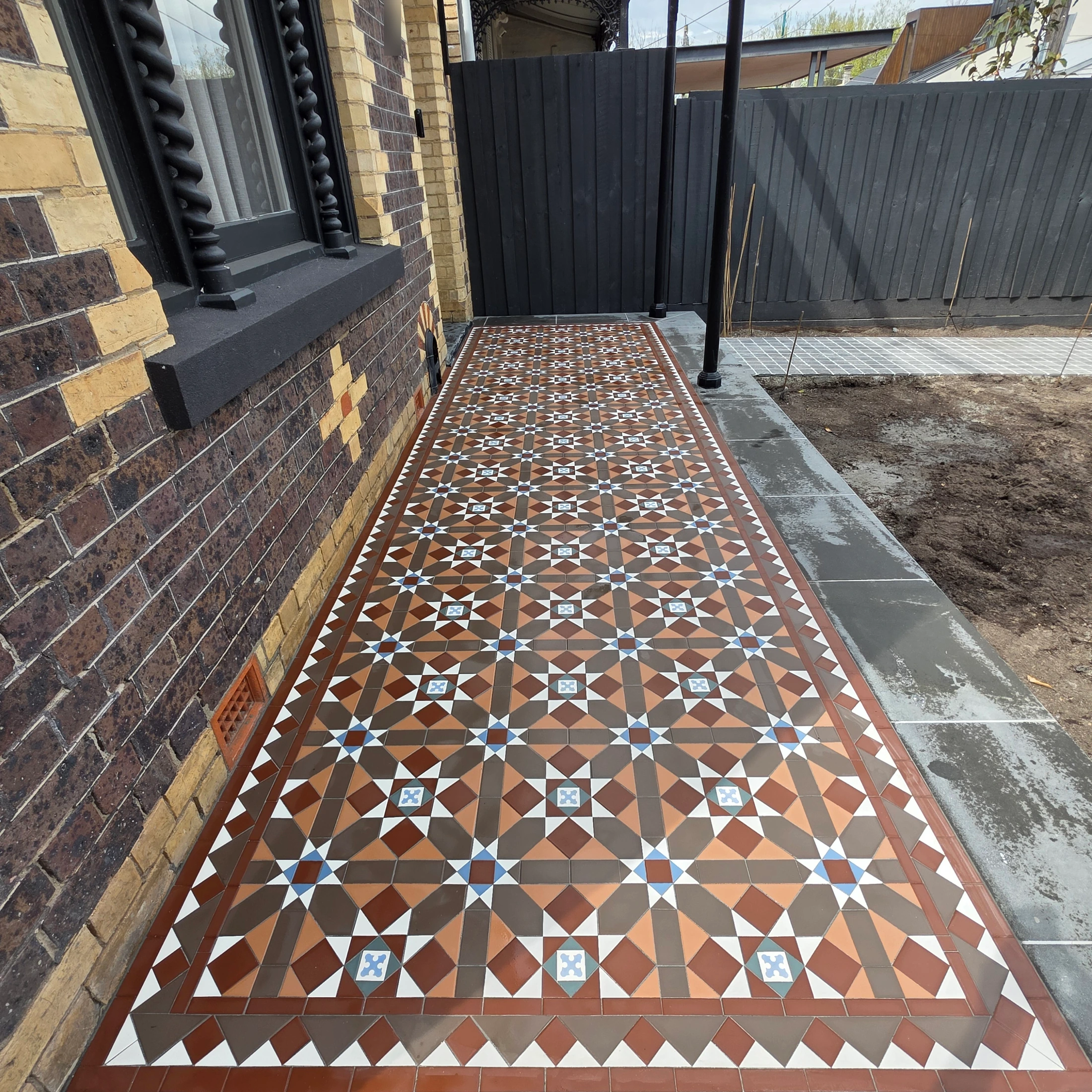
Tiling ideas for Collingwood's varied building character
Yarra City Council describes Collingwood as an early Melbourne suburb that grew quickly from the 1850s, with small houses alongside small businesses and later factories. That layered history makes a single one-size-fits-all tile treatment unsuitable. A compact front path, a traditional verandah and a converted industrial interior each call for different decisions about scale, border detail, transitions and how much new pattern should be introduced.
A design consultation can use the building's proportions, existing thresholds and surrounding materials as the starting point. The aim may be a new tessellated layout that sits comfortably with the architecture, or a restrained intervention that keeps the focus on surviving fabric. Colour and geometry should be selected for the particular setting rather than assumed from the suburb name alone.
A careful approach to heritage places and older surfaces
The Yarra planning scheme identifies multiple heritage overlay places in Collingwood and records local built-form and heritage studies. That does not mean every property is listed or that a particular tiling treatment is automatically approved. Before altering an older verandah, pathway or floor, it is sensible to establish whether the property sits within a relevant overlay or other control and to understand which original details need to be retained.
Where existing tiles remain, restoration can begin with an assessment of condition, pattern, edges and previous repairs. Where a new installation is appropriate, the layout can be designed to respect the property's scale and connections to doors, steps and adjoining paving. Any planning or heritage permissions are property-specific matters for the owner to confirm with the relevant authority.
Tessellated tile services for Collingwood properties
AHTC's Collingwood service can cover design consultation, tessellated tile supply, installation and restoration, with stone bullnose or edging coordination where it suits the project. The practical scope depends on the existing substrate, access, exposure, drainage and the condition of any original tiles, so these details should be reviewed before a method is selected.
For a new verandah or pathway, the useful starting point is the intended proportions, movement through the space and relationship to the building. For an older floor, the priority may instead be documenting what survives and deciding what can be retained, repaired or carefully complemented.
Your Heritage Tiling Questions
Are all Collingwood homes heritage-listed?
No. Collingwood contains identified heritage places and precinct-related controls, but heritage status is property- and overlay-specific. Check the particular property and proposed work with the relevant planning authority before making changes.
Can tessellated tiles suit a converted factory or mixed-use property in Collingwood?
They can, but the design should respond to the building rather than copy a residential pattern. Scale, thresholds, circulation, existing materials and the relationship between retained and new work all matter, particularly where an industrial building has been adapted for another use.
Can you restore an existing tessellated floor or verandah in Collingwood?
An assessment can establish the condition of the surviving tiles, pattern, edges and previous repairs before restoration options are discussed. The appropriate result may be selective repair, careful replacement or a complementary new section, depending on what remains and any property-specific controls.
What should I check before tiling a heritage-sensitive property?
Start by checking whether the property is affected by a heritage overlay or another planning control, then document the existing surface and discuss the proposed scope. A heritage listing or overlay does not by itself determine the tile design, and any permit question should be confirmed for the specific property.
Discuss Your Heritage Tiling Project
Share your location, project details and photographs using our enquiry form, or call 0433 932 711.