
Tessellated tiles and heritage tiling in Eaglemont
Eaglemont’s hillside streets and established garden settings call for tile choices that sit comfortably with the property, not a one-size-fits-all pattern. We can help with tessellated tile design, supply, installation and restoration for floors, verandahs and pathways, including early consideration of layout, transitions and stone bullnose or edging where it suits the brief.
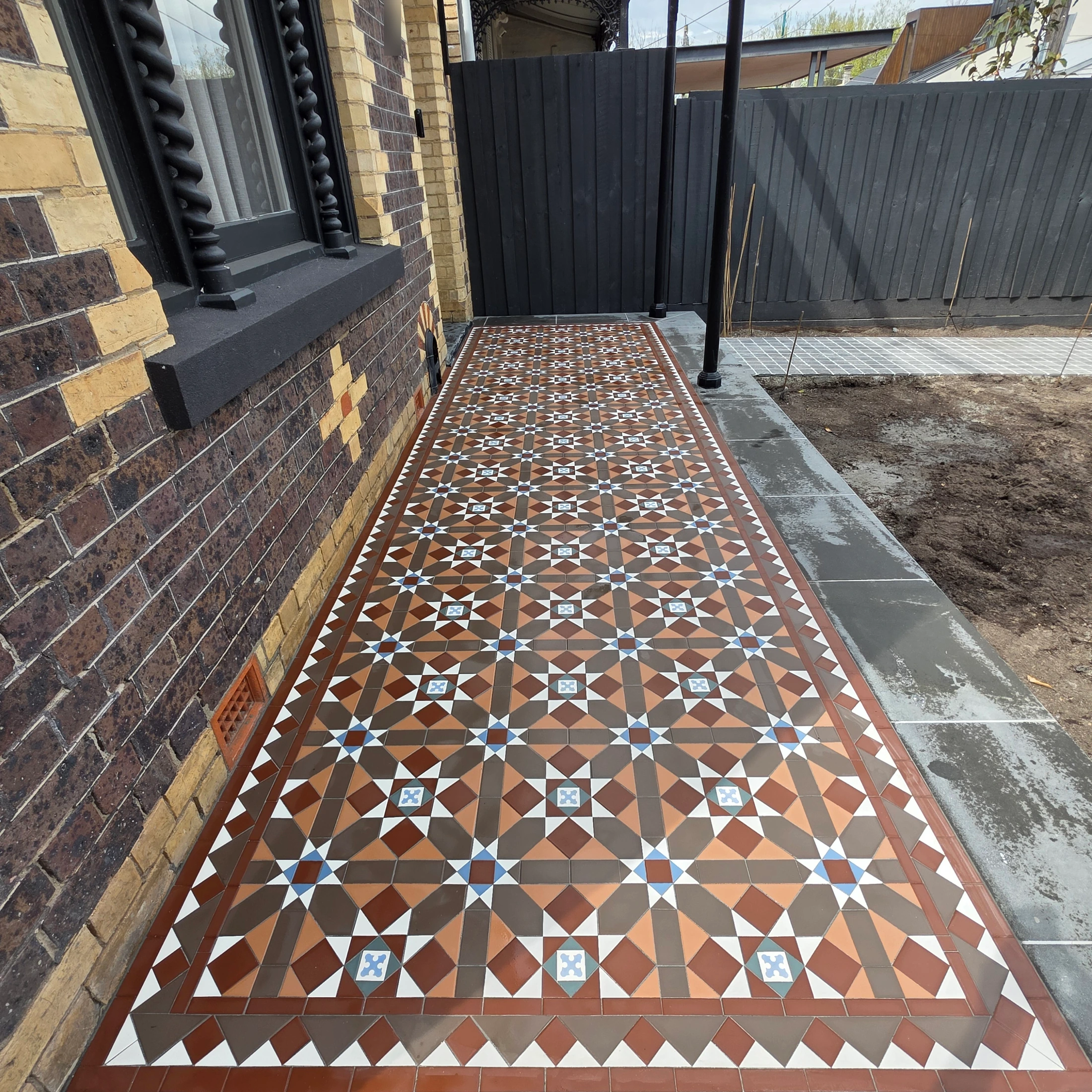
A landscape-led setting for tile design
Banyule’s Mount Eagle and Glenard Estate guidelines describe curving streets shaped by the landform, shared reserves and generous allotments where trees and gardens are intended to remain visually important. For a verandah, entry or garden path, that context makes proportion, border treatment, sightlines and transitions as important as the tile pattern itself.
A design consultation can consider how a new tiled surface relates to the approach to the house, existing steps, retaining conditions, garden edges and the character of the setting. The aim is a durable result that belongs to the property rather than an imitated historical look applied without regard to the site.
When an Eaglemont property has heritage significance
The Banyule Heritage Overlay schedule identifies Mount Eagle Estate, Glenard Estate and Eaglemont Shopping Centre precincts, along with individual heritage places in Eaglemont. A heritage reference does not mean every house has the same controls, so the particular property, the proposed work and any applicable planning information should be checked before work is settled.
For an existing tiled floor, path or verandah, begin by recording what survives: tile sizes and colours, repeated geometry, border sequence, thresholds, steps, drainage interfaces and areas of loss. Restoration or selective repair may be more appropriate than wholesale replacement when the existing fabric contributes to the character of the place.
Plan the practical details before installation
For new work, the useful decisions are usually made before laying begins: the intended pattern and scale, how the layout meets walls and steps, the treatment of exposed edges, and how the tiled area connects with adjoining surfaces. Tessellated tile supply and installation can be coordinated around the design so that the finished geometry is resolved rather than trimmed as an afterthought.
For restoration, condition and retained material guide the approach. Cleaning, repair, careful matching or a limited new section may each be relevant depending on what is present and what the property needs. Stone bullnose or edging coordination can be considered where a step, landing or pathway requires a clear, robust transition.
Start with the property and its brief
Eaglemont contains more than one architectural period and type, from the Griffin-associated estates to later local examples recorded in Banyule’s heritage work. A useful tile brief therefore starts with the individual building, the area being tiled and the desired relationship between old and new, rather than assuming a single suburb-wide style.
Share the location, photographs and the practical aim for the space so the design, supply, installation or restoration discussion can be directed to the relevant part of the property.
Your Heritage Tiling Questions
Are all Eaglemont homes covered by a heritage overlay?
No. Banyule’s planning schedule identifies particular precincts and individual places. Heritage requirements depend on the property and the proposed work, so check the applicable planning information before finalising changes.
What should be considered when tiling a verandah or path in Eaglemont?
Consider the property’s proportions, approach, steps, garden setting, pattern scale, border treatment, drainage interfaces and the way the new surface meets existing fabric. Mount Eagle and Glenard are documented as landscape-led precincts, making the relationship between tilework and setting especially important there.
Can an existing tessellated floor be restored instead of replaced?
Often the first step is an assessment of what remains, including loose or missing tiles, worn areas, borders, thresholds and transitions. Depending on condition and the brief, selective repair, careful matching or broader restoration may be considered.
Can new tessellated tiles be designed for a later Eaglemont home?
Yes. Eaglemont has documented architectural examples from different periods, so a new pattern can be developed around the individual home’s scale, materials and setting rather than assuming that only one historical style is suitable.
Discuss Your Heritage Tiling Project
Share your location, project details and photographs using our enquiry form, or call 0433 932 711.