
Tessellated Tiles in Heidelberg Heights
For Heidelberg Heights homes, tessellated tiles can connect a front path, verandah or interior threshold with the proportions and materials of the property. We help with design consultation, tessellated tile supply, installation, restoration and stone bullnose or edging coordination, taking the existing setting and the intended new work into account.
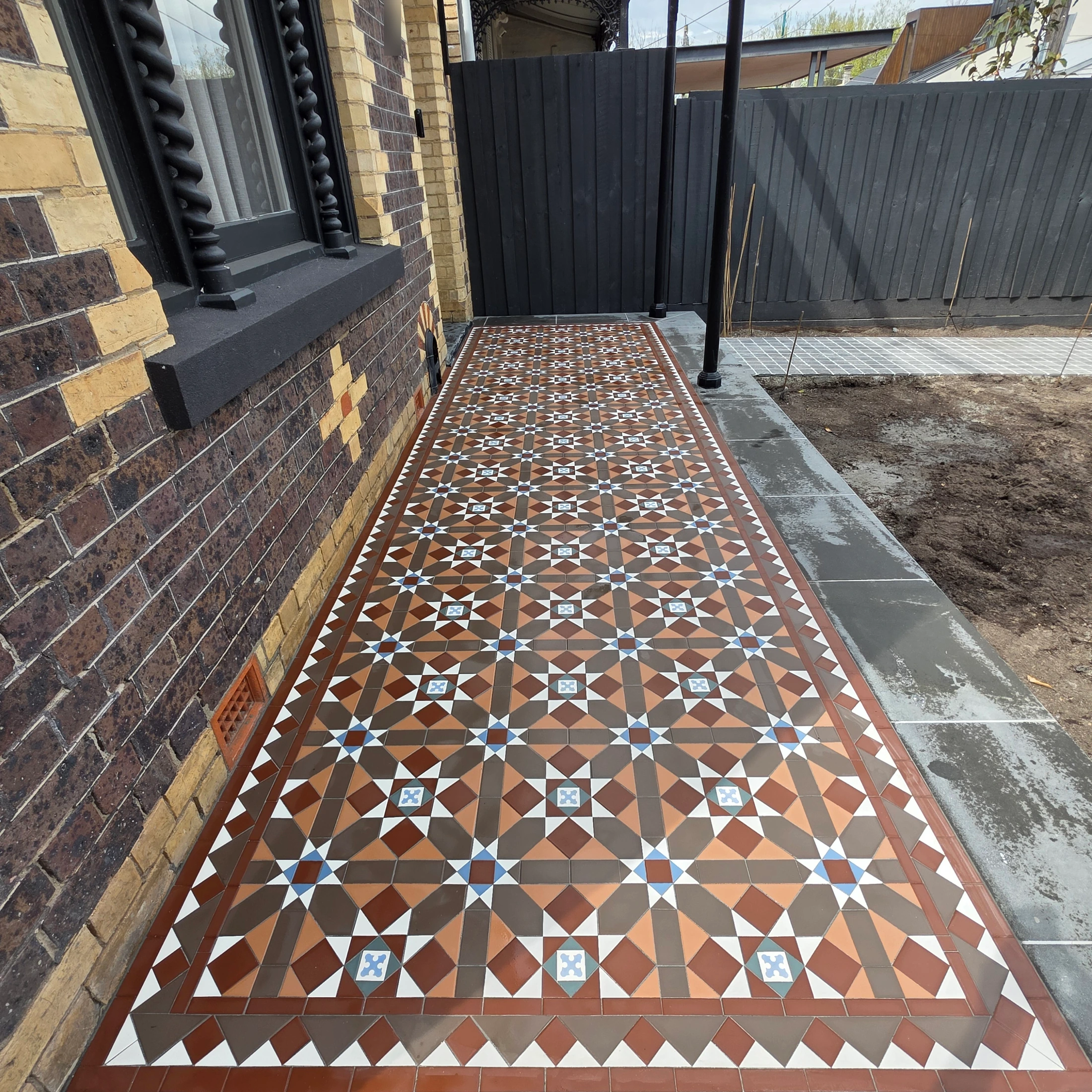
A considered approach for Heidelberg Heights properties
Heidelberg Heights sits within Banyule's West Precinct alongside Bellfield and Heidelberg West. Banyule's local planning material describes this precinct as a place with its own character, local history and relationship to the Darebin Creek trail and surrounding parklands. That context makes the immediate setting useful when selecting a border, scale, colour balance or transition detail, rather than treating every site as interchangeable.
The approved Postcode 3081 Urban Design Framework provides built-form and landscape guidance for applicable areas of Heidelberg Heights. It addresses matters such as setbacks, landscaping, colours and materials. This does not make every property heritage listed or subject to the same controls, so tile decisions should remain specific to the site and checked against the current planning information where a project changes external fabric.
Designing paths, verandahs and thresholds
For a front path or verandah, the pattern should be set out around the actual width, door approaches, steps and edge conditions. A restrained field with a clear border can suit a simple garden setting, while a more detailed repeat may work where the architecture and surrounding finishes can carry it. The practical sequence is to review the space, consider the intended use and drainage, then resolve the layout before final supply and installation details.
Where a new tiled area meets existing brickwork, concrete, stone or another floor finish, the junction deserves as much attention as the pattern. Bullnose or stone edging can help define an exposed edge, but the right profile depends on the site, levels and adjoining materials. These are design and construction decisions to confirm at the property, not universal prescriptions for Heidelberg Heights.
Restoration, matching and property-specific checks
If an existing tiled surface survives, begin by recording its pattern, colour variation, edge treatment and condition before deciding whether to repair, match or replace sections. Restoration may call for careful assessment of loose or damaged tiles and the relationship between the old surface and any proposed new work. The aim is a coherent result that respects what is already there without assuming that every older-looking surface has formal heritage protection.
Banyule's planning scheme uses maps and ordinance provisions to show where zones and overlays apply. Before external works on a property with a known planning, neighbourhood-character or heritage question, check the current property information and obtain any advice required for the proposed work. A suburb name alone cannot establish the applicable controls.
Your Heritage Tiling Questions
Can tessellated tiles suit a Heidelberg Heights front path or verandah?
Yes. The layout can be developed around the property's path width, steps, thresholds, garden setting and adjoining finishes. A site review helps determine an appropriate pattern, border and edge treatment rather than applying one standard design.
Does every Heidelberg Heights home have heritage controls?
No. A suburb-wide assumption is not reliable. Banyule's planning scheme maps zones and overlays, and the applicable information can vary by property. Check the current property-level planning information if the proposed work may affect external fabric or a character-sensitive setting.
How should an existing tiled area be assessed before restoration?
Record the existing pattern, colours, borders, edge details and areas of damage first. The next decision is whether the surface is best repaired, selectively matched or replaced, taking account of the adjoining finishes and the intended use of the space.
Can stone bullnose or edging be coordinated with tessellated tiles?
It can be considered where an exposed edge, step or transition needs a defined finish. The suitable profile and material depend on levels, drainage, adjoining surfaces and the property's design, so they should be resolved as part of the site-specific layout.
Discuss Your Heritage Tiling Project
Share your location, project details and photographs using our enquiry form, or call 0433 932 711.