
Tessellated tiles in Montmorency
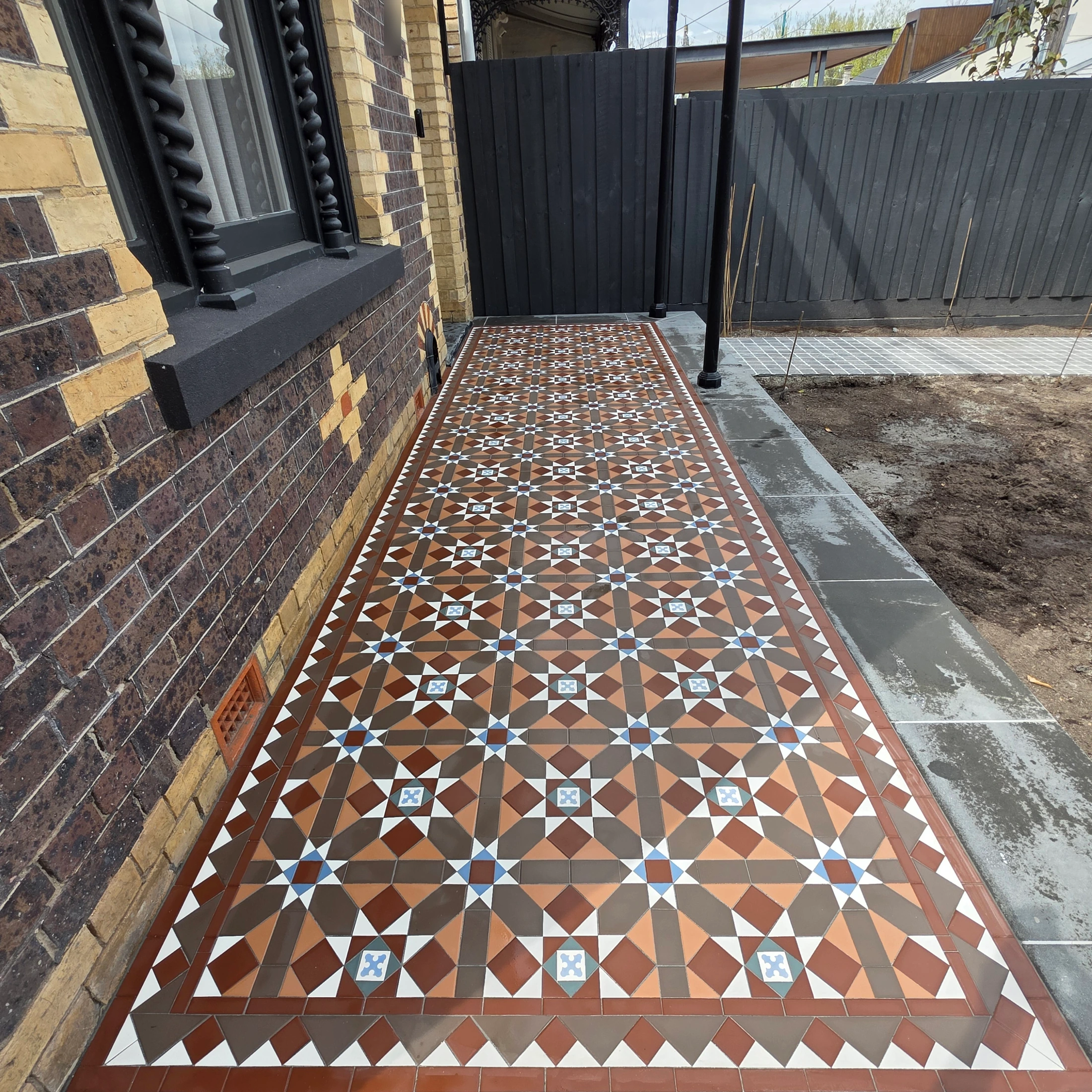
For a Montmorency verandah, pathway, entry or interior floor, tessellated tiles can be planned around the proportions and character of the property rather than treated as a one-size-fits-all pattern. Montmorency's Were Street village has documented mid-century commercial character, while individual places in the suburb appear in Banyule's Heritage Overlay schedule. We can help you consider a suitable layout, tile supply, installation or restoration approach, with the property's existing condition and any applicable controls checked before work is specified.
Designing with Montmorency's local context
Banyule's heritage review describes the Montmorency Shopping Village around Were Street and part of Binns Street as having a consistent 1950s and 1960s architectural character. That is a useful cue for restrained pattern selection and careful transitions in the village context, but it is not a statement that every Montmorency dwelling has the same period or architectural form.
The Were Street centre remains a practical public place as well as a heritage reference point. Banyule's streetscape project retained the village feel while improving paths, planting, paving and accessibility. For a project near this kind of setting, proportion, edging, thresholds and the relationship between a tiled surface and adjoining landscape or public-facing frontage deserve attention alongside colour and geometry.
A property-led approach to tile supply and installation
A first discussion can clarify whether the work is new tessellated tiling, a repair, or an attempt to retain and extend an existing floor. Tile size, border treatment, colour balance, falls, thresholds and the visual relationship with brick, stone, paintwork or garden edges can then be considered together.
For verandahs and pathways, the usable width, door thresholds, exposure and drainage need to be assessed on site. A design that looks right on a sample board may need adjustment when it meets steps, bullnose edges, garden beds or an irregular existing surface.
Checking heritage requirements before changing existing fabric
The Banyule Heritage Overlay schedule includes the Montmorency Shopping Village and several individual Montmorency places. An overlay entry is not a conclusion about every nearby property, and it does not by itself describe the condition or significance of a customer's home. Before altering an existing tiled surface, confirm the property's current planning and heritage position with the relevant authority and obtain any advice or approval that applies to that specific site.
Where original or early fabric remains, a measured inspection and careful documentation can help separate repairable material from later work. Restoration, selective replacement and new installation are different decisions; the appropriate balance depends on what is actually present rather than on the suburb name alone.
Design, restoration and edging coordination
AHTC's service conversation can cover design consultation, tessellated tile supply, installation and restoration. Where a project meets steps or exposed edges, stone bullnose or edging coordination can be considered as part of the overall composition and practical detailing.
Share photographs, dimensions and any available property or planning information when making an enquiry. The useful starting point is the surface itself: its age, pattern, substrate condition, moisture exposure and relationship to adjoining construction.
Your Heritage Tiling Questions
Can you help with tessellated tiles for a Montmorency verandah or pathway?
Yes. A verandah or pathway can be considered through its proportions, thresholds, exposure, drainage, borders and relationship with the house and garden. The design and installation approach should follow the actual site rather than a standard suburb-wide recipe.
Does being in Montmorency mean my property is heritage listed?
No. Banyule's schedule identifies particular heritage places and precincts, including the Montmorency Shopping Village and individual places. Check the specific property and current planning information before changing existing fabric; the suburb name alone does not establish an overlay.
Can an existing tessellated floor be repaired rather than replaced?
Often the first step is to document what survives and assess the condition, pattern, matching options and cause of any damage. A repair, selective replacement or full renewal may then be considered according to the floor and the property-specific requirements.
What should I consider for a tiled entry near the Were Street village area?
Consider how the pattern, border and edge treatment sit with the building frontage, adjoining paving, steps and landscape. Banyule's description of Were Street as a village centre and its retained village character provide useful context, but the design still needs to respond to the individual site.
Discuss Your Heritage Tiling Project
Share your location, project details and photographs using our enquiry form, or call 0433 932 711.