
Tessellated Tiles in Glenbrook
For Glenbrook homes, tessellated tiling can connect a new verandah, entry or pathway with the proportions and character of the property. We can help with design consultation, tessellated tile supply, installation, restoration and stone bullnose or edging coordination, with the approach shaped by the existing building and site.
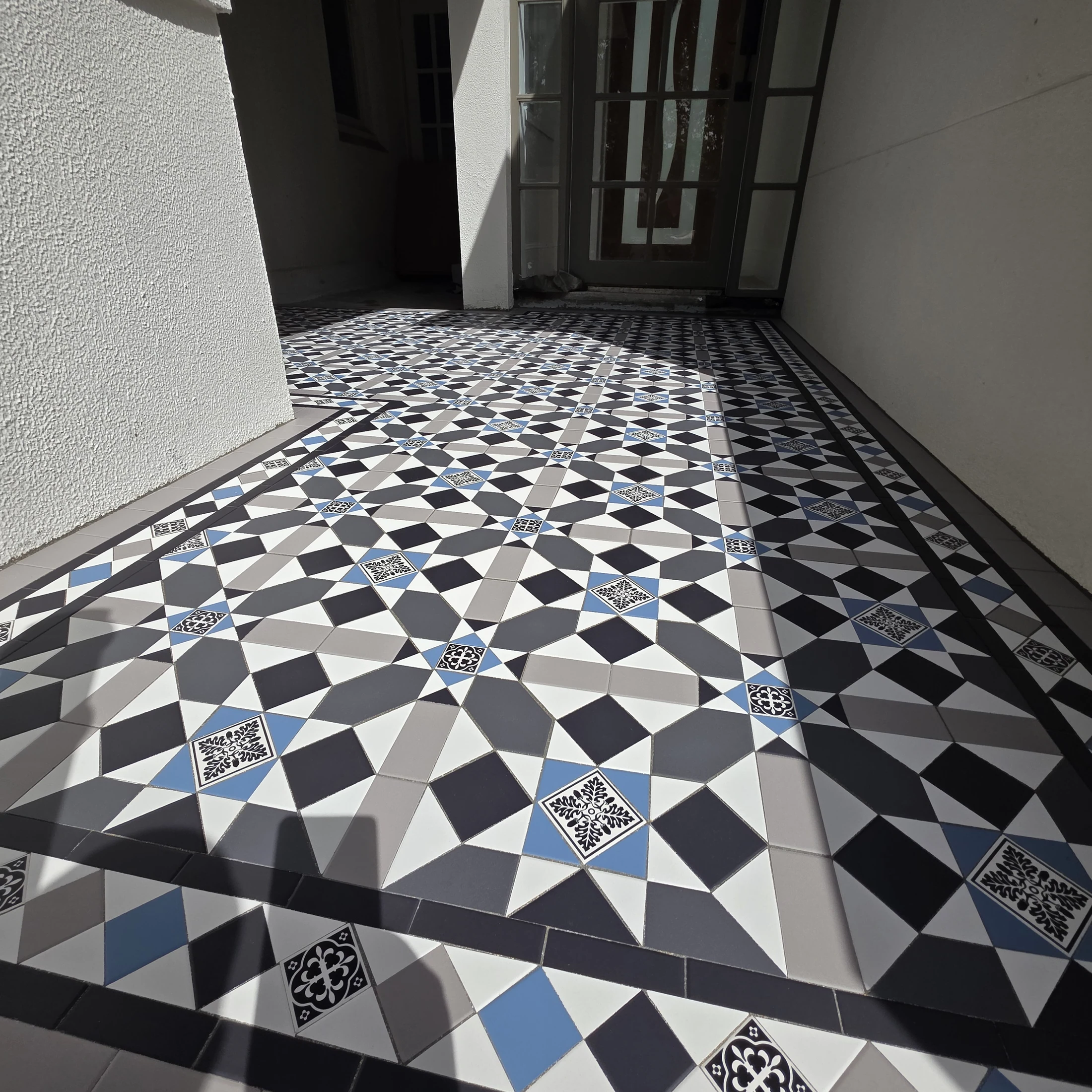
Tiling for Glenbrook's Blue Mountains setting
Glenbrook sits within the Blue Mountains' lower-mountains setting, where established gardens, changing levels and a mix of older and newer residential work can influence how a tiled area feels from the street. A considered layout can give an entry or verandah a clear relationship with the house without treating every property as if it has the same period or heritage status.
Blue Mountains Council identifies a Glenbrook Heritage Conservation Area and describes conservation-area boundaries through a map and inventory sheet. That makes the property's exact position and the surviving fabric at the site more useful starting points than a broad assumption about the suburb.
Blue Mountains City Council geographic contextWestern City District Plan - NSW Government
Design, supply and restoration decisions
For new work, the key choices include the field pattern, border proportions, transitions at doors and steps, and how the finish meets garden edges or stone bullnose details. These decisions can be developed around the house rather than selected as a generic suburb style.
Where original tiles remain, restoration starts with assessing what is present and what can be retained. Matching colour, scale and pattern may be more appropriate than replacing an entire area, while a new pathway or verandah may need a clearly defined contemporary layout that sits comfortably beside older fabric.
Check the property before work begins
A Glenbrook address should be checked against the Blue Mountains Council heritage mapping before design decisions are finalised if the property may be within the conservation area. Council explains that the map datasets are informational and advises formal advice or certified planning information when a decision requires it.
A heritage-sensitive tiling brief does not itself confirm that approval is needed or that a property is protected. The relevant planning controls, the property's exact location and the proposed scope should be considered together.
A practical Glenbrook tiling brief
A useful first discussion can cover the area to be tiled, existing surfaces, access and levels, the visual relationship to the house, and whether the work is new installation, selective repair or restoration. From there, design consultation can be coordinated with tile supply, installation and any stone bullnose or edging requirements.
The existing Blue Mountains service connection remains the right regional context for Glenbrook enquiries, while the property-specific page keeps the design conversation focused on the home and its setting.
Your Heritage Tiling Questions
Does every Glenbrook property sit in the heritage conservation area?
No. Blue Mountains Council identifies a Glenbrook Heritage Conservation Area, but its boundary and inclusions are defined by the relevant map and inventory sheet. Check the individual property rather than assuming the whole suburb has the same status.
Can tessellated tiles work with a newer Glenbrook home?
Yes. The layout can be designed around the home's proportions, entry sequence and landscape rather than copying a historic pattern without context. A border, transition or pathway may be enough to give the work a deliberate relationship with the building.
What should I check before tiling a Glenbrook verandah or pathway?
Confirm the existing surface and levels, consider drainage and transitions at doors or steps, and check the property's planning and heritage information where relevant. Council's property mapping is informational, so seek formal advice or certified planning information when required for a decision.
Can existing tessellated tiles be restored instead of replaced?
Often the first step is to assess what survives and whether selective repair, cleaning or careful matching can retain more of the original work. The suitable approach depends on the tile condition, extent of loss and the proposed use of the area.
Discuss Your Heritage Tiling Project
Share your location, project details and photographs using our enquiry form, or call 0433 932 711.