
Tessellated tiles and heritage-sensitive design in Leura
Leura’s layered Blue Mountains setting calls for tile choices that respect both the house and its landscape. We can help with tessellated tile design consultation, supply, installation and restoration, including considered options for verandahs, pathways, entries and interior floors. The right approach depends on the existing fabric, the pattern, the setting and the practical demands of the property.
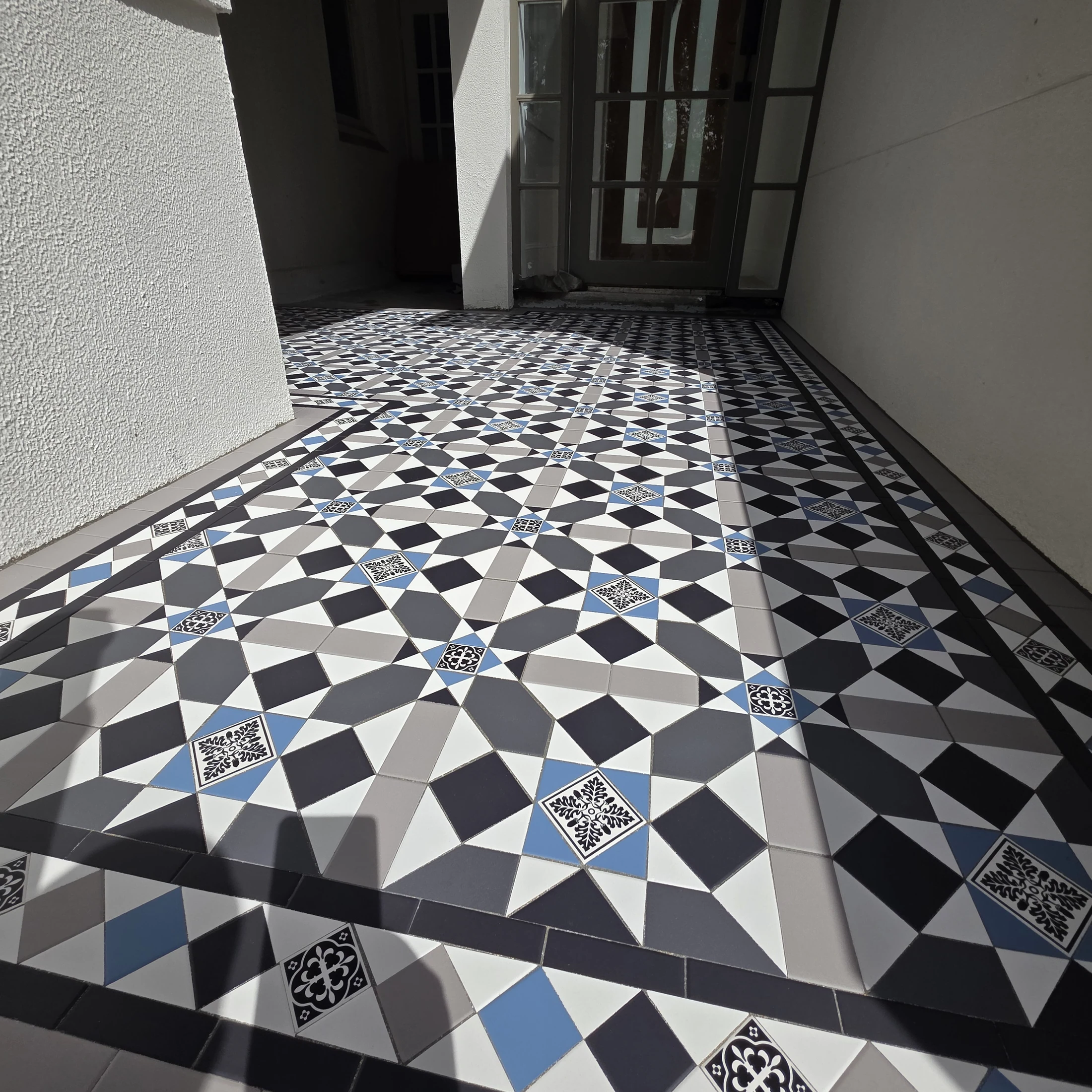
A gardened Blue Mountains setting
Leura is known for mature gardens, hedges, feature trees and a relatively low-density streetscape. The local heritage inventory describes many buildings as late nineteenth- or early twentieth-century homes that remain substantially intact or have been altered sympathetically. That context makes the relationship between a tiled surface, the front garden, the verandah and the approach to the house as important as the pattern itself.
For a Leura project, a useful first step is to look at what remains: original tile fragments, thresholds, stair edges, verandah proportions, adjoining masonry and the way the surface meets the garden. A new layout may need to sit quietly with an established setting, while a repair may need careful matching rather than a wholesale replacement.
Design choices for period homes and gardens
The Leura South inventory records lightweight early materials, generous lots and strong garden character, alongside later buildings that contribute through their mature settings. Tessellated tiles can therefore be considered as part of a broader composition rather than as an isolated decorative finish. Border scale, geometry, colour balance, edge treatment and transitions should be tested against the building’s proportions and the route from street to door.
Where a property sits within a heritage conservation area or contains a separately listed place, property-specific planning and heritage requirements should be checked with the relevant authority before work begins. A conservation setting does not make every home identical, and tile work should not be described as automatically approved or exempt.
Verandahs, pathways and exposed approaches
Leura’s sloping terrain, gardened sites and escarpment weather make the setting part of the design brief. Outdoor tiled areas need decisions about falls, drainage, thresholds, transitions and surface use that are based on the actual site. A pathway leading through planting may need a different proportion and edge treatment from a sheltered verandah or an interior entry.
We can coordinate design consultation with tessellated tile supply, installation, restoration and stone bullnose or edging considerations. For existing floors, the condition of the substrate and surviving tiles should be assessed before deciding whether to retain, repair, lift or replace sections.
Your Heritage Tiling Questions
Are all Leura homes in a heritage conservation area?
No. Blue Mountains City Council identifies several conservation areas in Leura, each with its own mapped boundary. A property-specific check is needed rather than assuming that every Leura address has the same heritage status or planning requirements.
Can tessellated tiles suit a Leura period home?
They can, when the layout and finish are selected with the building and garden setting in mind. Existing thresholds, verandah proportions, surviving fragments, adjacent materials and the intended use should be considered before settling on a pattern or border.
What should be checked before tiling an outdoor pathway in Leura?
The site should be considered as a whole, including levels, drainage, transitions, exposure, access and how the path meets garden edges and the house. The appropriate construction and finish depend on the existing conditions rather than a universal recipe.
Can damaged original tiles be restored instead of replaced?
Often the decision starts with an inspection of the surviving tiles, pattern, substrate and areas of damage. Selective restoration or carefully matched new work may be appropriate, but the suitable option depends on the individual floor and its condition.
Discuss Your Heritage Tiling Project
Share your location, project details and photographs using our enquiry form, or call 0433 932 711.