
Tessellated Tiles in Springwood, NSW
Springwood's Blue Mountains setting includes established residential streets, a well-used Macquarie Road centre and local heritage conservation areas. Authentic Heritage Tiling Co can help you consider tessellated tile layouts, supply, installation and restoration for a home or project in Springwood, with the existing building, access and surrounding landscape guiding the design conversation.
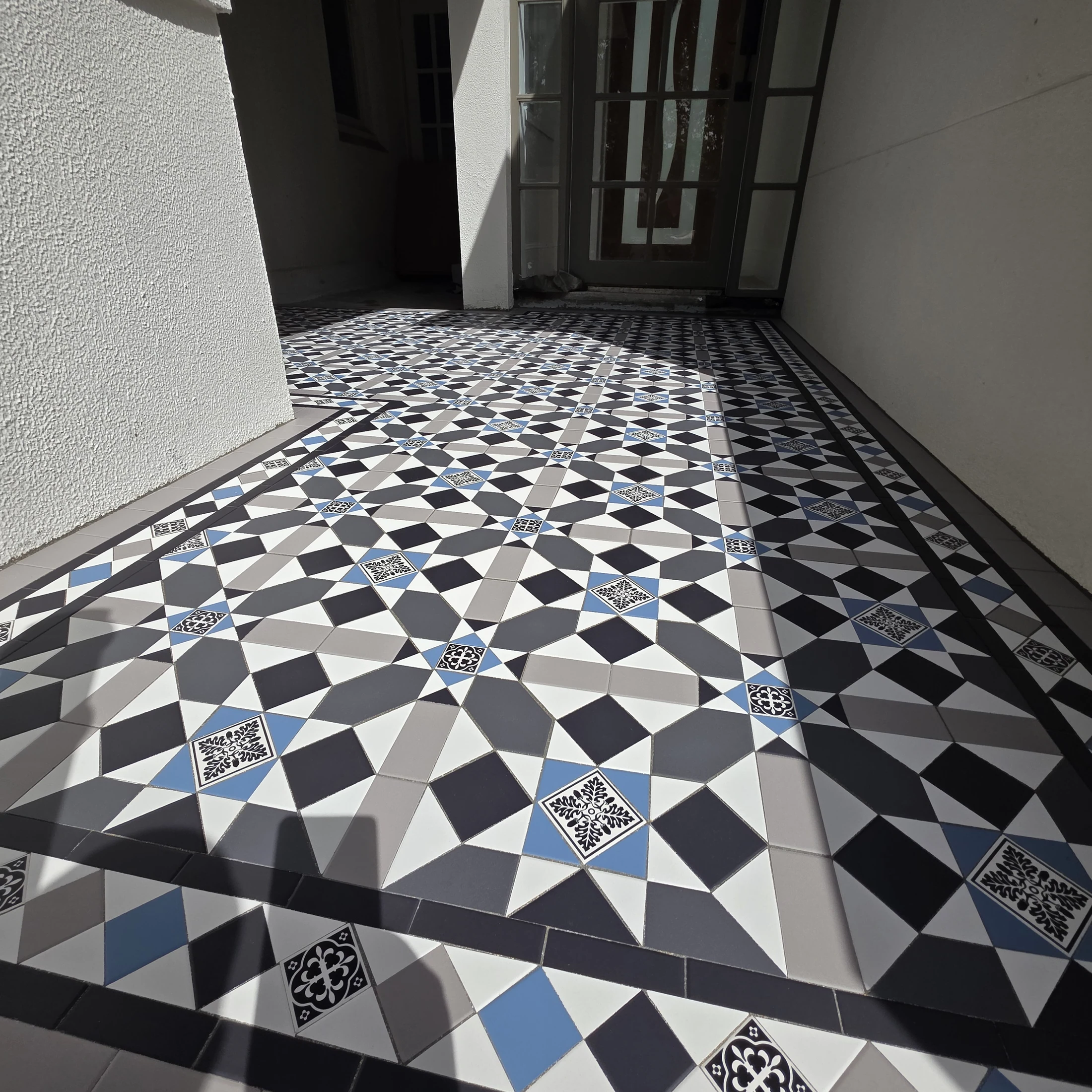
Tiling for Springwood homes and streetscapes
Council's Springwood heritage records describe areas of mostly single-storey early to mid-twentieth-century housing, consistent setbacks, mature gardens and low or transparent front fences. In another Springwood precinct, mature planting and hedges help frame modest houses beside the railway corridor. These details can matter when a new verandah, entry path or threshold is meant to sit comfortably with an established home rather than compete with it.
Tessellated layouts can be considered for verandahs, pathways, porches and interior floors. The useful starting point is the property itself: existing tile fragments, the proportions of the space, sightlines from the street and the relationship between paving, garden and house. A consultation can then address pattern direction, border treatment, transitions and whether new work should complement or deliberately distinguish itself from surviving fabric.
Springwood's conservation-area status is not suburb-wide. If your property is in or near a mapped heritage conservation area, check the current Blue Mountains City Council mapping and property-specific requirements before work begins. Heritage-sensitive tile advice does not replace a council or planning assessment, and a conservation area does not mean every house has the same history or controls.
Design, supply and restoration decisions
For a new Springwood installation, the design can be developed around the home's scale and the way people approach it from the street or garden. Border width, repeat size, colour balance and edge details should be resolved with the dimensions and use of the space in view. Stone bullnose or edging coordination may also be relevant where tiled work meets steps, garden edges or another paving surface.
For an older floor or verandah, begin with an assessment of what remains. Matching is not only a colour exercise: orientation, wear, surviving borders, substrate condition and the relationship with adjacent finishes all influence a repair or restoration approach. Where original fabric is worth retaining, selective work may be more appropriate than wholesale replacement.
The appropriate sequence and construction detail depend on the property and the work area, so no single substrate or installation method should be assumed in advance.
A property-led starting point
Before choosing a pattern, photograph any existing tiles and note where the work sits in relation to the house, garden, street and access route. For properties in a mapped heritage conservation area, use the Council's heritage layer to confirm the boundary and seek the relevant property-specific guidance. This is particularly useful where a front verandah, visible pathway or intact garden setting contributes to the street presentation.
Bring the dimensions, photographs and any available history of the space to a design discussion. The aim is a tile scheme that is practical for the site and visually considered, whether the brief is a new Springwood pathway, a period-informed verandah or careful work to an existing tiled floor.
Your Heritage Tiling Questions
Does every Springwood property have heritage controls?
No. Blue Mountains City Council identifies specific heritage conservation areas and provides maps for their boundaries. Check the Council's current heritage mapping for the individual property rather than assuming that all of Springwood has the same controls.
What should I consider for tessellated tiles on a Springwood verandah or pathway?
Consider the existing house, the proportions of the verandah or path, street visibility, garden setting, access and transitions to other surfaces. In established Springwood streetscapes, setbacks, mature planting and modest building scale can all influence how a new tiled surface sits with the property.
Can older Springwood tiles be restored rather than replaced?
Often the first step is an assessment of the surviving tiles, borders, orientation, wear and underlying condition. If original fabric remains useful and stable, selective restoration or carefully matched repairs may be considered instead of replacing the whole surface.
Can a new tile design suit a heritage conservation area?
A suitable approach depends on the property and the proposed work. A design consultation can consider scale, pattern, edge treatment and the relationship with the existing house, while the relevant Blue Mountains Council mapping and property-specific planning guidance should be checked before work begins.
Discuss Your Heritage Tiling Project
Share your location, project details and photographs using our enquiry form, or call 0433 932 711.