
Tessellated tiles in Camberwell
Camberwell combines an active junction and civic centre with established residential streets and a documented heritage setting. For a new floor, verandah or pathway, the right tessellated tile layout should suit the proportions and architecture of the property. Where original or earlier tiling remains, assessment and careful matching can help guide the next decision without assuming that every property has the same heritage controls.
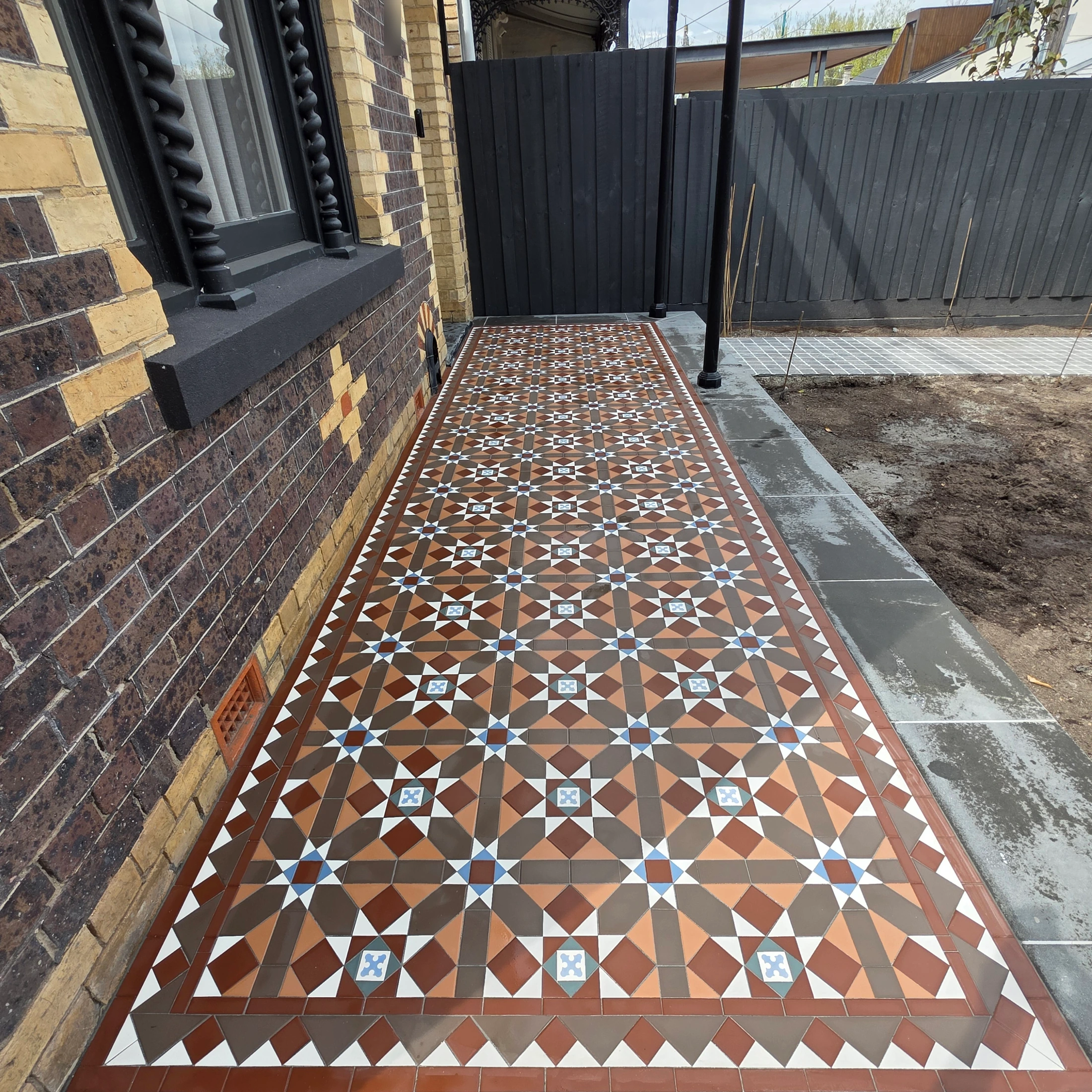
Designing for Camberwell's varied built character
Camberwell Junction has a diverse built form. Local planning guidance refers to the main-street character of Burke Road and the Junction, while the civic precinct includes modern and heritage buildings, churches, a school, library and offices. That mix makes proportion, edge treatment and the relationship between new work and existing fabric more useful starting points than a one-size-fits-all pattern.
For a period-influenced home, a tessellated floor or verandah can be developed around the building's entry sequence, façade scale and existing colours. For a more recent alteration, a restrained border or carefully proportioned field may connect the new surface to the architecture without imitating details that are not present. Design consultation can consider the room, threshold, exposure and intended use before tile supply or installation is arranged.
Working carefully with existing tilework
Camberwell has dedicated heritage studies and a heritage review for the Junction, and planning material identifies heritage-protected Victorian shops along Burke Road. Those records show why an existing tiled surface deserves inspection before replacement. Condition, drainage, movement, previous repairs and the relationship to adjoining finishes can all affect whether selective restoration, sympathetic renewal or a new installation is the better path.
A heritage reference or character area does not by itself establish the controls for every property. Owners should confirm any property-specific heritage overlay, permit or planning question with the relevant authority. A tiling assessment can then stay focused on the physical surface, the desired appearance and a practical scope for supply, restoration, installation or stone bullnose and edging coordination.
Verandahs, pathways and transitions
Camberwell properties can present different thresholds: a sheltered verandah, a garden path, an internal entry or a transition beside newer work. Layout decisions should account for the path width, sightlines, door clearances and how the pattern meets steps, walls or another floor finish. Borders and stone edging can be coordinated where they support the geometry and weather exposure of the site.
The local planning emphasis on protecting main-street character and managing interfaces with adjoining residential properties is a useful reminder to consider the whole setting, not only the tile field. The same property-led approach applies to a domestic project: retain what contributes to the character, make new work legible and select materials that are suitable for the actual location.
Your Heritage Tiling Questions
Can tessellated tiles suit a Camberwell period-style home?
They can be designed to complement a period-style home, but the pattern, border, colour balance and scale should be considered against the property's own façade, entry and surviving details. A consultation can help develop an appropriate design rather than assume a standard Camberwell pattern.
Should existing Camberwell tiles be restored or replaced?
That depends on condition and significance. Begin with an inspection of the existing tiles, bedding, edges, drainage and previous repairs. Selective restoration may be suitable in some cases; in others, a carefully matched renewal or new installation may be more practical. Property-specific heritage controls should be checked separately.
Can you plan tessellated tiles for a verandah or pathway in Camberwell?
Yes. Planning can address the pathway or verandah proportions, entry transitions, border layout, exposure and the way the tiled surface meets steps, walls or other finishes. The site should guide the design and installation approach.
Does a Camberwell heritage study mean every property needs heritage approval?
No. A suburb-wide study or a heritage-protected streetscape does not determine the controls for every individual property. Check the relevant planning and heritage information for the specific address before work begins, and treat the tile design as a property-specific decision.
Discuss Your Heritage Tiling Project
Share your location, project details and photographs using our enquiry form, or call 0433 932 711.