
Tessellated tiles in Hawthorn East
For a Hawthorn East home, a tessellated floor, verandah or pathway can be designed as a considered part of the property's architecture. We can discuss pattern, scale, edging and practical installation or restoration requirements for your site, while keeping any heritage questions specific to the property rather than assuming a whole suburb has one protected character.
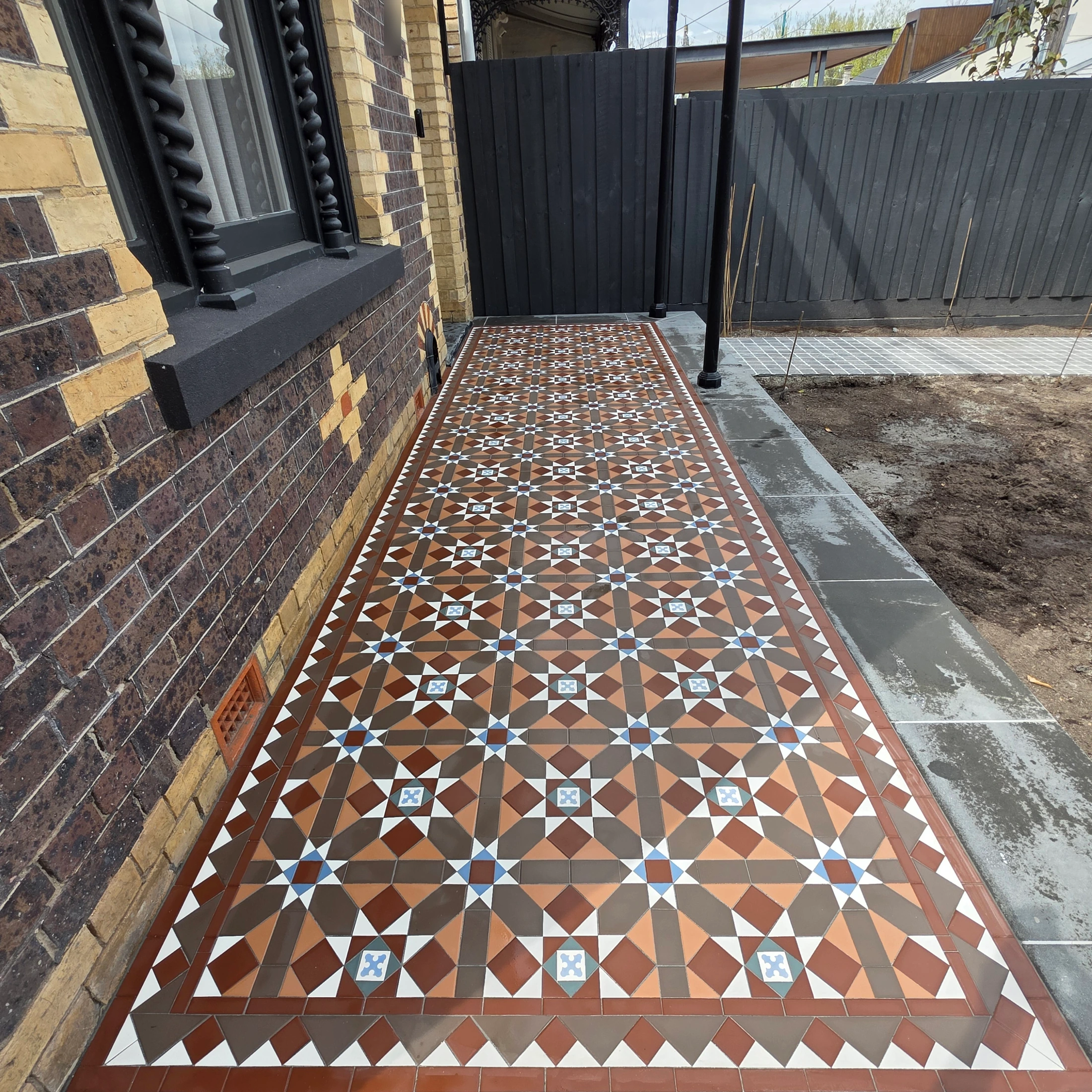
A property-led approach for Hawthorn East homes
Hawthorn East sits within the City of Boroondara, in Melbourne's inner and middle-eastern suburbs. Boroondara maintains a Hawthorn East heritage gap study as part of its local heritage-study program, so project decisions benefit from looking closely at the individual house, its setting and any relevant local controls rather than applying a generic period treatment. [Source: vic-boroondara-council-profile, boroondara-completed-heritage-studies]
The local gap-study record describes work assessing places outside existing Heritage Overlays and recommending precincts, an extension and individual places for possible inclusion. That history makes a measured first conversation useful: identify what survives, what is later work and what the proposed tiling needs to do. A study or nearby heritage place does not mean every property is protected or that a particular tile pattern is mandatory. [Source: hawthorn-east-heritage-gap-study-record, boroondara-heritage-guidance]
Designing a floor, verandah or pathway
Start with the way the tiled area meets the house. A front path may need a clear border and a pattern that reads well from the street; a verandah may need careful attention to thresholds, falls and how the new surface meets steps or garden edges. Indoor floors call for a different conversation about room proportions, light and transitions.
We can help develop a tessellated layout, coordinate tile supply and plan installation around the existing site. Stone bullnose or edging can also be considered where it provides a durable, visually resolved edge. The appropriate substrate, preparation and sequencing depend on the actual conditions found at the property, not on a universal recipe.
Restoring existing tessellated tiles
Where original or earlier tiles remain, document the layout and condition before deciding what to replace. Retaining sound fabric, matching a repair discreetly and separating repair work from new work can produce a more coherent result than removing an entire surface without investigation.
Boroondara provides a Heritage Overlay and grading map and recommends heritage studies and local records as part of property research. If your Hawthorn East property may be affected by a Heritage Overlay or another planning control, check the relevant requirements with the responsible authority before works begin. A tiling consultation can inform design and condition decisions, but it is not heritage or planning approval. [Source: boroondara-house-history-guidance, boroondara-heritage-guidance]
Bring the right details to a consultation
Useful starting information includes photographs of the area, approximate dimensions, access constraints and any visible cracking, movement, damp or previous repairs. For a restoration discussion, photographs of surviving tiles and borders can help establish whether the priority is careful repair, a sympathetic extension or a new design that sits comfortably with the home.
Boroondara's local-history guidance notes that heritage studies, council records and research into alterations can help owners understand a property's development. That background can support a better tiling brief, especially where the visible surface is only one part of a longer sequence of changes. [Source: boroondara-house-history-guidance]
Your Heritage Tiling Questions
Does every Hawthorn East home need heritage approval for tessellated tiles?
No. Heritage requirements are property-specific. Boroondara provides a Heritage Overlay and grading map, and its local studies identify particular places and precincts rather than treating every home as protected. Check the relevant property information and planning requirements before work begins. [Source: boroondara-heritage-guidance, hawthorn-east-heritage-gap-study-record]
Can a new tessellated pathway suit an older Hawthorn East house?
It can, when the layout responds to the house and site. Border width, pattern scale, thresholds, steps, drainage and the relationship between the path and the frontage should be considered together rather than selected in isolation.
What should I check before restoring old tiles?
Photograph the surface, note areas of movement or loss, and look for evidence of earlier repairs or later additions. It is also sensible to check the property's Heritage Overlay or grading information and use available local-history material before removing surviving fabric. [Source: boroondara-house-history-guidance, boroondara-heritage-guidance]
Can you coordinate edging for a Hawthorn East verandah or path?
Yes. Stone bullnose or another suitable edging approach can be considered alongside the tile layout, levels and adjoining steps or garden edges. The right detail depends on the dimensions and conditions of the particular site.
What information is helpful for a Hawthorn East tiling consultation?
Share clear photographs, approximate measurements, access information and any known history of repairs or alterations. If the property has a possible heritage control, include the relevant property information so the design discussion can remain appropriately cautious. [Source: boroondara-house-history-guidance]
Discuss Your Heritage Tiling Project
Share your location, project details and photographs using our enquiry form, or call 0433 932 711.