
Tessellated Tiles in Mont Albert
Mont Albert's established residential streets include period homes and streetscapes where tile geometry, porch proportions and the relationship between a house and its garden can matter as much as the floor finish itself. We can help with tessellated tile design, supply, installation and restoration for homes in Mont Albert, including verandahs, entrances, pathways and other considered areas.
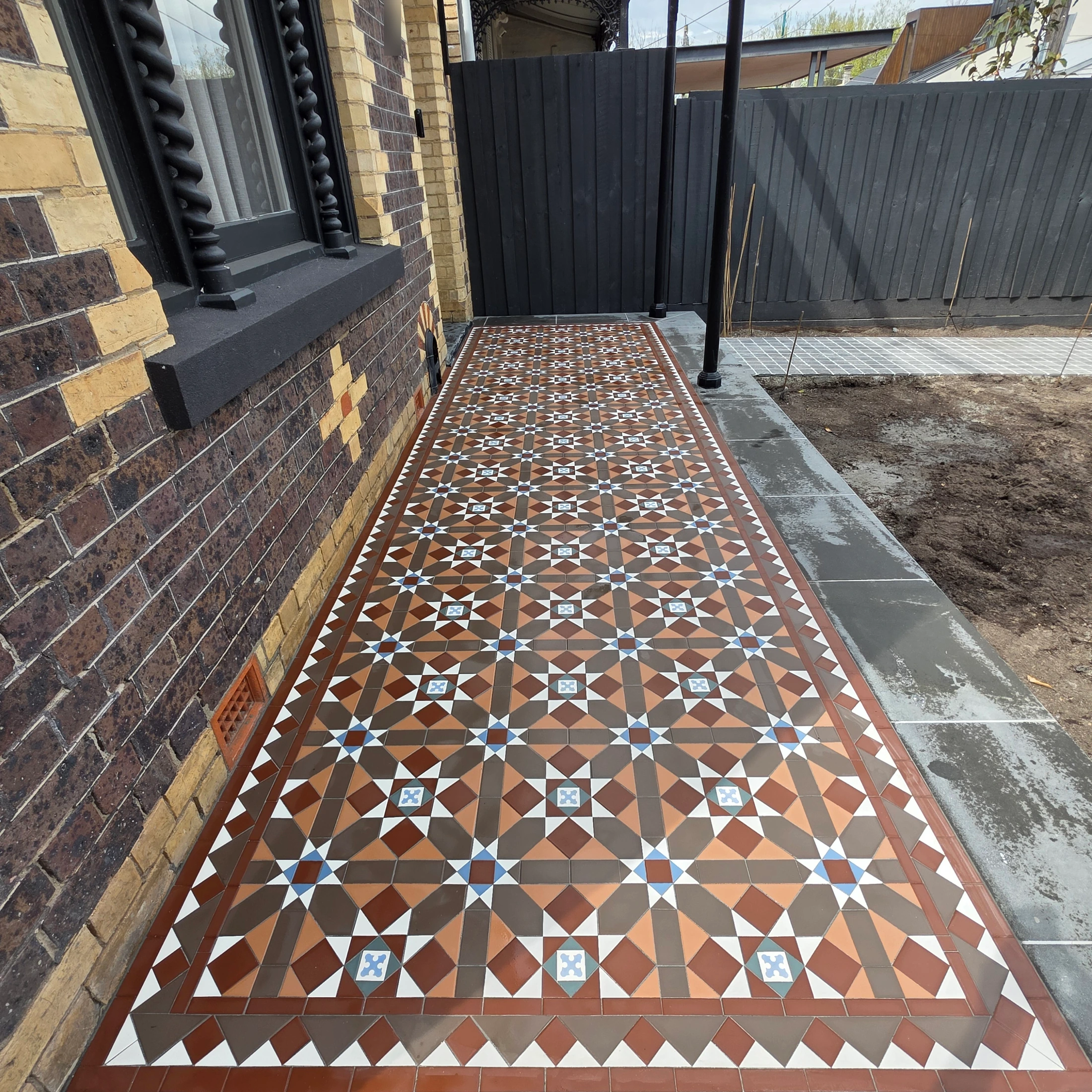
Tiling that responds to Mont Albert's period streetscapes
The Mont Albert Residential Precinct guidance describes substantially intact Victorian, Edwardian and inter-war houses, including red-brick Edwardian villas, decorative verandah and gable details, broad blocks and mature planting. Those features make proportion and edge treatment important when a tiled area is visible from the street.
For a front verandah or path, a design consultation can consider the home's architectural lines, the width of the approach, transitions at doors and gates, and how borders sit beside planting or existing paving. The aim is a coherent result rather than a pattern that overwhelms the building.
Check the property before changing original fabric
Mont Albert includes heritage-overlay places and precinct guidance, but heritage status is not uniform across the suburb. Before removing an older tiled surface or changing a visible frontage, check the property's applicable planning controls and the relevant heritage citation with the responsible council.
Where original fabric is worth retaining, restoration or carefully matched repair may be preferable to wholesale replacement. New work can then be designed around the surviving material, access, drainage and the way the finished surface meets steps, thresholds and garden edges.
Design, supply and installation for homes and pathways
AHTC can discuss tessellated layouts for verandahs, entry paths and selected interior areas, then coordinate tile supply and installation around the property's existing conditions. Restoration work can focus on assessing the surviving pattern and finish before decisions are made about cleaning, repair, matching or replacement.
Stone bullnose or edging coordination can help define steps and transitions where a tiled path meets a garden, landing or other surface. The appropriate detail depends on the site and the surrounding architecture, so the design should be settled after viewing the area and its intended use.
Your Heritage Tiling Questions
Are all Mont Albert homes heritage listed?
No. Official guidance distinguishes between significant, contributory and non-contributory places, and heritage controls apply to particular properties or precincts. Check the applicable council mapping and heritage citation for the property before planning visible alterations.
What should I consider for a tessellated front path in Mont Albert?
Consider the house's period details, the width and fall of the approach, border proportions, thresholds, steps, garden edges and the view from the street. In a heritage-sensitive setting, the design should minimise visual intrusion and respond to the existing streetscape rather than treating the path as an isolated pattern.
Can an existing tessellated verandah be restored rather than replaced?
Often the first step is an assessment of what survives, including the pattern, edges, condition and areas of loss. Restoration or selective repair may be appropriate where original fabric contributes to the property's character, subject to the condition and any applicable planning controls.
Which council should I check for a Mont Albert tiling project?
Mont Albert is shared by Whitehorse and Boroondara. Confirm the property's actual council and then check its planning and heritage information, especially if the work involves demolition, construction, alteration or extension in a heritage overlay.
Discuss Your Heritage Tiling Project
Share your location, project details and photographs using our enquiry form, or call 0433 932 711.