
Tessellated Tiles in Bass Hill
For Bass Hill homes and public-facing properties, tessellated tiles can bring pattern, proportion and a durable finish to verandahs, pathways and interior floors. We can help you consider a new design, coordinate tessellated tile supply and installation, or assess existing tiles for careful restoration. Bass Hill sits within Sydney's south-western suburbs, so the right approach starts with the individual property's fabric, access and intended use rather than assuming every site shares the same heritage status.
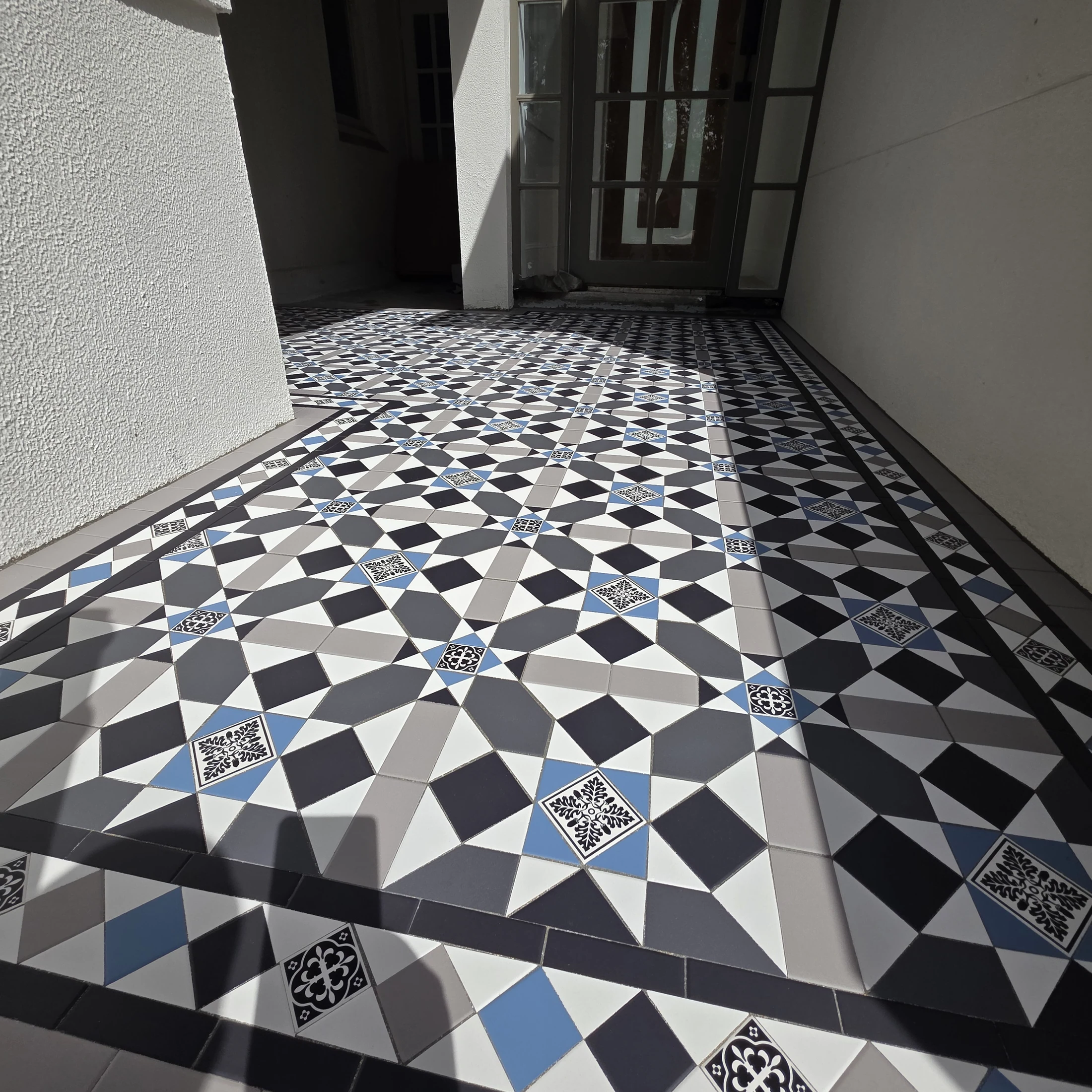
A Bass Hill context for tile decisions
Bass Hill is listed by Canterbury-Bankstown Council in the Buru / Bass Hill Ward. The locality's documented public history includes its earlier name, Upper Bankstown, Liverpool Road, and the opening of Bass Hill Public School in 1923. That history offers useful context for respecting older proportions and established streetscapes, but it does not mean every Bass Hill property is heritage-listed or belongs to a conservation area.
When a property has surviving period fabric, a tile layout can be designed to sit comfortably with the building's scale and circulation. We can look at the entry sequence, verandah or pathway proportions, existing thresholds and the relationship between pattern and surrounding brickwork, render, stone or garden edges.
Your Council | City of Canterbury BankstownOur school history | Bass Hill Public SchoolHeritage | City of Canterbury Bankstown
Design inspiration for verandahs, paths and floors
A Bass Hill tile scheme may be developed for a verandah, front path, porch, hallway or another defined floor area. Early design conversations should settle the pattern scale, border treatment, transitions and the visual weight of the installation in relation to the building. A restrained field with a considered border can support an existing façade, while a more graphic arrangement may suit a clearly new intervention that does not imitate original fabric.
For an older property, retain and work around sound original details wherever practical. Existing thresholds, steps, damp-prone edges, movement joints and drainage falls all affect how a new or repaired tiled surface should be planned. These are site questions to assess before finalising a pattern or installation sequence.
Our school history | Bass Hill Public SchoolHeritage | City of Canterbury Bankstown
Heritage-sensitive work is property specific
Canterbury-Bankstown Council explains that heritage protection operates through the Local Environmental Plan and related controls. It also notes that changes to a heritage-listed property or a property in a heritage conservation area will normally require development consent, while some minor works may be possible after written council advice. Check the individual property before removing, covering or altering an older tiled surface.
Where existing tessellated tiles remain, restoration can begin with documenting the pattern, identifying sound and damaged areas, and deciding what should be retained, repaired or replaced. Where the work is new, design consultation can help distinguish a complementary contemporary installation from an attempt to reproduce a historic surface without enough evidence. Council's heritage advisory service is the appropriate place to confirm local planning or heritage requirements; tile design and installation services do not replace that advice.
Heritage | City of Canterbury BankstownCanterbury-Bankstown Development Control Plan | City of Canterbury BankstownCanterbury-Bankstown Local Environmental Plan 2023 | NSW legislation
Craftsmanship from design through installation
Good tessellated tiling depends on more than selecting a pattern. The work should coordinate setting-out, tile supply, substrate and edge conditions, installation sequencing and the finished relationship to doors, steps and adjacent materials. For Bass Hill projects, a measured site review helps identify the practical details that will shape the result before materials are ordered.
We can also coordinate stone bullnose or edging where a tiled path, verandah or stair detail needs a durable and visually resolved edge. The final recommendation should follow the property's dimensions, existing fabric and use rather than a one-size-fits-all recipe.
Heritage | City of Canterbury BankstownOur school history | Bass Hill Public School
Your Heritage Tiling Questions
Does every Bass Hill property need heritage approval for tessellated tiles?
No. Heritage requirements depend on the individual property's listing, conservation-area status and the proposed work. Canterbury-Bankstown Council advises checking the property and obtaining written advice where relevant before proceeding; the suburb name alone does not establish a heritage control.
Can existing tessellated tiles in Bass Hill be restored rather than replaced?
Often the first step is an assessment of the existing pattern, tile condition, edges, substrate and areas of loss. That assessment can establish whether careful cleaning and selective repair are appropriate, or whether a partial or full replacement needs to be considered.
What should be considered for a Bass Hill verandah or pathway?
Consider the proportions of the area, border and transition details, door thresholds, steps, drainage and how the pattern relates to the building and surrounding landscape. A site review is useful before choosing a layout or ordering materials.
Can a new tile design suit an older Bass Hill home without pretending to be original?
Yes. A new installation can respond to the scale, materials and circulation of an older property while remaining legible as new work. The design should be based on the actual building and any available evidence, not on an assumption that every older-looking detail is original.
Discuss Your Heritage Tiling Project
Share your location, project details and photographs using our enquiry form, or call 0433 932 711.