
Tessellated tiles in Canterbury
Canterbury's built story follows the Cooks River, early industry, railway-linked subdivision and successive waves of suburban development. For a home, verandah or pathway, tessellated tiles can be considered as part of the property's proportions, materials and street presentation rather than as an isolated pattern choice. We can help with design consultation, tessellated tile supply, installation and restoration, with stone bullnose or edging coordination where appropriate.
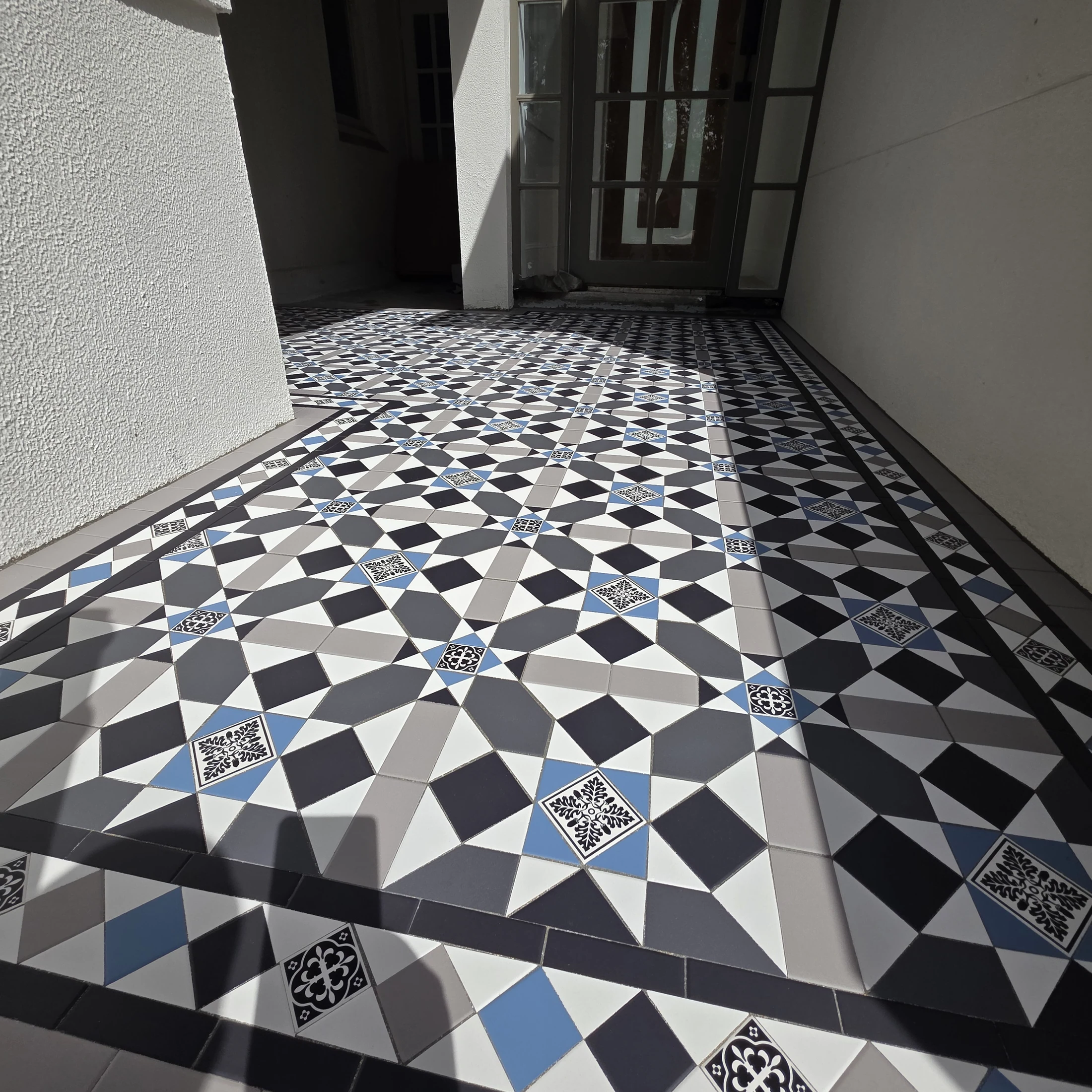
A local setting shaped by river, industry and suburban growth
Canterbury is an inner-western Sydney suburb bisected by the Cooks River. Its recorded history includes early land grants and farming, nineteenth-century industry, roads and bridges, and later railway-linked subdivision and suburban expansion.
The Canterbury Heritage Review describes timber houses with iron roofs and bullnose verandahs among the housing built before 1910, followed by Federation and inter-war growth. That history is useful design context, but it does not mean every Canterbury property has the same period, character or heritage status.
Start with the property, not a stock pattern
For an older Canterbury entry, verandah or pathway, begin by looking at the existing floor levels, thresholds, steps, edges, door openings and the way the work meets the street. A layout may need to respect the scale and rhythm of the frontage while still being a clearly considered new intervention.
Where original tilework or other significant fabric survives, condition, extent and later alterations should be understood before deciding whether to retain, repair, match or introduce new work. A site assessment is important because the public record cannot establish the condition of areas that are not visible.
Design inspiration for verandahs and pathways
Canterbury's documented mix of Victorian, Federation and inter-war development provides a starting point for proportion and restraint. Consider how a border, geometric field or threshold transition relates to the width of the verandah, the entry sequence and the home's existing material palette.
Pathways need their own response to movement, levels, drainage and edges. Stone bullnose or edging can help resolve a transition where it suits the site, but the correct detail depends on the existing construction and the way water and adjoining surfaces are managed.
Check the applicable heritage controls
The City of Canterbury-Bankstown explains that the Canterbury-Bankstown Local Environmental Plan 2023 identifies heritage items and heritage conservation areas. A heritage listing or conservation-area location does not automatically prevent change, but compatible new work and the applicable approval pathway need to be considered.
Before work begins, check the property's planning and heritage status with the current council information and obtain property-specific advice where needed. Heritage-sensitive tiling can support a considered result, but it is not a substitute for council or planning approval where approval is required.
Careful tile work for a Canterbury home
A useful process keeps the design, tile selection, setting-out, installation and finishing decisions connected. We can discuss tessellated tile supply, new installation and restoration options, including how a proposed layout relates to thresholds, verandah proportions, pathways and adjoining edging.
For existing work, the aim is to understand what is there before selecting a repair or replacement approach. For new work, the aim is to make the pattern, scale and junctions feel deliberate in the context of the property rather than treating a historic reference as a generic template.
Your Heritage Tiling Questions
Are all older Canterbury homes heritage listed?
No. Age alone is not the same as heritage listing. The City of Canterbury-Bankstown distinguishes individually listed heritage items, heritage conservation areas and other places that may have heritage value. Check the current planning and heritage information for the specific property.
Can tessellated tiles suit a Canterbury verandah?
They can be considered where the layout responds to the verandah's proportions, thresholds, levels and existing materials. Canterbury's documented older housing includes timber houses with iron roofs and bullnose verandahs, but each property needs its own assessment rather than an assumed period treatment.
Should existing tiles be removed before restoration is planned?
Not as a general rule. First understand the existing fabric, its condition and any later changes. The Canterbury heritage guidance recommends investigating and assessing significance before deciding how a place should be managed, and the published heritage review notes that unseen areas may require further inspection.
Do I need to check council controls before tiling a heritage property?
Yes. The applicable controls depend on the property's status and the proposed work. Current City of Canterbury-Bankstown guidance explains that listed properties and conservation areas are managed through planning and heritage controls, with some minor-work pathways and other work requiring further advice or consent.
Discuss Your Heritage Tiling Project
Share your location, project details and photographs using our enquiry form, or call 0433 932 711.