
Tessellated tiles in Earlwood
Earlwood sits within the City of Canterbury Bankstown's Budjur / Canterbury Ward in Sydney's south-western suburbs. For a home in Earlwood, a tessellated floor, verandah or pathway should be considered in relation to the building, its entry sequence and the existing fabric that may be worth retaining. Design consultation can help establish whether new tilework, careful repair or a coordinated supply-and-installation approach best suits the property.
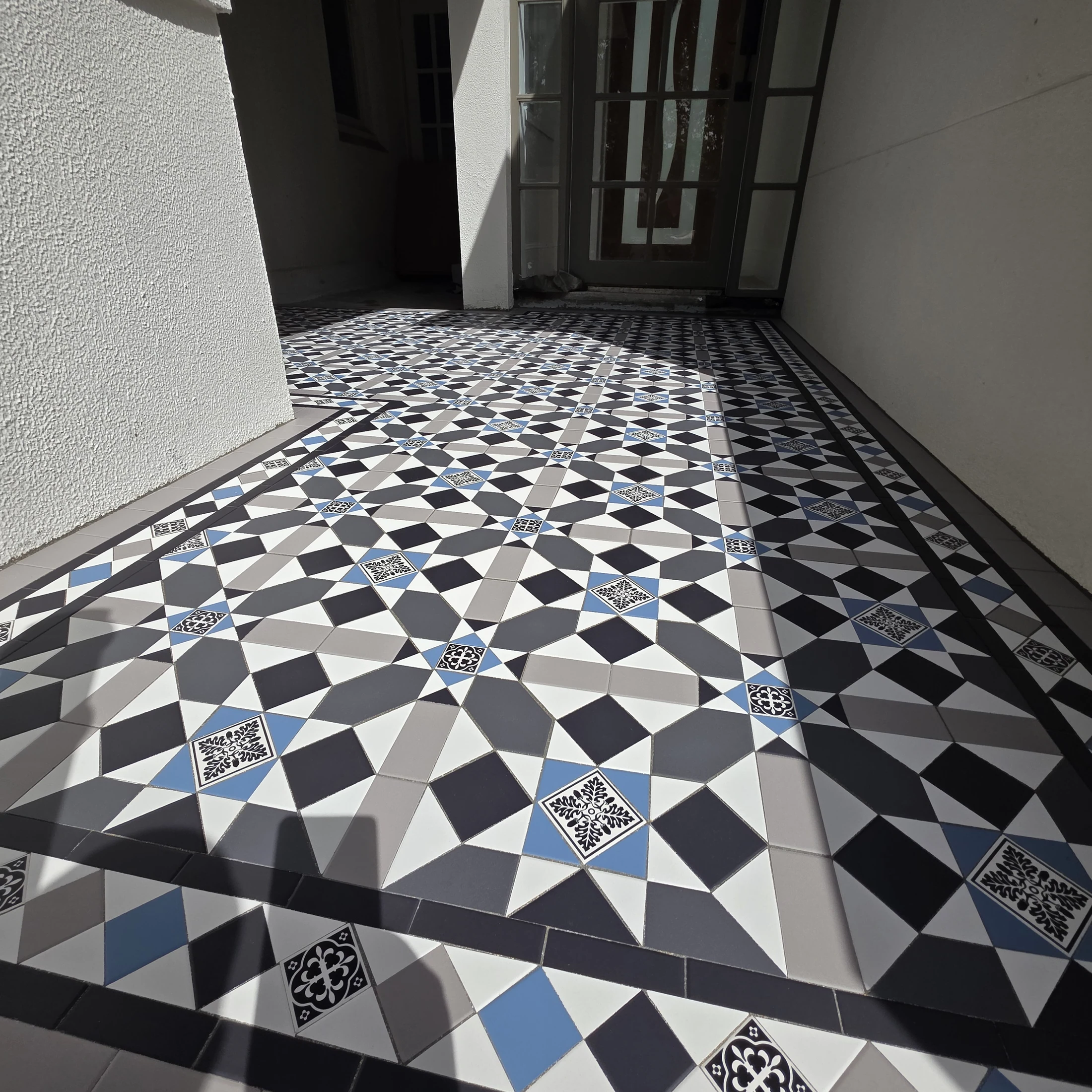
A property-led approach for Earlwood homes
Earlwood's heritage questions are property-specific rather than automatic across the suburb. Canterbury-Bankstown Council explains that heritage protection can apply to individually listed places or to heritage conservation areas, and that the Local Environmental Plan 2023 is the relevant statutory framework. Before changing an older entry, verandah or pathway, confirm the property's current planning and heritage position and obtain the advice required for the proposed work.
A current Earlwood example is the Council-exhibited proposal for a property on Homer Street. The accompanying assessment describes that individual place as an Interwar California Bungalow with Arts and Crafts influences, with sandstone used in the building and front landscape. Those details can inform a respectful design conversation, but they should not be treated as a description of every Earlwood house.
Heritage | City of Canterbury BankstownPlanning Proposal — Heritage listing of 64 Homer Street, EarlwoodNo. 64 Homer Street, Earlwood — Assessment of Significance
Design considerations for entries, verandahs and paths
Where an Earlwood property has a strong front elevation or masonry setting, begin by observing the existing proportions, thresholds and visible materials. The Homer Street assessment records sandstone bases, an arched opening, retaining walls and a symmetrical bungalow frontage at that one property. For a different home, the useful design question is how a proposed tessellated layout can sit comfortably with what is actually present, rather than copying a style by assumption.
A considered brief can address the visual relationship between a front path, verandah and doorway, the transition between old and new work, and the level of pattern or border detail appropriate to the setting. Existing tiles or masonry should be assessed before removal so that sound fabric is not discarded unnecessarily.
No. 64 Homer Street, Earlwood — Assessment of SignificanceHeritage | City of Canterbury Bankstown
Craftsmanship, repair and heritage checks
Earlwood's documented local example highlights why material detail matters: the assessment attributes distinctive character to sandstone elements, timber casement windows, rendered surfaces and the arrangement of the bungalow frontage. A tile brief should therefore record the condition of the existing surface, edges, thresholds and adjoining masonry before decisions are made about restoration or new installation.
Council states that its heritage adviser can assist with restoration, adaptation, development-application requirements and conservation questions. That advice is separate from tile design or installation services, and a property's listing or planning status should be confirmed directly before substantial work proceeds.
No. 64 Homer Street, Earlwood — Assessment of SignificanceHeritage | City of Canterbury Bankstown
Planning the tile work
A project can begin with design consultation to clarify the intended pattern, setting and transition details. From there, tessellated tile supply, installation, restoration and stone bullnose or edging coordination can be considered against the property's measured conditions and the selected scope.
For heritage-listed or potentially significant places, keep the design discussion aligned with the property's documented significance and any advice or consent pathway that applies. The Council's heritage guidance makes clear that heritage status does not automatically prohibit change, but compatibility and the relevant approval requirements still need to be considered.
Your Heritage Tiling Questions
Is every older Earlwood home heritage listed?
No. Heritage status is property-specific. Canterbury-Bankstown Council distinguishes individual heritage items from heritage conservation areas, and its current Earlwood consultation concerns the possible listing of one property at Homer Street. Check the current Local Environmental Plan and Council advice for the property in question.
Can a heritage-listed property in Earlwood be changed?
Council says heritage listing does not prevent changes, additions or new work. Proposed work must be compatible with the heritage place, and development consent may normally be required. Confirm the applicable pathway before work begins.
What should be checked before restoring a tiled verandah or pathway?
Record the existing tiles, edges, thresholds, adjoining masonry and any visible pattern before deciding what to retain, repair or replace. If the property is listed or may have heritage significance, seek the relevant Council or heritage advice as part of the project planning.
What local design reference is documented for Earlwood?
The assessment prepared for the Homer Street property documents an Interwar California Bungalow with Arts and Crafts influences and distinctive sandstone elements. It is a useful example for discussing material relationships, not a claim that every Earlwood property shares that style.
Discuss Your Heritage Tiling Project
Share your location, project details and photographs using our enquiry form, or call 0433 932 711.