
Tessellated Tiles in Copacabana
Copacabana's coastal setting calls for tile decisions that respect the proportions and character of the property as well as the practical demands of an exposed site. Authentic Heritage Tiling Co can assist with tessellated tile design consultation, supply, installation and restoration, including stone bullnose or edging coordination where it suits the project.
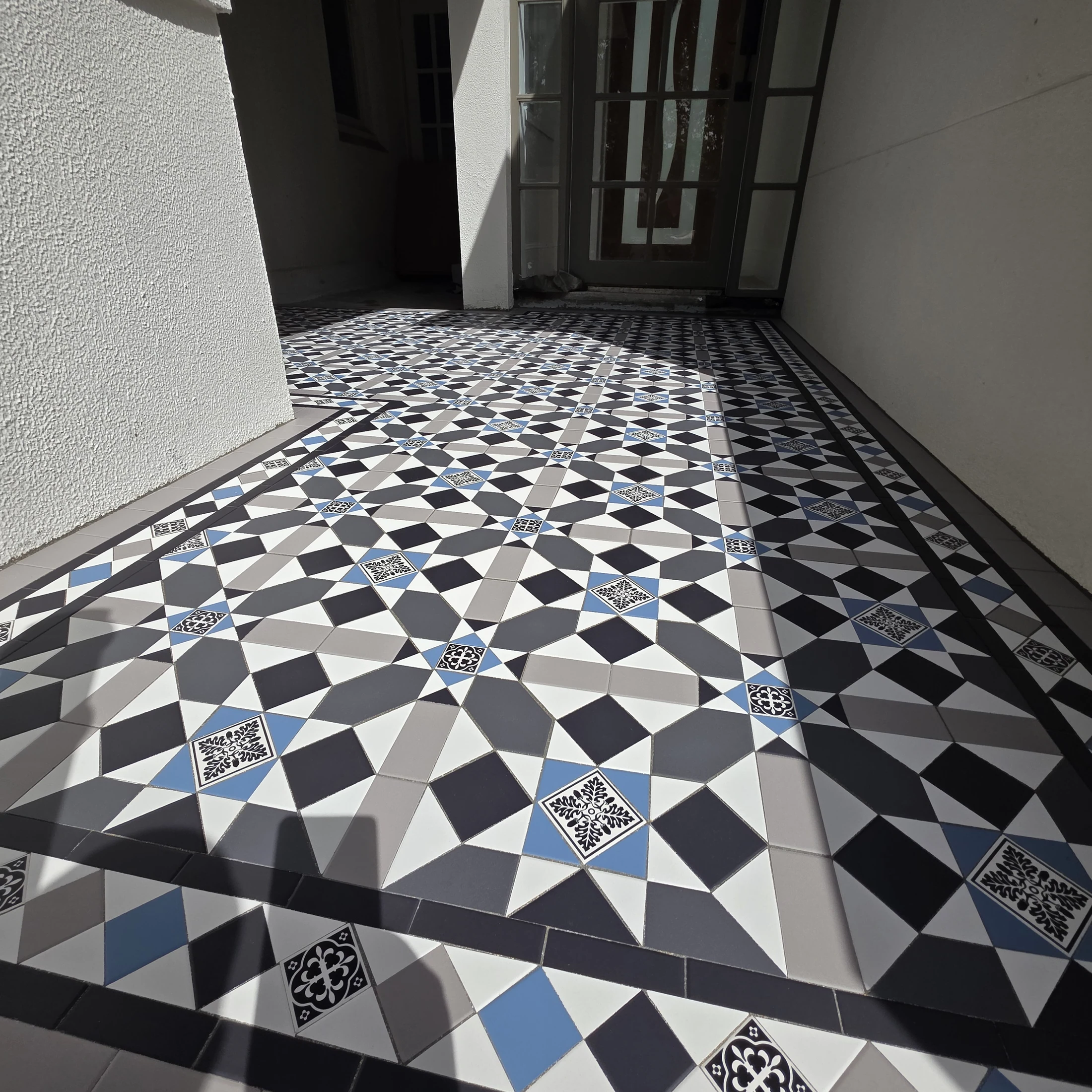
Tiling for Copacabana's coastal setting
Central Coast Council describes the MacMasters/Copacabana landscape as an informal, low-density coastal setting framed by vegetated ridges and connected visually to the ocean, lagoons and forested hinterland. That context makes proportion, sightlines and the relationship between a tiled surface and the surrounding landscape important parts of early design discussion.
For a verandah, entry or pathway, a considered border and a restrained field can help a new tiled surface sit comfortably with the home's scale. The right response depends on the existing architecture, levels, drainage, exposure and how the area is seen from the street or coast-facing outlooks.
Design, installation and restoration decisions
A project may involve a new tessellated pattern, careful matching to surviving tiles, selective restoration or a coordinated supply-and-installation scope. Existing fabric should be assessed before removal so that sound tiles, edges and transitions are not lost unnecessarily. New work should be developed from the property's actual dimensions and adjoining finishes rather than from a generic pattern applied by name alone.
Where a home sits on a prominent slope or is readily visible from public areas, the council's scenic guidance makes scale and visual integration especially relevant. This is a design consideration, not a promise that a particular tile treatment will satisfy planning requirements.
Property-specific heritage checks
A coastal setting or an older-looking house does not by itself establish heritage listing. Before altering original tilework or other fabric, check the property's applicable planning and heritage information and seek the relevant advice for the proposed work. Central Coast Council's current heritage guidance explains that significant places and landscapes are considered through the applicable controls and that requirements depend on the individual place and proposal.
AHTC's role is to discuss tile design, condition, matching and installation options. It does not amount to council or heritage authority approval.
A practical starting point for a Copacabana project
Useful first information includes photographs of the tiled area, approximate dimensions, the home's location within the site and whether the work is new, repair, matching or restoration. A discussion can then focus on pattern, edge treatment, transitions and the sequence needed for the particular property. Design consultation, tessellated tile supply, installation, restoration and stone bullnose or edging coordination can be considered as one connected brief where appropriate.
Your Heritage Tiling Questions
Does every Copacabana home need heritage approval for new tiles?
No. A locality's coastal or older character does not automatically make every home heritage listed or every tiling project approval-triggering. Check the individual property and proposed work against the applicable Central Coast and NSW requirements before altering original fabric.
What should be considered for tiles on a Copacabana verandah or pathway?
Start with the property's existing proportions, levels, exposure, drainage, adjoining finishes and visibility from public areas. In the MacMasters/Copacabana setting, scale and visual integration matter because council identifies high visual sensitivity and a low-density coastal character.
Can existing tessellated tiles be restored rather than replaced?
Often the first step is an assessment of what remains, including loose, cracked, worn or visually important tiles and the condition of adjoining edges. The appropriate outcome may be selective restoration, matching and repair, or a new scheme where the existing surface cannot be retained.
Can tile design be coordinated with stone bullnose or edging?
Yes. Edge details can be considered alongside the tile layout, thresholds, steps and adjoining landscape or masonry work. The suitable profile and finish depend on the actual site dimensions and the way the tiled area meets other surfaces.
Discuss Your Heritage Tiling Project
Share your location, project details and photographs using our enquiry form, or call 0433 932 711.