
Central Coast heritage tiling area directory
Use this Central Coast area directory to find locality-specific heritage tiling guidance. The Central Coast brings together coastal towns, Brisbane Water communities, regional centres and hinterland settings. For a verandah, pathway or interior floor, tessellated tiles can be selected to complement the proportions, materials and setting of the property rather than applied as a generic period look. Authentic Heritage Tiling Co can assist with design consultation, tessellated tile supply, installation, restoration and stone bullnose or edging coordination across the region.
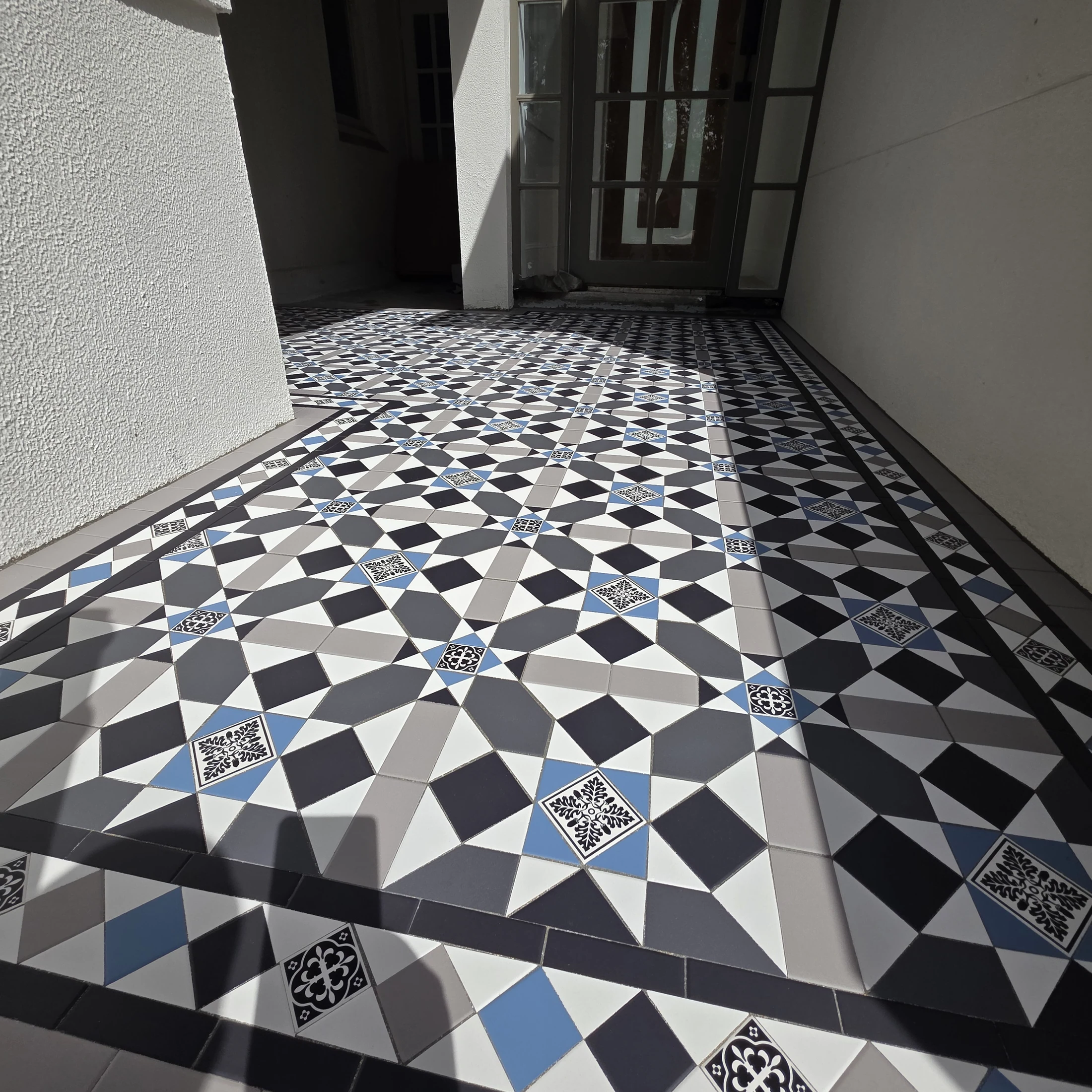
A regional setting with more than one architectural response
NSW Planning identifies the Central Coast as a region containing Gosford and Tuggerah regional centres, coastal towns including Terrigal and The Entrance, and hinterland settlements. That range matters when planning a tiled threshold or outdoor surface: a waterfront-facing verandah, an established town property and a bushland-edge home may need different decisions about scale, transitions, exposure and visual weight.
Brisbane Water is an important local reference for the Gosford and Woy Woy area. Its creeks, lakes, channels and islands sit alongside urban and conservation landscapes. A considered tile layout should therefore work with the property's own slope, outlook, drainage and existing materials rather than assume one Central Coast style fits every locality.
Central Coast Regional Plan 2041Brisbane Water | NSW Environment and Heritage
Start with the property's heritage context
A Central Coast address is not automatically heritage-listed. Council distinguishes local heritage items, Gosford regional-centre items, state-listed items, heritage conservation areas and archaeological sites. Check the property's applicable planning and heritage records before choosing a restoration or new-installation approach.
The council's listed conservation areas include Mount Penang Parklands, Oakland Avenue and Wyong Town Centre. Where a property is listed or sits within a conservation area, the relevant significance, fabric and setting should guide the work. Council's DCP specifically points to form, massing, setbacks, scale, architectural style, topography, landscape, views, streetscape and subdivision pattern.
Heritage items, conservation areas and archaeological sites | Central Coast CouncilCentral Coast Development Control Plan 2022, Chapter 3.6 Heritage Conservation
Design inspiration for verandahs, paths and interiors
For a new tessellated surface, begin with the relationship between the building and the route to it. A border can frame a verandah or path, while a restrained field pattern can keep a narrow entry from feeling busy. Proportions, door thresholds, steps, garden edges and existing masonry should be considered together before a pattern is fixed.
For older work, the first question is usually what can be retained. The Central Coast DCP encourages reinstatement of lost significant fabric and says changes should be minimised and reversible where possible. Careful condition assessment, tile matching, edge detailing and compatible new work can help a repaired surface sit comfortably with the property's existing character without pretending that every missing piece can be replaced invisibly.
Central Coast Development Control Plan 2022, Chapter 3.6 Heritage ConservationHeritage and development | Central Coast Council
Coordinate tile work with the wider property plan
Central Coast planning guidance is broader than heritage alone. The council's DCP includes character and scenic quality, coastal hazard, waterfront, town-centre and regional-city chapters. For exposed paths, waterfront edges or sloping sites, discuss levels, falls, drainage, transitions and edge protection as part of the design brief rather than treating the tile pattern in isolation.
Where approval or exemption advice may apply, obtain the relevant written advice before work begins. The tiling scope can then be coordinated with the property's plans, photographs, materials and construction details.
Central Coast Development Control Plan 2022Heritage and development | Central Coast Council
Central Coast area directory
Your Heritage Tiling Questions
Does every Central Coast home need heritage approval for tessellated tiling?
No. The requirement depends on the property's listing, location and proposed work. Central Coast Council says work on or near a heritage site or within a conservation area may require development approval or, in some cases, an exemption. Check the applicable records and obtain Council advice where relevant.
Which Central Coast conservation areas should I check?
Council lists Mount Penang Parklands, Oakland Avenue and Wyong Town Centre as Heritage Conservation Areas under Central Coast LEP 2022. A property outside those areas may still be an individual local, Gosford regional-centre or state heritage item, so the address-specific records remain important.
Can a listed property be modernised or have its tiles changed?
Council states that heritage listing does not prevent modernisation, alteration or development. Work must have regard to heritage significance and be sympathetic to the place. For older tiled surfaces, begin by assessing significant fabric, setting and what can be retained before deciding on replacement.
What should I consider for a Central Coast verandah or pathway?
Consider the property's slope, drainage, exposure, threshold levels, steps, existing masonry, garden edges and the relationship between the path and building. The Central Coast DCP also identifies form, scale, setbacks, streetscape, topography and landscape as relevant context for sympathetic work in a conservation area.
Can minor heritage repairs be exempt from approval?
Some minor repairs and maintenance may be eligible for a heritage exemption, including certain work using the same materials and finishes. Central Coast Council says written exemption advice must be obtained before work starts, so confirm the pathway for the property and proposed scope first.
Discuss Your Heritage Tiling Project
Share your location, project details and photographs using our enquiry form, or call 0433 932 711.