
Tessellated Tiles in Green Point
For Green Point homes, a tessellated tile scheme can be considered alongside the setting of the property. On the Central Coast, outlook, slope, vegetation and the relationship between a house and its outdoor areas may influence how a verandah, entry, path or interior floor should be designed. We can discuss tessellated tile supply, installation and restoration as part of a site-led brief.
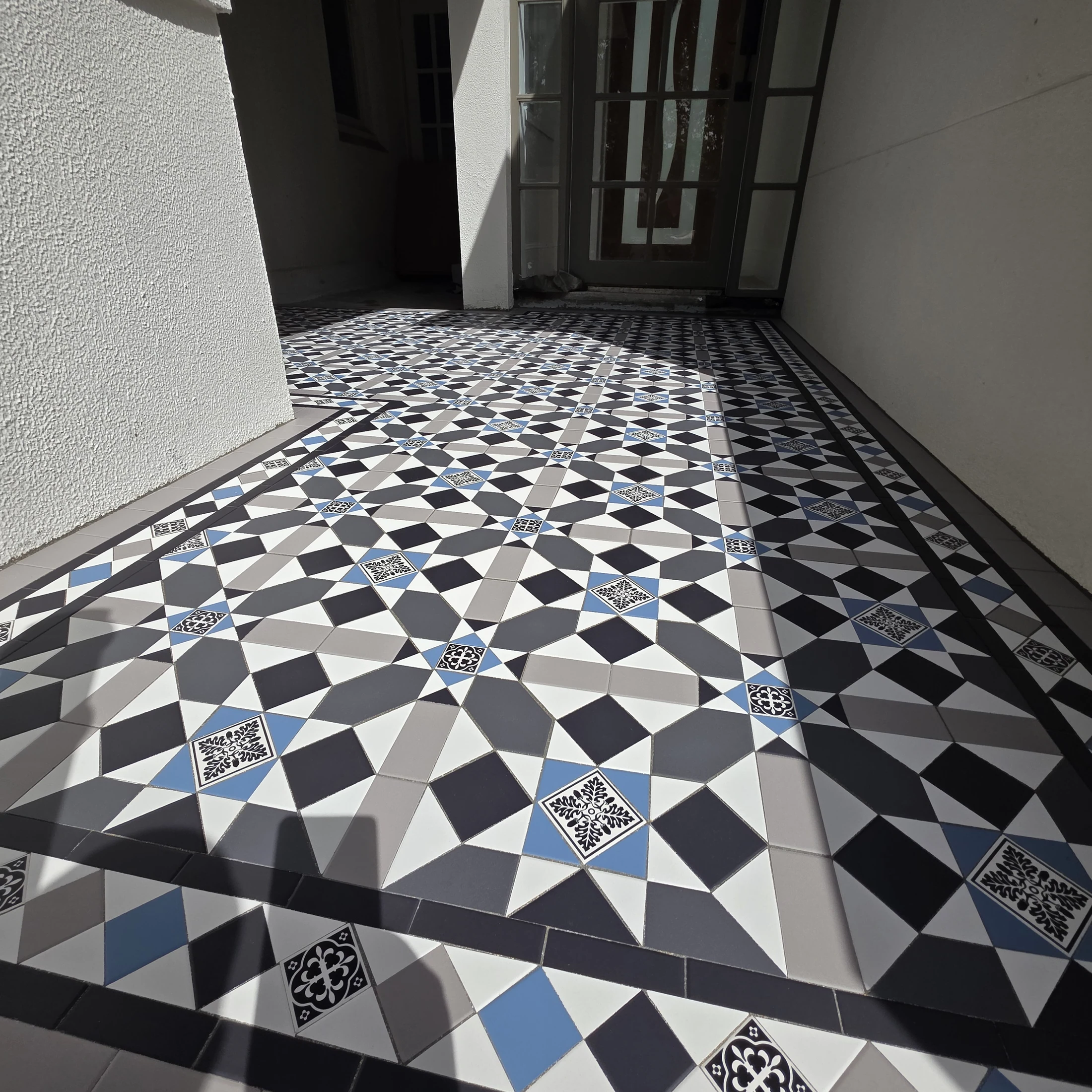
A Brisbane Water setting calls for a site-led tile design
Central Coast Council's Green Point/Saratoga character statement describes residential development near Brisbane Water across foreshore, midslope and higher-slope areas, with ridges and waterways shaping the visual setting. That context can matter when choosing a border, laying direction, colour balance and transition between a house and its garden or outdoor entertaining area.
A design consultation can consider the proportions of the space, the line of sight from the house and how a pattern will sit against existing joinery, masonry, steps or landscape. The aim is a coherent result for the individual property, rather than a claim that every Green Point home shares one architectural style.
Plan verandahs, paths and edges around the property
On a sloping or visually exposed site, the practical brief may include changes in level, drainage interfaces, step geometry, access for materials and the way a pathway meets the dwelling. A verandah or entry pattern should be set out with those relationships in mind before supply and installation details are confirmed.
Council identifies higher slopes, waterfront areas and visible locations as more sensitive in its scenic guidance. This is not a tile approval or a heritage ruling, but it is a useful prompt to review the whole setting and any relevant controls before committing to external works.
Match existing fabric carefully, whether restoring or starting fresh
Where original or established tiles remain, assessment should begin with what is actually on site: the pattern, dimensions, colour relationships, edge details and condition. Selective restoration may be appropriate when the existing work can be retained, while a new installation can be developed around the home's proportions and the intended use of the space.
The Central Coast planning framework includes separate guidance for character, scenic quality and heritage conservation. A property-specific check is sensible where the work affects an identified heritage place, a constrained site or an external area visible from the public domain. Tile advice does not replace Council or other approval advice.
Tessellated tile services for Green Point projects
AHTC can discuss design consultation, tessellated tile supply, installation and restoration for floors, verandahs, entries and pathways. Stone bullnose or edging coordination can also be considered where the layout needs a defined transition or finished edge.
The right approach depends on the existing surface, the proposed use and the details of the property. Share photographs and the broad location of the work during an enquiry so the brief can be understood before a site-specific recommendation is made.
Your Heritage Tiling Questions
Can tessellated tiles suit a sloping Green Point property?
They can be considered, but the layout should be planned around the actual levels, steps, drainage interfaces and access conditions. A consultation can address how the pattern and borders work within the space rather than assuming a level-site solution.
Does a Green Point location automatically mean a heritage approval is required?
No. Heritage or planning requirements depend on the property, the proposed work and the controls that apply to the site. Central Coast Council notes that controls can apply at suburb, street or single-lot level, so property-specific advice should be checked where relevant.
Can existing tessellated tiles be restored instead of replaced?
That depends on the condition and extent of the surviving work. Assessment can look at the existing pattern, tile sizes, colour relationships, edges and damaged areas before deciding whether selective restoration, additions or a new scheme is the better fit.
Are tessellated tiles suitable for a Green Point verandah or pathway?
They may be suitable when the pattern, transitions, levels and exposure are designed for the particular space. External work should be considered with access, drainage, steps and the relationship to the house and garden in view.
Discuss Your Heritage Tiling Project
Share your location, project details and photographs using our enquiry form, or call 0433 932 711.