
Tessellated tiles in Saratoga
Saratoga's foreshore setting includes modest cottages and bungalows, pitched roofs, verandahs, lightweight facades and gardens shaped by slopes and water views. Tessellated tile work can respond to that character without making every property look the same. AHTC can discuss pattern, colour, edging and practical installation choices for a new verandah or pathway, or assess existing tiles where the aim is to retain a valued surface.
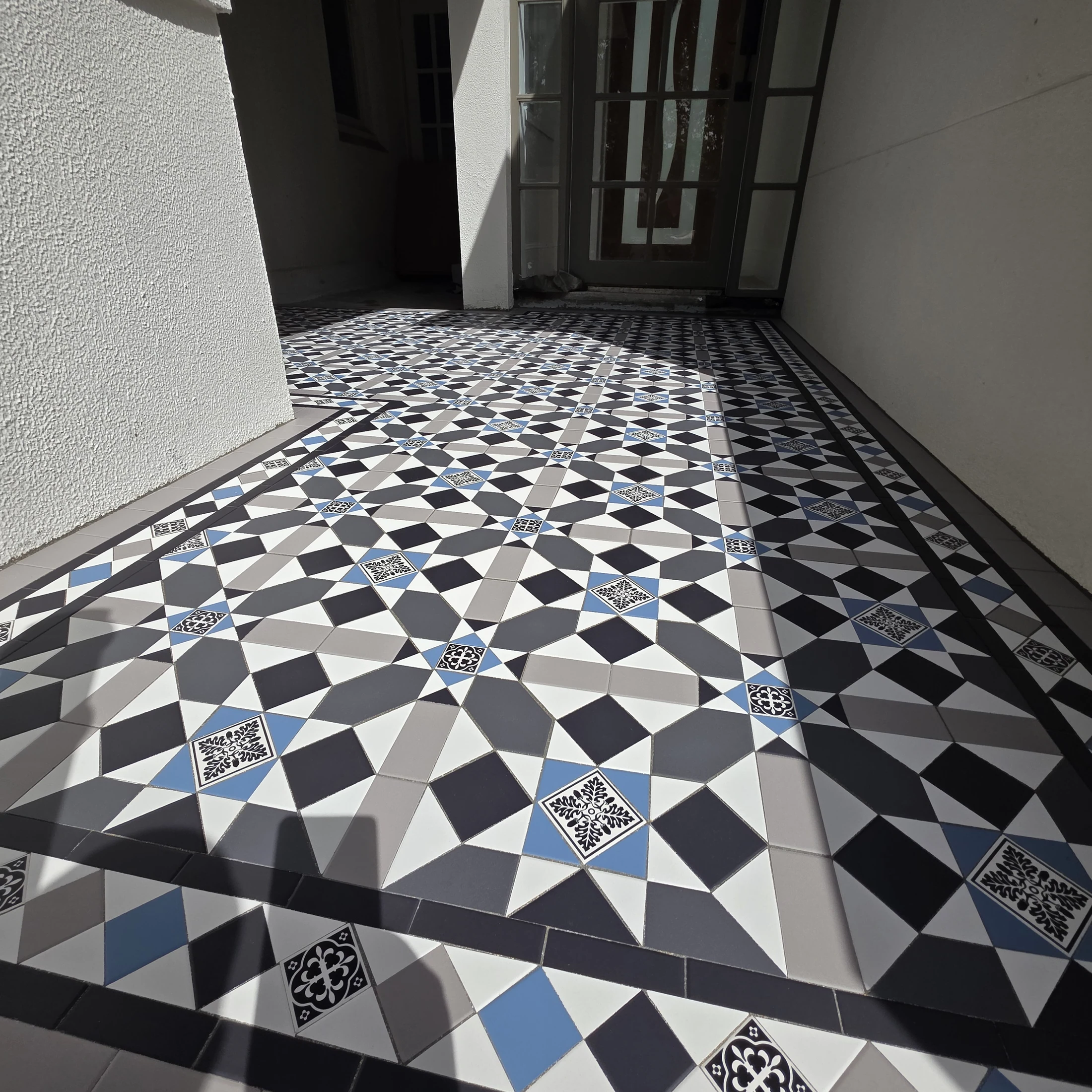
Designing for Saratoga's foreshore character
The Central Coast character statement describes Saratoga's foreshore as a mix of gentle-to-moderate slopes, waterfront reserves, small-to-medium allotments and distinctive views across the water. It also records surviving early-to-mid twentieth-century cottages and bungalows, some retaining their original scale and lightweight cladding.
For a verandah or front path, proportion is often as important as the tile pattern. A restrained border, a clear threshold and a layout that follows the home's approach can sit more comfortably beside a modest cottage than an overly busy field. Where a house has been substantially altered, the design can still take cues from its roofline, entry sequence, garden and surrounding streetscape without pretending that the whole property is historic.
Verandahs, paths and changing site levels
Saratoga's documented settings include houses below roads, informal waterfront gardens, wide verges and sloping sites. Those conditions make the junctions around steps, thresholds, drains and garden edges part of the design brief, not an afterthought. A site discussion can consider how a tessellated layout meets existing paving, a seawall or a garden edge while keeping movement through the property clear.
The DCP's desired character guidance favours modest scale, simple pitched forms, verandahs, wide eaves, planted setbacks and avoidance of visually dominant walls or extensive hard surfaces. For tile work, that points towards careful scale, legible transitions and edging that supports the building rather than competing with the foreshore setting.
Working carefully with existing tilework
Where an older entry, verandah or pathway remains, the first question is what can be retained. Existing tiles may have movement, worn surfaces, patching or previous alterations that affect a repair or matching decision. AHTC's design consultation and restoration service can help separate the visual aim from the condition of the substrate and the practical limits of the surviving material.
Saratoga's broader foreshore character is not the same as a heritage listing. Central Coast Council explains that heritage consideration applies to significant places, buildings, structures and landscapes and provides property-specific development guidance. Owners should check the individual site and proposal with the relevant authority before assuming that work is exempt or requires approval.
A regional Central Coast service context
Saratoga is part of the Central Coast region, not a metropolitan Sydney suburb. The NSW Planning regional plan describes the Central Coast Region as including the Central Coast Local Government Area and identifies Gosford as its regional capital.
The existing Central Coast location page remains the useful service connection for Saratoga. From there, homeowners can consider design consultation, tessellated tile supply, installation, restoration and stone bullnose or edging coordination in the context of their own property.
Your Heritage Tiling Questions
Can tessellated tiles suit a Saratoga cottage or bungalow?
Yes, when the layout is scaled to the entry, verandah or path and relates to the building's existing proportions. Saratoga's documented foreshore character includes early-to-mid twentieth-century cottages and bungalows, verandahs and pitched roofs, so a considered border and balanced field can be more appropriate than an oversized or visually dominant pattern.
What should be considered before tiling a sloping or waterfront-facing path?
The design discussion should include levels, steps, thresholds, drainage, edges, access and how the path meets existing paving or garden areas. Saratoga's DCP character statement records sloping allotments, waterfront reserves and informal gardens, so the finished work should be planned around the site's movement and water-management conditions rather than treated as a flat decorative surface.
Does Saratoga's foreshore character mean my home is heritage-listed?
No. A suburb-wide architectural description does not establish that an individual property is listed or protected. Central Coast Council's heritage guidance explains that heritage consideration concerns significant places, buildings, structures and landscapes; check the individual property and proposed work with the relevant authority before proceeding.
Can existing Saratoga tiles be restored or matched?
Often the first step is an assessment of the surviving tiles, pattern, edges and underlying condition. Restoration, selective repair or a new complementary layout may each be appropriate depending on what remains and what the property needs. A site-specific consultation can clarify the practical options without assuming that a replacement is necessary.
Discuss Your Heritage Tiling Project
Share your location, project details and photographs using our enquiry form, or call 0433 932 711.