
Tessellated tiles in Toukley
Toukley sits within a Central Coast landscape shaped by lake edges, foreshore connections, a defined town centre and varied residential precincts. Central Coast planning and local-character material points to the importance of views, mature vegetation, green space and thoughtful design as the area evolves. Our design consultation, tessellated tile supply, installation, restoration and stone bullnose or edging coordination can be considered around the existing property, its access and exposure, and any applicable heritage or planning requirements.
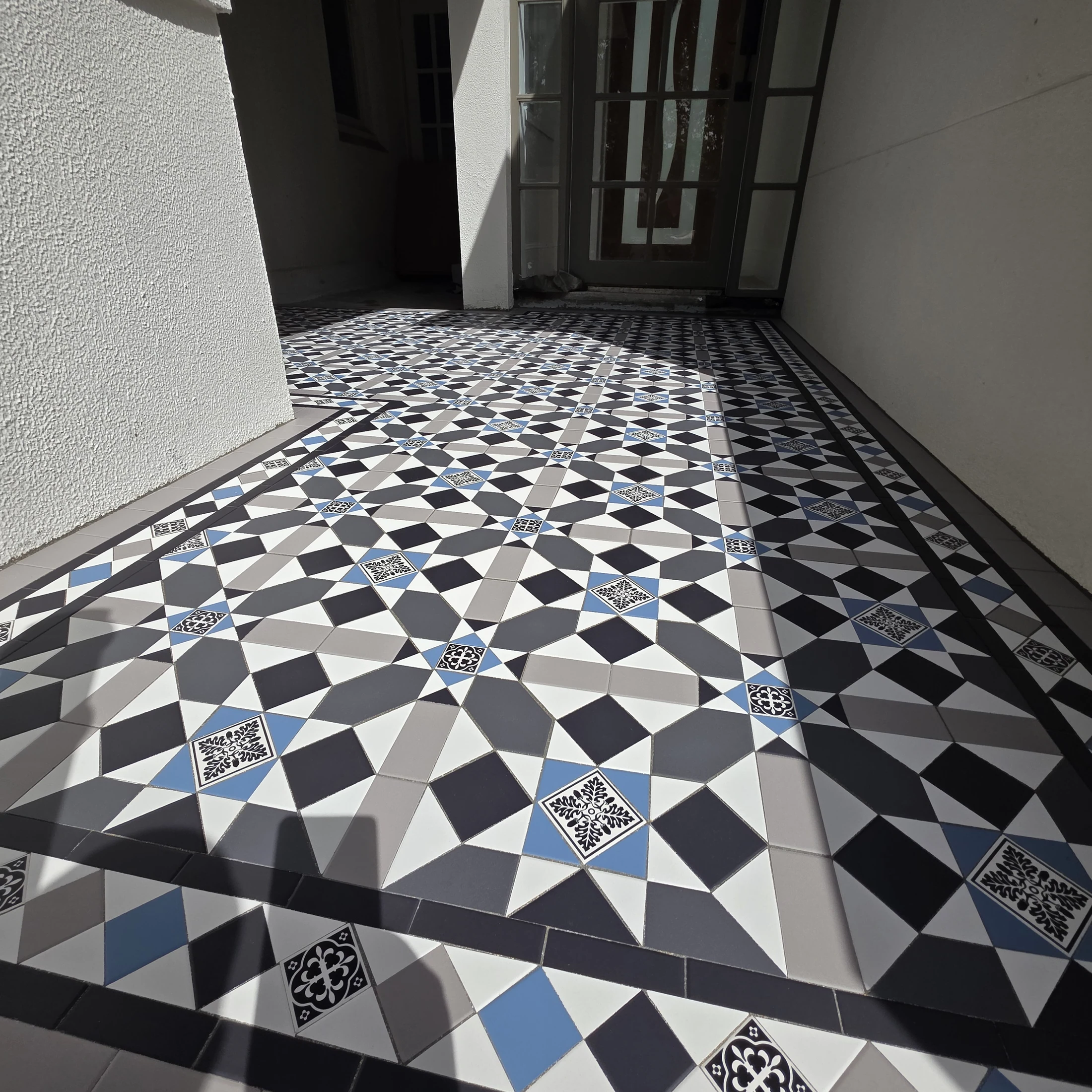
Designing for Toukley's varied setting
Toukley is not one uniform streetscape. Council planning material identifies a town centre and surrounding precincts including Peel Street, Moss Avenue, Canton Beach, East Toukley and Northern Toukley, while local-character work considers green space, scenic views, housing, tree coverage and the built environment together. For a verandah, entry, pathway or interior floor, start with the particular property's proportions, existing thresholds and relationship to the street or landscape.
A tessellated layout can be developed with the building and site rather than selected as a generic period treatment. Border width, field scale, transitions and edging should be coordinated with adjoining paving, steps, walls, planting and sightlines. Where a stone bullnose or edge is considered, levels, drainage and the existing material palette need to be reviewed on site rather than assumed from the suburb name.
Lake, foreshore and exposure considerations
The Toukley planning strategy identifies Budgewoi Lake, Tuggerah Lake, foreshore connections, mature vegetation, water views and coastal hazards as relevant local conditions. On a property near a lake edge or exposed coastal route, the design conversation should include how the tiled area meets existing paving, garden levels, thresholds and drainage paths. These are site questions, not a universal installation recipe.
Council's Toukley town-centre material also documents public paths, planting and sandstone blocks as part of local amenity. Existing hard surfaces and landscape elements can provide useful cues for proportion and edge treatment, but a private property should be assessed on its own condition, access and intended use.
Heritage checks before altering older tilework
A Central Coast setting with older fabric or a character-sensitive streetscape does not by itself make every property heritage-listed. Before removing or covering existing tessellated tiles, record the surviving pattern, borders, steps, thresholds, adjoining masonry and areas of repair. That information can help distinguish a repair or retention opportunity from a later replacement, subject to the property's condition and planning context.
Central Coast Council explains that heritage listing does not prevent all change, but new work should have regard to significance and be sympathetic. The applicable pathway can depend on the address and the proposed scope, so check current council information before work begins. The NSW Government Architect's heritage guide also frames good design as a way to conserve, maintain and enhance heritage places without treating a general locality description as an approval or listing.
A measured path from design to installation
Begin with photographs, dimensions and a review of the existing surface and edges. Design consultation can then explore a new tessellated arrangement or a sympathetic restoration approach, followed by supply, installation or repair planning as appropriate. For an exposed, sloping or landscape-connected site, sequencing should account for thresholds, access and the way the finished work meets surrounding surfaces.
The Toukley page remains the local starting point within the Central Coast service directory. The broader Central Coast destination provides regional navigation, while this page keeps the property and its actual tile task at the centre of the conversation.
Your Heritage Tiling Questions
Is every Toukley property heritage-listed?
No. Toukley's local planning and character context does not mean every property is individually heritage-listed. Check the particular address and proposed work with Central Coast Council and the relevant planning or heritage information before starting.
What should I consider for tessellated tiles near a Toukley lake or foreshore setting?
Review the site's levels, thresholds, drainage, access, existing paving, vegetation and exposure. Central Coast planning material identifies lake relationships, water views, vegetation and coastal hazards as local considerations, but the correct construction response depends on the individual property.
Can a new tessellated pattern suit a Toukley home?
It can be explored through a property-led design process. Consider the home's scale, frontage, entry sequence, adjoining materials, landscape and the way the pattern will be seen from the street or pathway rather than assuming one period pattern suits every Toukley property.
Do I need approval to repair or replace old tiles in Toukley?
There is no single answer for every address or scope. Central Coast Council says work affecting heritage-listed properties or conservation areas may require development approval, while some minor work may be eligible for exemption advice. Check the current council pathway for the property and obtain any required written advice before work begins.
Can existing Toukley tiles be restored rather than replaced?
That depends on what survives and the condition of the tiles, edges, substrate and adjoining surfaces. Document the existing layout and repairs first, then assess whether cleaning, selective repair, matching or replacement is the most appropriate response for the property and its planning context.
Discuss Your Heritage Tiling Project
Share your location, project details and photographs using our enquiry form, or call 0433 932 711.