
Tessellated Tiles in Docklands
For a Docklands apartment, terrace, entry, courtyard or shared building area, a good tiling decision starts with the space as it exists. We can help with tessellated tile design consultation, supply, installation, restoration and stone bullnose or edging coordination. The waterfront setting and the area's mix of newer development and retained urban fabric make access, transitions, exposure and the relationship between new work and existing finishes important to discuss before a pattern is selected.
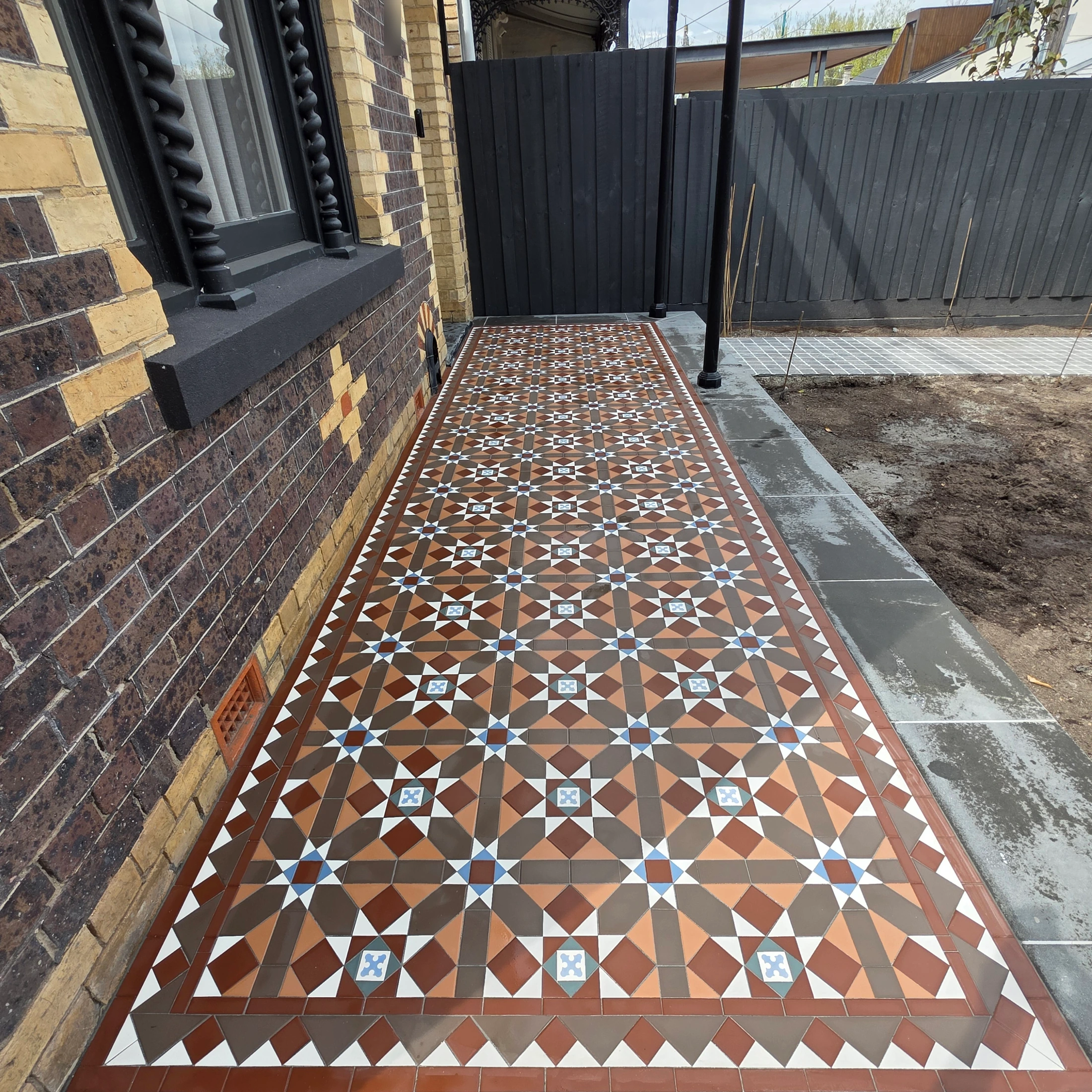
Tiling choices for Docklands properties
Docklands is a City of Melbourne neighbourhood at the lower delta of the Yarra River Birrarung. The area includes waterfront public spaces and multi-dwelling properties, so a tiling brief may involve a compact apartment entry, a balcony-adjacent threshold, a terrace, a courtyard or a common access route rather than a traditional detached verandah. Measure the actual area and identify who controls it before choosing a layout or finish.
In a building with shared access, the practical brief may include delivery routes, protection of adjoining finishes, work hours and the transition between private and common areas. These are property-specific coordination questions, not a universal Docklands construction rule. An on-site review can establish what is feasible before supply or installation is planned.
For a new design, we can work through scale, border treatment, colour balance and the way a pattern meets walls, thresholds or existing stone. For an older or altered surface, the first question is whether sound original fabric can be retained. Cleaning, selective repair, careful matching and replacement should follow the condition of the actual floor rather than an assumed period style.
Waterfront setting, access and finish decisions
The City of Melbourne publishes dedicated Docklands standards for public space, waterfront and street design works. For a private or strata project, that does not automatically determine the tile specification, but it is a useful reminder that movement, edges, adjoining surfaces and the wider public-realm setting can matter around waterfront properties.
Discuss exposure, drainage interfaces, falls, thresholds and slip considerations with the relevant building or project professionals for the site. Tile selection should be made alongside the substrate and access conditions that are actually present. We can coordinate design consultation, tessellated tile supply, installation planning, restoration and stone bullnose or edging requirements without assuming one method suits every Docklands property.
When planning or heritage checks may matter
The Melbourne Planning Scheme includes a Docklands Zone that recognises the water environment, the relationship with the central city and the possible conservation of places with architectural or historical significance. The scheme also refers to urban design information, external materials, colours and finishes for relevant building and works applications.
That planning context is not a blanket statement that every Docklands property is heritage-listed or that every tiling job needs approval. If the work changes a building, common property, publicly visible frontage or a place with a specific control, confirm the property's applicable requirements with the responsible authority, owners corporation or project team before work begins. Our role is to help assess the tiling and restoration brief, not to provide planning approval.
Docklands tessellated tile services
Our Docklands service scope can include design consultation for a new pattern, tessellated tile supply, installation planning and installation, restoration of suitable existing tessellated work, and coordination of stone bullnose or edging. The right sequence depends on the surface, access, pattern, adjoining materials and the condition found during assessment.
Share the property's locality, the area being considered, whether the tiles are new or existing, and photographs that show thresholds and surrounding finishes. That gives the brief useful starting context without assuming a particular substrate, repair method or approval pathway.
Your Heritage Tiling Questions
Can you help with tessellated tiles in a Docklands apartment or shared building area?
Yes. The first step is to clarify whether the area is private or common property, how access will work and which adjoining finishes must be protected. We can then discuss design, supply, installation or restoration for the specific space.
Does a Docklands address automatically mean my tiling work needs heritage approval?
No. A Docklands address alone does not establish that a property is heritage-listed or that a particular tiling job needs approval. Check the property's applicable planning, building, owners corporation and project requirements before work starts, especially where external appearance, common property or a significant place may be involved.
Can existing tessellated tiles be restored rather than replaced?
Possibly. The decision depends on the condition, extent and significance of the existing work, as well as access and the surrounding construction. An assessment can compare careful retention or selective repair with replacement before a finish is specified.
What should I include when asking about a Docklands tiling project?
Include the area type, approximate dimensions, whether it is private or common property, the condition of any existing tiles, access constraints and photographs showing thresholds or adjoining stone. Those details help frame a realistic design, supply, installation or restoration discussion.
Discuss Your Heritage Tiling Project
Share your location, project details and photographs using our enquiry form, or call 0433 932 711.